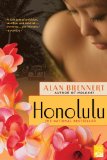
Honolulu by Alan Brennert: Questions, plus a reading group guide, with links to reviews, excerpt, author interview and author biography at BookBrowse.com.
Honolulu
by Alan Brennert
Hardcover: Mar 2009,
368 pages.
Paperback: Feb 2010,
464 pages.
Please be aware that this discussion guide may contain spoilers!
How do you feel about Jins decision to leave Korea? What do you think that you might have done in her place? How do you regard the various decisions she made after learning the truth about her fiancé in Hawai'i
How would you interpret the poem by Hwang Chini on page 26 within the context of the story?
Korea and Hawai'i were both small countries, in strategic locations, that came to be dominated by more powerful nations. In what other ways were the Korean and Hawaiian societies of the time both similar and different?
Compare and contrast the lives of a Korean kisaeng and an Iwilei prostitute.
How does the author weave real people and events into the lives of his fictional characters, and how do they contribute to your understanding of Jins circumstances? If you were already familiar with any of the historical figures, how do you view them after reading the novel? For example, the author is uncertain of May Thompsons fate in real lifewhat do you think she might have done after leaving Honolulu? What do you think about the Governors decision to commute the sentences of Lt. Massie and the others convicted in Joe Kahahawais death?
How have Americans attitudes toward immigrants changedor not changedsince the 1900s?
The biography Passage of a Picture Bride describes its real-life subject as having a positive outlook and broad-mindedness, unusual traits among Korean women of that time. How does this statement apply to Jin and her fellow picture brides?
What binds Jin and her Sisters of Ky?ngsang together, other than the kye? What purpose do they serve in each others lives?
What is the significance of the patchwork quilts not just to Jins life, but to the life of Hawai'i itself?
At the end of the novel, Jin says Hawai'i has often been called a melting pot, but I think of it more as a mixed platea scoop of rice with gravy, a scoop of macaroni salad, a piece of mahi-mahi, and a side of kimchi. Many different tastes share the plate, but none of them loses its individual flavor, and together they make up a uniquely local cuisine. This is also, I believe, what America is at its besta whole great than the sum of its parts.
What do you think of her statement? What is gained and what is lostboth in Hawai'i and in the U.S. as a wholein becoming a multicultural society? How might this be particularly relevant to Native Hawaiians?
Unless otherwise stated, this discussion guide is reprinted with the permission of St. Martin's Griffin.
Any page references refer to a USA edition of the book, usually the trade paperback version, and may vary in other editions.

The first biography of Clarence Birdseye, the eccentric genius inventor whose fast-freezing process revolutionized the food industry and American agriculture.
BookExpo America will broadcast live author appearances for the first time(May 24 2012) For the first time, BookExpo America is making author appearances at the show available for viewing online live or on demand, via Livestream. It is...
Full Story