return to home  
Join   |  Gift   |  Member Login   |  Library Login
BookBrowse Mobile
Follow Us: 
   Reading Guides

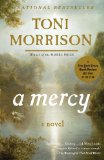
A Mercy by Toni Morrison: Questions, plus a reading group guide, with links to reviews, excerpt, author interview and author biography at BookBrowse.com.

A Mercy

A Mercy
A Novel
by Toni Morrison
Hardcover: Nov 2008,
176 pages.
Paperback: Aug 2009,
224 pages.

Publication information
Author Information
Critics' Opinion:   
Readers' Rating:  
About BookBrowse Rankings
Share: 
Buy This Book

Reading Guide Questions

 Printer Friendly Guide

Please be aware that this discussion guide may contain spoilers!

About This Guide

The following introduction, discussion questions, and suggestions for further reading are designed to enhance your group's discussion of Pulitzer Prize winner and Nobel Laureate Toni Morrison's searing new novel about the trauma of living in colonial America during the birth of the slave trade.

About This Book

Set in the 1680s, in the early stages of the slave trade, A Mercy gives voice to a remarkable group of characters: Jacob, an Anglo-Dutch farmer, trader, and lender; his wife, Rebekka, newly arrived from England; their servant woman, the Native American Lina, whose tribe has been wiped out by smallpox; Florens, the slave girl he reluctantly accepts as payment for a bad loan; and the permanently shipwrecked Sorrow, daughter of a sea captain killed in a storm off the coast of the Carolinas. These characters take turns narrating the story, and their voices carry the physical and emotional scars of the struggles of their lives.

A Mercy is a visceral, intricately textured novel that takes readers right to the origins of America, a place where the seeds of the racial, religious, and class tensions that would later come to fruition in revolution and civil war were already being sown. It is a place where people are forced to make wrenching decisions. Jacob does not wish to take a slave as payment for a bad debt, but he feels it’s the best option available. Nor does he wish to traffic in slavery - he prides himself on his honest work - though he is willing to make huge profits off the slave labor of sugar plantations in Barbados. Florens's mother does not want to part with her daughter, but feels that Florens will be better off with Jacob than with her own cruel master. Rebekka knows that even as a white woman, the only choices open to her are wife, servant, and prostitute. Florens, Lina, and Sorrow, who are servants, know that if both their master and mistress die, their already circumscribed choices will disappear completely and they will be fair game for anyone. This is a world in which women - white, black, and Native American - are especially vulnerable, literally at the mercy of the men who hold power over them.

But A Mercy is as much a novel of experience as ideas, and it is the vividness and immediacy of these characters that makes the novel so powerful. These are voices that have not been heard before, voices silenced first by cruelty and then by history.

In A Mercy they are free to speak at last.

Reader's Guide

  1. Florens addresses her story to the blacksmith she loves and writes: "You can think what I tell you a confession, if you like, but one full of curiosities familiar only in dreams and during those moments when a dog's profile plays in the steam of a kettle" (page 3). In what sense is her story a confession? What are the dreamlike "curiosities" it is filled with?

  2. Florens writes to the blacksmith, "I am happy the world is breaking open for us, yet its newness trembles me" (page 5), and later, "Now I am knowing that unlike with Senhor, priests are unlove here" (page 7). In what ways is Florens's use of language strikingly eccentric and poetic? What does the way she speaks and writes reveal about who she is and what her experience has been?

  3. What does A Mercy reveal about Colonial America that is startling and new? In what ways does Morrison give this period in our history an emotional depth that cannot be found in text books?

  4. A Mercy is told primarily through the distinctive narrative voices of Florens, Lina, Jacob, Rebekka, Sorrow, and, lastly, Florens's mother. What do these characters reveal about themselves through the way they speak? What are the advantages of such a multivocal narrative over one told through a single voice?

  5. Jacob Vaark is reluctant to traffic in human flesh and determined to amass wealth honestly, without "trading his conscience for coin" (page 28). How does he justify making money from trading sugar produced by slave labor in Barbados? What larger point is Morrison making here?

  6. How does Jacob's attitude toward his slaves/workers differ from that of the farmer who owns Florens's mother?

  7. When Rebekka falls ill, Lina treats her with a mixture of herbs: devil's bit, mugwort, Saint-John's-wort, maidenhair, and periwinkle. She also considers "repeating some of the prayers she learned among the Presbyterians, but since none had saved Sir, she thought not" (page 50). What fundamental differences are suggested here between the practical, earth-based healing knowledge of Lina and the more ethereal prayers of the Presbyterians? What larger role does healing play in the novel?

  8. Rebekka knows that even as a white woman, her prospects are limited to "servant, prostitute, wife, and although horrible stories were told about each of those careers, the last one seemed safest" (pages 77-78). And Lina, Sorrow, and Florens know that if their mistress dies, "three unmastered women … out here, alone, belonging to no one, became wild game for anyone" (page 58). What does the novel as a whole reveal about the precarious position of women, European and African, free and enslaved, in late-17th-century America?

  9. Rebekka says she does not fear the violence in the colonies - the occasional skirmishes and uprisings - because it is so much less horrifying and pervasive than the violence in her home country of England. In what ways is "civilized" England more savage than "savage" America?

  10. What role does the love story between Florens and the blacksmith play in the novel? Why does the blacksmith tell Florens that she is "a slave by choice" (page 141)?

  11. When Florens asks for shelter on her journey to find the blacksmith, she is taken in by a Christian widow and her apparently "possessed" daughter Jane, whose soul she is trying to save by whipping her. And Rebekka experiences religion, as practiced by her mother, as "a flame fueled by a wondrous hatred" (page 74). How are Christians depicted in the novel? How do they regard Florens, and black people generally?

  12. Lina tells Florens, "We never shape the world... The world shapes us" (page 71). What does she mean? In what ways are the main characters in the novel more shaped by than shapers of the world they inhabit?

  13. Why does Florens's mother urge Jacob to take her? Why does she consider his doing so A Mercy? What does her decision say about the conditions in which she and so many others like her were forced to live?

  14. The sachem of Lina's tribe says of the Europeans: "Cut loose from the earth's soul, they insisted on purchase of its soil, and like all orphans they were insatiable. It was their destiny to chew up the world and spit out a horribleness that would destroy all primary peoples" (page 54). To what extent is this an accurate assessment? In what ways is A Mercy about the condition of being orphaned? What is the literal and symbolic significance of being orphaned or abandoned in the novel?

  15. Why does Morrison choose to end the novel in the voice of Florens' s mother? How does the ending alter or intensify all that has come before it?

  16. Why is it important to have a visceral, emotional grasp of what life was like, especially for Africans, Native Americans, and women, in Colonial America? In what ways has American culture tried to forget or whitewash this history?

  17. Did you see the stunning twist at the novel's conclusion coming? If so, when and why? If not, why do you think it blindsided you?

  18. How do the stories of the women in A Mercy serve as a prequel to the stories of the women in Beloved, which is set two centuries later?

Suggested Reading
Toni Morrison, Beloved;
Madison Smartt Bell, All Souls' Rising;
Zora Neale Hurston, Their Eyes Were Watching God;
Edward P. Jones, The Known World;
Valerie Martin, Property;
Cassandra Pybus, Epic Journeys of Freedom: Runaway Slaves of the American Revolution and Their Global Quest for Liberty;
William Styron, The Confessions of Nat Turner;
Richard Wright, Black Boy.


Unless otherwise stated, this discussion guide is reprinted with the permission of Vintage. Any page references refer to a USA edition of the book, usually the trade paperback version, and may vary in other editions.

Become a Member
Click Here
Editor's Choice
  •  May 25 
  •  May 23 
  •  May 21 
The Shelter Cycle
Peter Rock

The Shelter Cycle Jacket

An American original, Peter Rock brings our strangest beliefs to vivid and sympathetic life in this haunting novel inspired by true events.
And the Mountains Echoed
Khaled Hosseini

And the Mountains Echoed Jacket

Khaled Hosseini has written a new novel about how we love, how we take care of one another, and how the choices we make resonate through generations
Helga's Diary
Helga Weiss

Helga's Diary Jacket

The remarkable diary of a young girl who survived the Holocaust—appearing in English for the first time.
Click Here
   Most Recent Blog Entries
Movies Based on Books: Summer 2013 (May - August)
Jewish Young Adult Books That Are Not About The Holocaust
Books to Give This Mother's Day
rss  RSS   rss  subscribe
Recent Reader Reviews
Bring Up the Bodies by Hilary Mantel
A very large book - in number of pages and in content - and every page worth reading. Thoroughly enjoyed this one and her first book on the... read more
Two Lives by Vikram Seth
Two Lives is a memoir written by international best-selling author, Vikram Seth. In this interesting and engaging book, Seth writes about his great... read more
Z: A Novel of Zelda Fitzgerald by Therese Fowler
Z, the novel about the life of Zelda Sayre Fitzgerald is at points charming and; like another reviewer, I kept thinking of the movie, "Midnight... read more
RSS RSS feed More...  
Most Viewed This Week
1. The Boy in the Striped Pajamas
John Boyne
2. And the Mountains Echoed
Khaled Hosseini
3. Telegraph Avenue
Michael Chabon
4. The Glass Castle
Jeannette Walls
5. The Round House
Louise Erdrich
More...
Book Club Recommendations
Why Be Happy When You Could Be Normal?
by Jeanette Winterson
Paperback (Mar/13)
Eleanor & Park
by Rainbow Rowell
Hardback (Feb/13)
The House Girl
by Tara Conklin
Paperback (Oct/13)
The Painted Girls
by Cathy Marie Buchanan
Hardback (Jan/13)
More...
First Impressions
Members read and review books often months before they're published. See what they think in First Impressions!
The Sisterhood
by Helen Bryan
Four Stars            (Apr/13)
The Caretaker
by A .X. Ahmad
Four Stars            (May/13)
Golden Boy
by Abigail Tarttelin
4.5 Stars            (May/13)
The Last Girl
by Jane Casey
Four Stars            (May/13)
More...
  Latest BookBrowse News
Judge rules unused Borders gift cards to be worthless (May 23 2013)
Borders owes nothing to holders of roughly $210.5 million of gift cards that had not been used by the time the bookstore chain shut down, a Manhattan federal... Full Story
rss RSS feed More...
 
BookBrowse Poll
Q: Which of these Summer movies based on books would you like to see? (Info on each movie here)
The Great Gatsby
Epic
Man of Steel
World War Z
The Lone Ranger
The Wolverine
R.I.P.D.
Percy Jackson
Paranoia
The Mortal Instruments
Select Any That Apply
Search: Title or Author
Free Newsletters
The Light Between Oceans

Online Book Club
More about
The Comfort of Lies
Join the discussion!


Win This Book!
On Sal Mal Lane


"Piercingly intelligent and shatter-your-heart profound."

Enter To Win Now!

wordplay
Solve this clue:
"I Y N P O T Solution, Y P O T P"

and be entered
to win....
frame top
New Author
Interviews
Menna van Praag
Erica Brown
Helga Weiss
Kate Morton
frame bottom
HOME Book Submissions | Advertising | Library Subscriptions | Reviewing for BookBrowse | Contact Us