Book Club Discussion Questions
For supplemental discussion material see our Beyond the Book article, Greenland and ther Vikings and our BookBrowse Review of The Thrall's Tale.
Please be aware that this discussion guide will contain spoilers!
INTRODUCTION
At the end of the tenth century, a Viking adventurer called Eirik the Red set sail for Greenland with twenty-five ships of Norse colonists. Eirik had already explored Greenland on a previous voyage, and he named the vast glacier-bound island Greenland to make it sound more inviting. Here, he claimed, was the ideal place for a Norse colony—fertile, clement in climate, empty of human inhabitants. Hundreds heeded his word and sailed with him. The crossing was stormy and many died in shipwrecks, but eventually fourteen Norse ships reached the rugged coast of Greenland. With Eirik as their leader, the settlers founded two colonies that flourished for several hundred years in this harsh northern environment.
In her first novel,
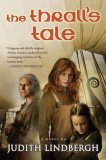
The Thrall's Tale, writer and Norse expert Judith Lindbergh draws on the true story of the Viking colony in Greenland to weave a startlingly original tale of discovery, deception, faith, and redemption. Lindbergh grounds her story in the epic sagas in which the Norse chronicled their heritage, lineage, conquests, feuds, and family ties. From archaeological finds in Greenland and elsewhere in the Viking world she conjures up the intimate feel and texture of daily life. Her characters, some inspired by figures in the sagas, some purely her own invention, come alive as rich, complex figures. Fusing historic details and imaginative creation, Lindbergh has fashioned a beguiling, vividly accurate historical novel.
Three intertwined women share the narration—Katla, a beautiful thrall (the Nordic term for slave), who was born into slavery when Vikings seized her Irish mother; Thorbjorg, a seeress steeped in the pagan Norse religion; and Bibrau, the strange silent child Katla bears after she is brutally raped and disfigured by her master’s son, Torvard Einarsson. Together these women recount the hardship and wonder of the first years of the Norse colony and the great change that comes to the settlers after Leif, son of Eirik the Red, brings Christianity to Greenland. For Katla, who has long whispered her mother’s Christian blessings in secret, the Christian era means freedom to live, to worship, and finally to love. But the dawning of the new faith has very different consequences for Thorbjorg and Bibrau. Hated by her mother as the living embodiment of her defilement, Bibrau comes of age as Thorbjorg’s pagan apprentice and foster child. But in the end, Bibrau’s fascination with the dark side of Norse belief leads her to a fate that neither pagan nor Christian could foresee or comprehend.
With
The Thrall's Tale, Judith Lindbergh has achieved something very special—a historical novel infused with both the wonder of legend and the grit of daily life in a bygone age. Every detail in the book, from the relations between Norse masters and slaves to the clothing they wear, from their feasts to their prayers, is based on scrupulous historical research. Every character is drawn with passion, complexity, and imagination. As novelist Jonis Agee writes, “Lindbergh inhabits her characters with rare compassion and honesty, exploring their cruelty, courage, and capacity to love.” Haunting and original,
The Thrall's Tale raises issues of faith, love, power, betrayal, and forgiveness that are strangely resonant in our own turbulent time.
DISCUSSION QUESTIONS
- Lindbergh has come up with an extraordinarily original style in which to tell her story—an English that sounds archaic, almost Norse, and yet is perfectly accessible to the contemporary reader. Discuss the ways that she has accomplished this stylistic feat, paying attention to diction, the rhythm of her prose, and old-fashioned expressions.
- Katla, the thrall of the title, is an extremely complex character—a strong woman who has been savagely damaged. She ends up being both angry and proud, a loving Christian who nonetheless hates her own daughter. Discuss the various strands of Katla’s character and your reactions to them.
- What do you make of the strange, haunting figure of Bibrau? To what extent is she the embodiment of pagan evil; to what extent is she a victim, of her birth, her time, her own disturbed psyche?
📖
Get the full reading guide
Join BookBrowse free to unlock all 11 discussion questions, author background, themes, and more for The Thrall's Tale.
Join free — it takes 30 seconds
Already a member? Log in →
- How does the author develop themes of identity and belonging throughout the narrative?
- What role does the setting play in shaping the characters' decisions and relationships?
- Discuss how the ending reframes the events of the story. Were you surprised?
Unless otherwise stated, this discussion guide is reprinted with the permission of Plume.
Any page references refer to a USA edition of the book, usually the trade paperback version, and may vary in other editions.

 Book Reviewed by: