
-
Your next favorite book
is waiting.
Summary | Excerpt | Reading Guide | Reviews | Beyond the Book | Read-Alikes | Genres & Themes | Author Bio
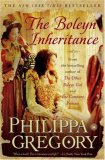
 Book Reviewed by:
For supplemental discussion material see our Beyond the Book article, and our BookBrowse Review of The Boleyn Inheritance.
Please be aware that this discussion guide will contain spoilers!
Background on The Boleyn Inheritance by Philippa Gregory
You don't have to be a feminist to object to one modern historian's
description of Katherine Howard as a 'stupid slut', but if you are, it makes it
more annoying. I am both a feminist and an historian, and I object very much.
Indeed both she and her immediate predecessor, Anne of Cleves, suffer the worst
from pejorative verdicts of history. Many historians have accepted without
question King Henry's view of his wives: the one as sexually repellent and the
other as wanton. It was obvious to me, when I started the research for this
novel that there would be more to these young women than the verdict of the man
who turned against them. No-one of any sense would take a resentful husband's
word as the only truth. Actually, no historian of any sense would take Henry
VIII's word on almost anything.
In search of the reality behind the condemnation of these two women I embarked
on my usual process of extensive reading (see booklist below) and the intense
process of thinking and imagining the every-day lives of these two young women,
often starting with the question of how it would seem in the here-and-now to
them.
The first thing that struck me was their intimacy. Katherine was one of Anne's
ladies from almost her first moment in England. Katherine was her daily
companion, advisor, and friend. Katherine was present when the King first met
Anne of Cleves, and we have reports from other courtiers that suggest that King
Henry was attracted at once to the maid in waiting and not the bride.
Anne would have known that Henry's two previous wives had met him in the rooms
of the Queen and it can only have added to her sense of unease. But we have no
record of her ever complaining of the presence of Katherine Howard (unlike both
Catherine of Aragon who quietly made it clear that she knew what Anne Boleyn was
doing, and Anne Boleyn who threw an enormous scene on catching Henry with Jane
Seymour on his knee).
Anne of Cleves was never in a strong-enough position to protest and in any case,
she was quickly removed from court.
The historical record is clear that a secret inquiry gathered evidence from her
ladies, indeed probably invented evidence (just as occurs in the novel); and it
seems that there were a number of strategies in place to rid the King of the
wife he did not like. Accusations of witchcraft and causing impotence were
certainly considered and Henry was so determined to be rid of her that he
allowed his doctor to supply medical evidence of his own sexual failures.
We cannot know why Henry so violently disliked Anne of Cleves, but we know that
from that first meeting in Rochford (when he did indeed approach her in disguise
and plant an uninvited kiss) that he complained that he did not like her.
Working as a novelist, rather than an historian, and imagining this scene and
Henry's behaviour, it seems to me plausible that a vain narcissistic man like
Henry might be shocked to his very core to be rejected by his chosen bride - a
girl that he had selected from a large pool of candidates and generously
invited. I suggest in the novel that her visible and instinctive shock at the
.sudden approach of a plainly-dressed man, old enough to be her father, was such
a blow to Henry's vanity that he could not like her, that he could not assuage
his distress except by saying that he did not like her, except by describing in
the most offensive terms that she was unattractive: with slack breasts and
belly, and body odour.
This is so unlikely that one has to wonder at the historians who have accepted
Henry's account for so many centuries. No courtier, no foreign ambassador would
have suggested a bride for Henry who was ugly and smelly. It would be a certain
route to disgrace or worse. Nobody ever suggested that Anne of Cleeves was
anything but attractive and indeed a number of observers praised her looks and
her charm. Only one person went on record (Lady Browne) saying that she did not
think the young Duchess would suit the King; but she did not say why. Certainly
the Holbein portrait shows a pretty girl, and historians have put themselves
into tangles for generations trying to explain why the pretty portrait was not
like the original - though Henry himself never complained to his official
painter. Finally, everyone agreed that once the divorce was made final that Anne
of Cleeves was a pretty woman and she created a great stir when she returned to
court for Christmas, charming everyone.
The evidence seems to me to point to the obvious conclusion that - rather like
the fable of the emperor's new clothes - that nobody dared to disagree with the
King and when he declared that she was so ugly that he was made impotent, they
all fell-over themselves to agree. Thus Henry could seek an annulment, thus he
could go on to marry a woman he preferred, and the court and he could applaud
the decision. Anne of Cleeves was (as the modern tabloid press would say) "monstered"
- blamed for everything that went wrong, and the blame was laid at the door of
her physical appearance.
Katherine Howard's story has come down to us only through the filter of the
criminal trials for her treason. Thus we know almost nothing of her early life
except some very young sexual activity with her music teacher - which I suggest
in the novel should perhaps be seen more as sexual abuse by the older man than
evidence of her excessive sexual appetites. The belief that Katherine Howard was
excessively sexually active is based on the evidence that she was betrothed and
sexually active with one young man, and then fell in love with another young man
after her arranged marriage to a man old enough to be her father. This was very
shocking to the Victorian historians but I think to us, in more sexually active
times, one would not call a young woman a 'slut' for having two boyfriends.
Katherine's story is that of an ordinary rather badly-educated girl who was put
into an extraordinary position with no guidance and a great deal of difficulties
and temptations.
The evidence for her extravagance and folly is in the historical record but the
mysterious part of her story is that played by Jane Boleyn, Lady Rochford.
No good biography is currently available about this extraordinary woman and so
the research I have done on her has all been in the footnotes and as asides in
the other great stories. She did indeed give evidence at the trial of her
husband and sister in law and sent them to their deaths. She may have done this
to save her own skin or her own wealth - as I suggest. She did ndeed give
evidence against Anne of Cleves and such evidence was almost certainly invented
- the young Queen simply did not have the command of the English language which
the women report. Finally she was extraordinarily active in arranging for the
meetings of Thomas Culpepper and Katherine Howard, and then she gave evidence
against them that she knew would lead to their deaths.
Some historians have believed that all this amounts to psychosis and that her
'madness' before the scaffold was genuine. It seemed to me that much of her
behaviour could be explained by the influence of the many complicated
conspiracies of the Tudor court as well as a voyeuristic and perverse sexuality.
Her story is perhaps one of the most extraordinary ones that have come to me
while working on these Tudor novels. I suspect that she was hoping for escape up
to the last minute and that her 'madness' which seems to have come on as she
realised that Katherine Howard would be found guilty of treason, was feigned. On
the scaffold she made a long speech saying the only thing she had ever done
wrong was the evidence she had given against Anne Boleyn and George.
The Howards suffered an eclipse of popularity with the King but survived as a
family to attain prominence when Anne's daughter Elizabeth came to throne. A
Howard descendant recently wrote in the readers' group that he felt I don't
'really like' the Howards and I apologise for giving that impression! The truth
is that I don't think any historian of this period could overlook the astounding
behaviour of this extraordinary family. The Tudor attraction to the Howard
women, and the Howards' determination to exploit this is one of the background
stories to the Tudor reigns.
I wrote this book in three voices in an attempt to bring to life these three
very contrasting young women in their attempts to survive and profit in these
dangerous times. It is currently my favourite book - not just because it is the
newest! but because I find it very vivid, and filled with life. I hope it will
be one of your favourites too.
Philippa Gregory
Yorkshire,
August 2006
Reading Group Guide
The Boleyn Inheritance
Philippa Gregory
Introduction
We are players in this game, but we do not choose our own moves. The men will play us for their own desires. All we can do is try to survive whatever happens next...
In Tudor England, three women are determined to escape their circumstances and start anew in the court of King Henry VIII.
There is Jane Boleyn, who longs once again for the world of courtiers and royal intrigue even though the last scandal in which she became entangled resulted in the deaths of her husband and her sister-in-law, Queen Anne. There is fourteen-year-old Katherine Howard, who has her cousin Anne Boleyn's beauty and precociousness. When she catches the king's eye she sets in motion a dreadful political plot she is too young to understand. And there is Anne of Cleves, a duchess from a far-away country who cannot even speak the language in her new homeland. Desperate to flee her abusive mother and brother, she is willing to marry Henry and sit on England's throne under the shadow of its last three queens.
A vengeful and unpredictable king, Henry descends deeper and deeper into madness. The peril runs deep, especially for these three women, recalling the terrified days leading up to the death of Anne Boleyn five years earlier. To be a favorite of the king comes at a risk. Will one of these three women inherit the fate of the former Queen and pay with her life?
Questions for Discussion
Join BookBrowse free to unlock all 15 discussion questions, author background, themes, and more for The Boleyn Inheritance.
Join free — it takes 30 secondsAlready a member? Log in →
Unless otherwise stated, this discussion guide is reprinted with the permission of Touchstone. Any page references refer to a USA edition of the book, usually the trade paperback version, and may vary in other editions.



Beware the man of one book
Click Here to find out who said this, as well as discovering other famous literary quotes!

Can you name the title?
Test your book knowledge with our daily trivia challenge!
Your guide toexceptional books
BookBrowse seeks out and recommends the best in contemporary fiction and nonfiction—books that not only engage and entertain but also deepen our understanding of ourselves and the world around us.
