Book Club Discussion Questions
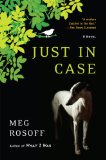
For supplemental discussion material see our Beyond the Book article, and our BookBrowse Review of Just In Case.
Please be aware that this discussion guide will contain spoilers!
Introduction
David Case is a fifteen-year-old boy on the verge of adulthood—and on the verge
of a nervous breakdown. After his younger brother nearly falls from an open
window, David becomes acutely aware of his own mortality and the haphazard
nature of fate.
Certain that fate has something truly horrible in store for him, David goes
about changing his identity in an attempt to trick fate, and avoid the suffering
and unhappiness that is his destiny. He changes his name to Justin, buys an
outlandish new wardrobe, and takes up a new hobby in his attempt to escape the
doom or fortune of David Case. What David doesn't realize, however, is that
Justin Case comes with his own set of predicaments and freak happenings.
Just in Case is a coming-of-age novel for teenagers and adults alike, for
anyone concerned with the path of his or her life and its ramifications. It
forces us to think about the consequences of our actions, the connection between
seemingly random events, and the effects of friendship, love, and tragedy.
Discussion Questions
- Just in Case has been called a work of magical realism—one in
which the fantastic (thoughts, feelings, dreams) and the pragmatic (action
and speech) are combined to create a more complete and authentic sense of
reality. Toddler Charlie "speaks" eloquently to his older brother; Peter and
Dorothea and Anne can "see" Boy, Justin's imaginary dog; and Fate is an
omniscient narrator and character of the novel. Discuss whether these
elements provide a more authentic sense of reality than a hardboiled
depiction of Justin's psychological crisis might have done.
- Fatalism is the belief that all events are predetermined by the events
that happened before them, and there is no possible alteration of the events
in one's life. This book not only deals with the subject of fate, but also
makes Fate a sentient being who narrates Justin's story and interacts with
Justin at various points in the plot. What do you believe Rosoff is saying
to us about the fatalist viewpoint?
- Charlie nearly falls out of an open window, and instead of reflecting on
almost losing Charlie, David worries about how his own life could have
changed if he hadn't caught his brother and stopped him from falling.
Discuss how David's narrow perception is age-appropriate, and how we see
these qualities alter and change as the novel progresses. How does Agnes
provide an element of irony to David/Justin's solipsism?
📖
Get the full reading guide
Join BookBrowse free to unlock all 10 discussion questions, author background, themes, and more for Just In Case.
Join free — it takes 30 seconds
Already a member? Log in →
- How does the author develop themes of identity and belonging throughout the narrative?
- What role does the setting play in shaping the characters' decisions and relationships?
- Discuss how the ending reframes the events of the story. Were you surprised?
Unless otherwise stated, this discussion guide is reprinted with the permission of Plume.
Any page references refer to a USA edition of the book, usually the trade paperback version, and may vary in other editions.

 Book Reviewed by: