Book Club Discussion Questions
Please be aware that this discussion guide will contain spoilers!
ABOUT THIS GUIDE
The introduction, discussion questions, and suggested reading list that
follow are intended to enhance your group's reading and discussion of Patrick
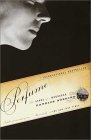
Süskind's
Perfume. We hope they will provide you with a variety of
approaches to this vividly imagined historical novel. Set in eighteenth-century
France,
Perfume explores the evolution of a remorseless killer during an
era of intense contradictions, an age in which poverty, filth, and superstition
coexisted uneasily with the Enlightenment's ideals of progress, liberty, and
reason.
ABOUT THIS BOOK
The novel's protagonist, Jean-Baptiste Grenouille, begins and ends his life
at the Cimetière des Innocents. But in the meantime, a most unusual—and
unbelievable—life unfolds. Born with no odor of his own, Grenouille soon
develops a sense of smell capable of almost supernatural olfactory distinctions.
He wanders the reeking streets of Paris, absorbing thousands of scents, until
one day he is irresistibly drawn to an odor of "pure beauty," a scent that he
feels will provide the principle for ordering all the others. The source is an
adolescent girl, and Grenouille coldly kills her in order to possess her smell.
After getting away with the murder, he goes to work for the perfumer Baldini and
quickly reveals a genius for creating fragrances of unsurpassed subtlety and
allure. He makes his master rich, but his contempt for mankind drives him into
the wilderness, away from the smell of humans, and he spends seven years in a
cave beneath France's loneliest mountain. When he emerges, he travels to Grasse,
the center of the perfume industry, where he learns how to distill the essential
scents of objects, animals and, ultimately, of humans. Here he creates for
himself an arsenal of odors which he manipulates in order to make himself
unnoticeable, repellent, or pitiable. But he is driven to an even greater goal
and begins a ghastly series of murders, robbing the most beautiful virgin girls
in the town of their scents to concoct a perfume capable of making everyone,
even the father of one of his victims, love and revere the wearer. Whether such
powers will save him from his own self-destructive emotions is not revealed
until the novel's harrowing final pages. A story in which the trajectories of
genius, obsession, and cruelty come together in one extraordinary character,
Perfume offers a fascinating look at the seething underside of the Age of
Reason.
Reader's Guide
- Jean-Baptiste Grenouille is born in a food market that had been erected
above the Cimetiere des Innocents, the "most putrid spot in the whole kingdom"
[p. 4]. He barely escapes death at his birth; his mother would have let him die
among the fish guts as she had her four other children. But Grenouille
miraculously survives. How would you relate the circumstances of his birth to
the life he grows up to live?
- When the wet nurse refuses to keep Grenouille because he has no smell and
therefore must be a "child of the devil" [p. 11], Father Terrier takes him in.
But he is exasperated. He has tried to combat "the superstitious notions of the
simple folk: witches and fortune-telling cards, the wearing of amulets, the evil
eye, exorcisms, hocus-pocus at full moon, and all the other acts they performed"
[p. 14]. In what ways can Perfume be read as a critique of the eighteenth
century's conception of itself as the Age of Reason? Where else in the novel do
you find rationality being overcome by baser human instincts?
- Throughout the novel, Grenouille is likened to a tick. Why do you think
Süskind chose this analogy? In what ways does Grenouille behave like a tick?
What does this analogy reveal about his character that a more straightforward
description would not?
📖
Get the full reading guide
Join BookBrowse free to unlock all 16 discussion questions, author background, themes, and more for Perfume.
Join free — it takes 30 seconds
Already a member? Log in →
- How does the author develop themes of identity and belonging throughout the narrative?
- What role does the setting play in shaping the characters' decisions and relationships?
- Discuss how the ending reframes the events of the story. Were you surprised?
Unless otherwise stated, this discussion guide is reprinted with the permission of Vintage.
Any page references refer to a USA edition of the book, usually the trade paperback version, and may vary in other editions.