Book Club Discussion Questions
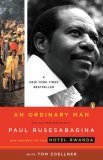
For supplemental discussion material see our Beyond the Book article, The Republic of Rwanda and our BookBrowse Review of An Ordinary Man.
Please be aware that this discussion guide will contain spoilers!
About This Book
Paul Rusesabagina believes he survived history's fastest-moving genocide
simply because he acted as if things were normal. As a hotel manger during
Rwanda's murderous spring of 1994, Rusesabagina navigated a world of mass murder
with the internal compass he used to steer through office politics.
When a crazed army officer barged into the Hotel Des Milles Collines,
Rusesabagina treated him much as he would any angry hotel guest. He offered the
man a drink, and then deferred to every statement his guest made. And finally,
when the man had calmed down, Rusesabagina suggested a solution that might make
all parties happy. Rusesabagina's now legendary work of protecting himself and
the hotel's guests was, in a way, just damage control on a sublime level. He bet
his own life on his belief that, even in the midst of a genocide, most people
are only a conversation away from their normal selves.
This may seem a very strange belief for a contemporary Rwandan to hold.
Before 1994, the exceptionally courteous population of this tiny, beautiful
African country seemed anything but dangerous, but behind their smiles, Rwandans
nursed deep political and historical grievances. Angry talk shows on the radio
stoked long-held resentments against the Tutsi minority. On April 4, 1994, when
the Rwandan president's plane was shot down, chaos erupted. Neighbor began
attacking neighbor, and a killing spree began that would eventually claim the
lives of at least half a million people in the space of just a few months.
But Rusesabagina clung to his confidence in the power of language. Even when
the streets were littered with corpses, he patiently continued talking until
each killer in front of him turned into just a man, open to making a deal.
An Ordinary Man makes clear that the most famous hero of the Rwandan genocide
survived above all because of his strength of character and his capitalist wits. Rusesabagina had originally trained to be a pastor, but as an industrious young
man, he decided there was little opportunity in the clergy and instead found a
career in a multinational corporation. This author's lifesaving tools were to be
found in his leather-bound book of professional contacts.
Toward the end of
An Ordinary Man, Rusesabagina resigns himself to the fact
that he cannot fully answer his children's questions about what the history of
the genocide means. "The only thing I am able to do is keep talking to them," he
writes. It's a neat distillation of Rusesabagina's philosophy: evil remains in
the world, but an ongoing discussion will keep us grounded.
Discussion Questions
- Rusesabagina writes that "a false view of history is a toxin in the
bloodstream." How have you experienced this in your own life? Is there such a
thing as a completely true view of history?
- The culture of hate enabled Hutu murderers to think of themselves as
victims because "the person whose throat you do not cut will be the one who cuts
yours." Where do you think that sentiment arises from? How do you think it can
be counteracted?
- Rusesabagina describes how he would listen to absurdly racist radio
debates. Though he loathed the opinions expressed, he found the shows
fascinating. Why do you think people are drawn to media sources that they
disapprove of?
📖
Get the full reading guide
Join BookBrowse free to unlock all 9 discussion questions, author background, themes, and more for An Ordinary Man.
Join free — it takes 30 seconds
Already a member? Log in →
- How does the author develop themes of identity and belonging throughout the narrative?
- What role does the setting play in shaping the characters' decisions and relationships?
- Discuss how the ending reframes the events of the story. Were you surprised?
Unless otherwise stated, this discussion guide is reprinted with the permission of Penguin.
Any page references refer to a USA edition of the book, usually the trade paperback version, and may vary in other editions.

 Book Reviewed by: