return to home  
Join   |  Gift   |  Member Login   |  Library Login
BookBrowse Mobile
Follow Us: 
   Reading Guides

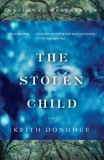
The Stolen Child by Keith Donohue: Questions, plus a reading group guide, with links to reviews, excerpt, author interview and author biography at BookBrowse.com.

The Stolen Child

The Stolen Child
A Novel
by Keith Donohue
Hardcover: May 2006,
336 pages.
Paperback: May 2007,
384 pages.

Publication information
Author Information
Critics' Opinion:   
Readers' Rating:  
About BookBrowse Rankings
Share: 
Buy This Book

Reading Guide Questions

 Printer Friendly Guide

Please be aware that this discussion guide may contain spoilers!

Discussion Questions

  1. The very first words out of Henry Day's mouth are "Don't call me a fairy," and then he takes the reader on a quasi-scientific account of the differences between fairies, hobgoblins, and other "sublunary spirits." Yet Aniday and the rest of the changelings refer to themselves as faeries throughout the book. Why does Henry insist on not being called a fairy? In what other ways does Henry attempt to distance himself from his prior life?
     
  2. Twins and other twosomes figure predominantly in the book: Henry and Aniday, Tess and Speck, Big Oscar and Little Oscar, Edward and Gustav, Mary and Elizabeth. Other characters form pairs: Luchog and Smaolach, Kivi and Blomma, Onions and Beka, George Knoll and Jimmy Cummings. What is the significance of the doubles? In what ways can Henry and Aniday be read as two halves of one being? How does the author, beyond using two alternating narrators, play with the theme of doubles?
     
  3. Rather than each chapter echoing its counterpart, the two stories run at different speeds until the end of the book. How does the author manage time in the novel? Where in the narrative does he relate the same incident from different perspectives and in different sequences?
     
  4. When Henry and his friends attempt to synchronize their watches before looking for little Oscar Love, not one of them has the same time as the others. At other points in the story, Henry or Aniday forget the time of day or, in some cases, what year it is. What does that say about their place in time?
     
  5. In chapter 35, Ruth Day says "I knew all along, Henry." Similarly, Henry dreams of Tess changing her form and saying that she, too, knows the truth. What does Henry think they know about him?
     
  6. A critical event in the novel is Bill Day's suicide and Henry's muted reaction. What did Bill come to understand about his son? Why do you think Henry's mother, Ruth Day, didn't react in a similar manner?
     
  7. In the poem "The Stolen Child" by W.B. Yeats, the faeries attempt to entice the child away "for the world's more full of weeping than you can understand." In what ways could the fairyland in Donohue's novel be considered better than the real world? In what ways could it be considered worse?
     
  8. The changeling legends, however, were cautionary tales meant to illustrate the dangers of creatures that many people once believed in. And the changeling legend, as McInnes points out in the novel, were also horrifying explanations for "failure to thrive," physical deformities, or mental illness in children. Are Henry's and Aniday's stories cautionary tales? What do you make of the changeling who took the place of young Gustav Ungerland and never said another word?
     
  9. What is the significance of music in Henry Day's transformation? Does the final concert offer Henry a chance at redemption?
     
  10. What is the significance of books in Aniday's transformation? As Speck teaches Aniday to read and write, does his understanding of the world change? Is his memoir a chance at redemption?
     
  11. Aniday's predecessor is referred to as Chopin, but we never really know much about Gustav Ungerland as a changeling. Similarly, once Igel and the others depart the world, they are rarely discussed. Why do the faeries avoid mentioning those that have departed?
     
  12. Why does Speck leave? What is the significance of her map on the ceiling? Do you think Aniday finds Speck?
     
  13. The epigraph from "Nostos" by Louise Gluck states: "We see the world once in childhood/The rest is memory." Why do you think the author chose it? How does it relate to the novel?
     
  14. Is this book a fairy tale for adults? If so, what is the moral of the story? Who, in the end, is the stolen child?
     

The Stolen Child by William Butler Yeats

Where dips the rocky highland
Of Sleuth Wood in the lake,
There lies a leafy island
Where flapping herons wake
The drowsy water-rats;
There we've hid our faery vats,
Full of berries
And of reddest stolen cherries.
Come away, O human child!
To the waters and the wild
With a faery, hand in hand,
For the world's more full of weeping than you can understand.

Where the wave of moonlight glosses
The dim grey sands with light,
Far off by furthest Rosses
We foot it all the night,
Weaving olden dances,
Mingling hands and mingling glances
Till the moon has taken flight;
To and fro we leap
And chase the frothy bubbles,
While the world is full of troubles
And is anxious in its sleep.

Come away, O human child!
To the waters and the wild
With a faery, hand in hand,
For the world's more full of weeping than you can understand.

Where the wandering water gushes
From the hills above Glen-Car,.
In pools among the rushes
That scarce could bathe a star,
We seek for slumbering trout
And whispering in their ears
Give them unquiet dreams;
Leaning softly out
From ferns that drop their tears
Over the young streams.

Come away, O human child!
To to waters and the wild
With a faery, hand in hand,
For the world's more full of weeping than you can understand.

Away with us he's going,
The solemn-eyed:
He'll hear no more the lowing
Of the calves on the warm hillside
Or the kettle on the hob
Sing peace into his breast,
Or see the brown mice bob
Round and round the oatmeal-chest.

For he comes, the human child,
To the waters and the wild
With a faery, hand in hand,
From a world more full of weeping than he can understand.


Unless otherwise stated, this discussion guide is reprinted with the permission of Anchor Books. Any page references refer to a USA edition of the book, usually the trade paperback version, and may vary in other editions.

Become a Member
Click Here
Editor's Choice
  •  Jun 19 
  •  Jun 17 
  •  Jun 15 
If You Find Me
Emily Murdoch

If You Find Me Jacket

There are some things you can't leave behind…
Americanah
Chimamanda Ngozi Adichie

Americanah Jacket

Fearless, gripping, at once darkly funny and tender, spanning three continents and numerous lives, Americanah is a richly told story set in today's globalized world.
We Are All Completely Beside Ourselves
Karen Joy Fowler

We Are All Completely Beside Ourselves Jacket

The story of an American family, middle class in middle America, ordinary in every way but one. But that exception is the beating heart of this extraordinary novel.
The Expats by Chris Pavone
   Most Recent Blog Entries
Top Ten Guidelines For How to Behave in a Book Club
Movies Based on Books: Summer 2013 (May - August)
Jewish Themed Young Adult Books, Not About The Holocaust
rss  RSS   rss  subscribe
Recent Reader Reviews
In the Shadow of the Banyan by Vaddey Ratner
First time novelist Vaddey Ratner captured my heart and senses in this novel based on her childhood in Cambodia. Her story transcends any news story... read more
In the Shadow of the Banyan by Vaddey Ratner
From the first page, I was drawn in by the lyrical writing of the author and mesmerized as the narrator, eight year old Raami, remembered the years... read more
TransAtlantic by Colum McCann
Trite but true, all good things must come to an end. I so wanted to keep reading the wonderful prose, the settings that let one think they are part... read more
RSS RSS feed More...  
Most Viewed This Week
1. Coraline
Neil Gaiman
2. Memoirs of a Geisha
Arthur Golden
3. The Glass Castle
Jeannette Walls
4. The Immortal Life of Henrietta Lacks
Rebecca Skloot
5. Behind the Beautiful Forevers
Katherine Boo
More...
Book Club Recommendations
Where'd You Go, Bernadette
by Maria Semple
Paperback (Apr/13)
The Unlikely Pilgrimage of Harold Fry
by Rachel Joyce
Paperback (Mar/13)
The Unchangeable Spots of Leopards
by Kristopher Jansma
Hardback (Mar/13)
How to Get Filthy Rich in Rising Asia
by Mohsin Hamid
Hardback (Mar/13)
More...
First Impressions
Members read and review books often months before they're published. See what they think in First Impressions!
Her Last Breath
by Linda Castillo
4.5 Stars            (Jun/13)
Crime of Privilege
by Walter Walker
Four Stars            (Jun/13)
Children of the Jacaranda Tree
by Sahar Delijani
4.5 Stars            (Jun/13)
More...
  Latest BookBrowse News
Amazon cuts off 5200 affiliates in Minnesota (Jun 19 2013)
With Minnesota's online sales tax law due to take effect July 1, Amazon has played a familiar card by cutting ties with 5,200 members of its Associates... Full Story
rss RSS feed More...
 
BookBrowse Poll
Q: We've been discussing guidelines for book club etiquette. Which of these do you think are important?
Read the book
Listen thoughtfully to all members
Take notes while you're reading
Stay on topic when you're speaking
Enjoy yourself
Don’t get drunk
Bring chocolate, everyone likes chocolate!
Eat before you come so you don’t devour the snacks
Compliment others sincerely
Have a good sense of humor
Don’t fret the small stuff
Search: Title or Author
Free Newsletters

Online Book Club
More about
The Execution of Noa P. Singleton
Join the discussion!


Win This Book!
You Only Get Letters From Jail


one of the finest and truest collections of 'American' short stories I have ever read

Enter To Win Now!

wordplay
Solve this clue:
"T M T C, T M T Stay T S"

and be entered
to win....
frame top
New Author
Interviews
Lawrence Osborne
Carol Rifka Brunt
Kent Wascom
Jennifer McVeigh
frame bottom
HOME Book Submissions | Advertising | Library Subscriptions | Reviewing for BookBrowse | Contact Us