return to home  
Join   |  Gift   |  Member Login   |  Library Login
BookBrowse Mobile
Follow Us: 
   Reading Guides

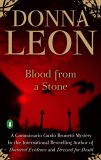
Blood From A Stone by Donna Leon: Questions, plus a reading group guide, with links to reviews, excerpt, author biography at BookBrowse.com.

Blood From A Stone

Blood From A Stone
A Commissario Guido Brunetti Mystery
by Donna Leon
Hardcover: Apr 2005,
256 pages.
Paperback: Apr 2006,
352 pages.

Publication information
Author Information
Critics' Opinion:   
Readers' Rating:    Not Yet Rated
About BookBrowse Rankings
Share: 
Buy This Book

Reading Guide Questions

 Printer Friendly Guide

Please be aware that this discussion guide may contain spoilers!

  1. What is the picture of Venice that emerges in the book? How is the story driven by the history and geography of the city? Did you feel catapulted into the life of the canals, even into the map of the frontispiece? How does Brunetti's own appreciation of his city seduce the reader? See page 77: "Palazzi swept by on both sides, the drunken promiscuity of their styles competing for his attention."

     
  2. " 'Who'd want to kill a vu cumpra?' Rizzardi asked" (p. 11). What are the attitudes of the citizens of Venice toward these street people? Are they tolerated by official insouciance, a general shrug about illegal immigrants? Brunetti had assumed they functioned under the arm of organized crime. Is there evidence of that?

     
  3. Even though we never know the name or even the proven nationality of the murder victim, how are we led along with Brunetti to a gradual sympathy with him and other vu cumprà trying to survive in Venice? Does the description of the bag sellers as beautiful, tall, straight, even happy people set up the victim as sacrificial? Do these Africans represent some simpler, golden age as compared to the sophisticated corruption of the Italians?

     
  4. How does Brunetti's personality help him in his unorthodox investigations? Does he ever have second thoughts about using his past and present network of friends? When? Does his character also limit his career, especially considering his "refusal to curry favour with the men in power" (p. 51)?

     
  5. "Was this the historian's plight, Brunetti wondered, never to know what was true but only what made sense? Or the policeman's?" (p. 59). What is he worried about here?

     
  6. Are there times Brunetti crosses lines of ethics, even legality? When? Does this behavior compromise him? Or is he just a functioning pragmatist? Does there seem to be any real way to work within the system without sabotaging it at times? Blackmail? Evidence tampering? Give examples. Are there times, aside from his interactions with Sandrini and the Albanian prostitute, when Brunetti is "strangely cheered by the consideration of his own perfidy" (p. 62)?

     
  7. How does Paola serve as a bridge between the old Venice and the new one? Would her moral distinctions, such as her outrage at Chiara, be taken as seriously by her family and the reader if she had no aristocratic cushion? Is she a limousine liberal or truly a person of conscience? What does she provide for Brunetti besides access to academia? Devil's advocacy?

     
  8. How does Don Alvise's character serve as a moral touchstone (see p. 69–75)? Are there other such touchstones for Brunetti? Does he have dependable allies within his department?

     
  9. Brunetti, a remarkably intelligent, well-read man, is technologically inept. What does his resistance to modernity suggest about his other talents and values? He harkens back to the Iliad and to Roman historians. His son gives him Pliny for Christmas. What does Brunetti glean from his readings? And how does he recognize his need for technology?

     
  10. What is the significance of the carved (truncated) head? How does Brunetti's academic research lead him further into the mystery? How do art, mythology, and fetishism converge in this artifact? What happens to it?

     
  11. Black Africans are not the only group subjected to prejudice and stereotype in the course of the novel. Who else comes under fire? How are Americans portrayed? Who weighs in on the subject and why? What are Brunetti's own susceptibilities to prejudice? He can assume that his daughter did not learn dismissal of Africans at home, that it must have been "something, like head lice, that Chiara picked up in school" (p. 30). But to what biases are he and many other Venetians vulnerable (see pp. 30, 33, and 48)?

     
  12. At times does the police story assume a fun-house atmosphere? Sometimes katzenjammer funny (the rescue in a shallow canal) and other times insane (the confiscation of thousands of counterfeit bags that just mushroom again the next day)? What other examples of mayhem do you see in the police? " 'It's all crazy, the whole thing,' said Rubini" (p. 52). Is it this particular department, made up of 80 percent pro-government and anti-immigrant officers, that causes havoc and engages in collusion? Donna Leon has addressed the inefficiency of the police and emergency services in Venice in her other books. Do you think she is commenting on a failing of the Venetian government or the impossibility of imposing a principled order anywhere?

     
  13. What do you think the title implies? How do stones recur as a motif in the book? Look again at Don Alvise's renunciation of his vocation on page 70.

     
  14. What is Brunetti left with as a philosophy at the end? In this world of venality and official complicity, is he to take arms against a sea of troubles in the only ways he knows—hard work, family, friends, and a certain generosity of spirit? His father-in-law the Count holds him in high regard for his dedication to work. In the face of Vianello's bleak vision of global warming, Brunetti asks if there is really nothing they could do. Vianello replies, "Live life and try to do our jobs, I think" (p. 81). Would you agree that good food, wine, and love are also essential to "living life and doing our jobs"?


Unless otherwise stated, this discussion guide is reprinted with the permission of Penguin. Any page references refer to a USA edition of the book, usually the trade paperback version, and may vary in other editions.

Become a Member
Click Here
Editor's Choice
  •  Jun 19 
  •  Jun 17 
  •  Jun 15 
If You Find Me
Emily Murdoch

If You Find Me Jacket

There are some things you can't leave behind…
Americanah
Chimamanda Ngozi Adichie

Americanah Jacket

Fearless, gripping, at once darkly funny and tender, spanning three continents and numerous lives, Americanah is a richly told story set in today's globalized world.
We Are All Completely Beside Ourselves
Karen Joy Fowler

We Are All Completely Beside Ourselves Jacket

The story of an American family, middle class in middle America, ordinary in every way but one. But that exception is the beating heart of this extraordinary novel.
The Expats by Chris Pavone
   Most Recent Blog Entries
Top Ten Guidelines For How to Behave in a Book Club
Movies Based on Books: Summer 2013 (May - August)
Jewish Themed Young Adult Books, Not About The Holocaust
rss  RSS   rss  subscribe
Recent Reader Reviews
In the Shadow of the Banyan by Vaddey Ratner
First time novelist Vaddey Ratner captured my heart and senses in this novel based on her childhood in Cambodia. Her story transcends any news story... read more
In the Shadow of the Banyan by Vaddey Ratner
From the first page, I was drawn in by the lyrical writing of the author and mesmerized as the narrator, eight year old Raami, remembered the years... read more
TransAtlantic by Colum McCann
Trite but true, all good things must come to an end. I so wanted to keep reading the wonderful prose, the settings that let one think they are part... read more
RSS RSS feed More...  
Most Viewed This Week
1. Coraline
Neil Gaiman
2. Memoirs of a Geisha
Arthur Golden
3. The Glass Castle
Jeannette Walls
4. The Immortal Life of Henrietta Lacks
Rebecca Skloot
5. Behind the Beautiful Forevers
Katherine Boo
More...
Book Club Recommendations
Where'd You Go, Bernadette
by Maria Semple
Paperback (Apr/13)
The Unlikely Pilgrimage of Harold Fry
by Rachel Joyce
Paperback (Mar/13)
The Unchangeable Spots of Leopards
by Kristopher Jansma
Hardback (Mar/13)
How to Get Filthy Rich in Rising Asia
by Mohsin Hamid
Hardback (Mar/13)
More...
First Impressions
Members read and review books often months before they're published. See what they think in First Impressions!
Crime of Privilege
by Walter Walker
Four Stars            (Jun/13)
Children of the Jacaranda Tree
by Sahar Delijani
4.5 Stars            (Jun/13)
Her Last Breath
by Linda Castillo
4.5 Stars            (Jun/13)
More...
  Latest BookBrowse News
Amazon cuts off 5200 affiliates in Minnesota (Jun 19 2013)
With Minnesota's online sales tax law due to take effect July 1, Amazon has played a familiar card by cutting ties with 5,200 members of its Associates... Full Story
rss RSS feed More...
 
BookBrowse Poll
Q: We've been discussing guidelines for book club etiquette. Which of these do you think are important?
Read the book
Listen thoughtfully to all members
Take notes while you're reading
Stay on topic when you're speaking
Enjoy yourself
Don’t get drunk
Bring chocolate, everyone likes chocolate!
Eat before you come so you don’t devour the snacks
Compliment others sincerely
Have a good sense of humor
Don’t fret the small stuff
Search: Title or Author
Free Newsletters

Online Book Club
More about
The Execution of Noa P. Singleton
Join the discussion!


Win This Book!
You Only Get Letters From Jail


one of the finest and truest collections of 'American' short stories I have ever read

Enter To Win Now!

wordplay
Solve this clue:
"T M T C, T M T Stay T S"

and be entered
to win....
frame top
New Author
Interviews
Lawrence Osborne
Carol Rifka Brunt
Kent Wascom
Jennifer McVeigh
frame bottom
HOME Book Submissions | Advertising | Library Subscriptions | Reviewing for BookBrowse | Contact Us