Reading Guide Questions

Please be aware that this discussion guide will contain spoilers!
Introduction
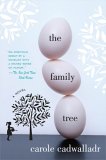
Rebecca Monroe would like to think we're all products of our own personal histories, i.e. what we've experienced. Her husband Alistair thinks we're all products of our family's history, a result of genetic traits passed down from generation to generation. It's an old argument, nurture vs. nature, and something that Alistair studies for a living as a behavioral geneticist. But for Rebecca, there's more at stake in the argument than a career or dissertation: Rebecca's family tree has one branch fewer than most. Her grandmother and grandfather were first cousins in a loveless but childbearing marriage. And her mother killed herself after years of suffering bipolar disorder and the banalities of suburban England circa 1980. Rebecca admits she has two strikes against her where nature's concerned, yet she needs to know: how much of her own personality is a result of her environment? How much of her self can she claim as uniquely her own?
Through scientific reasoning, flashbacks to her childhood, and the well-documented tale of her grandparents' courtship, Rebecca explores the origins of not only her own personality, but the personalities and behaviors of three generations of women. From her grandmother Alicia's illicit and ill-fated romance with a gentle, soft-spoken Jamaican, to her mother and aunt's bitter rivalry over domesticities and domestic partners, Rebecca traces the past and marks any moments where history repeats itself. She's compelled to determine if she is doomed to a predisposed, unhappy fate, or if there's a chance she can escape the outcomes deemed probable by genetic code.
Rebecca Monroe's struggle against both genetic predetermination and learned behavior marks her as an Everyman for anyone who's ever bucked under the weight of "becoming" one's mother or father. Party mystery, part romance, part scientific treatise, Cadwalladr's debut novel,
The Family Tree deftly intertwines multiple storylines while considering a singular question: What makes us "us?"
Discussion Questions
- At the start of The Family Tree we are introduced to Rebecca's early fascination with words and their definitions. This fascination, carried into her adulthood, is fundamental to the book's structure – sections and chapters often begin with definitions of words that relate to the particular section or chapter's content. Discuss the structure of the book and the role of the words Rebecca defines. How do they influence your interpretation of the text? Because she does not often give the entire definition of a word, what is significant about the parts of the definition she does reveal?
- Also essential to the book's structure is Rebecca's exploration of different methods of scientific reasoning, and how each can be applied to her own genetic history to determine probable outcomes for her life. Consider the impact of sections like "Theories of Relativity," "The Science of Happiness," "Occam's Razor," and "The Deductive Fallacy." How do they aid the progress of the plot? Discuss the ways in which they begin to reveal irreconcilable differences between Rebecca and her husband Alistair.
- At the end of the novel, Rebecca reveals the truth about her mother's relationship with Kenneth and her father's relationship with Suzanne. She says, "You can retrofit all you like, but the clues weren't there, I've checked. That's the problem with point-of-view narrative." In light of her theory about point-of-view narrative, discuss the "clues" scattered throughout the book about her relationship with Alistair. How early in the story can we see the relationship's demise? Did her explanation about opposites attracting ever seem valid? How much do we "see" as readers that Rebecca does not as the novel progresses?
- Consider Rebecca's relationship with her sister Tiffany, and compare the ways in which they deal with their complicated past (i.e. Rachel's participation in Alistair's study vs. Tiffany's "Family Affairs" column). Compare their relationship with that of Doreen and Suzanne, and then Alicia and Betty's. In what ways do rivalries repeat themselves? How does each generation's sister/sister relationship diverge from the one that preceded it? Is any one relationship healthier than the others?
- Motherhood, and the complicated relationship that exists between mother and daughter, is as central to the book as the arguments about genetic inheritance and learned behavior. Compare the relationships between Doreen and Alicia, Doreen and Cynthia (Doreen's mother-in-law), Doreen and Rebecca, Doreen and Tiffany, and Suzanne and Lucy. Where do these relationships mirror one another, and where do they diverge? What hopes do we have for Rebecca at the book's culmination, as she becomes a mother to a daughter herself?
- Discuss the dynamic that exists between members of the opposite gender in The Family Tree, and the issues of Marriage and Fatherhood. Consider the different father/husband archetypes as represented by James Monroe (Rebecca's father), Uncle Kenneth, the silent Herbert, and the reluctant Alistair, and how each man interacts with his respective wife and daughter(s), as well as women outside of his immediate family.
- Doreen is a dominant character in the novel, not only because of her role in Rebecca's life and Rebecca's preoccupation with her death, but because of her vivacious, volatile, and domineering personality. Consider her behavior throughout the book in light of her bipolar disorder, from her manic housekeeping to her postpartum depression to the final, frantic days of her life as she prepared for the wedding of Charles and Diana. Why is her character so compelling? What makes her a sympathetic character? What keeps us from sympathizing with her completely?
- Rebecca herself admits to problems and limitations with the point-of-view narrative. Consider the ways her narration creates suspense within the novel. Do we trust her implicitly as a narrator? What makes us trust her? (Or not?) Consider particularly the ways in which she relates to us Herbert, Alicia, and Cecil's story – the events of which she was not around to witness firsthand.
- Is Herbert a sympathetic character? Discuss his obsessive-compulsive behavior and his preoccupation with his cousin. In light of Doreen's diagnosis, what can we or do we infer about genetic inheritance? Is her mental illness a result of Herbert and Alicia's incestuous union (i.e. "something went wrong"), or an inherited trait (unmutated, "normal") like blue or brown eyes? Or is it, perhaps, an instance of learned behavior?
- Discuss the triangle between Herbert, Alicia, and Cecil, and Betty's role in bringing the relationship between Alicia and Cecil to a tragic close. Evaluate the ways in which Cadwalladr deals with the issues of racism and interracial romantic relationships within her book. How believable and satisfactory is Cecil's resurfacing at the end of the novel? What keeps it (or does not keep it) from being too tidy of an ending to his love affair with Alicia?
- Consider Rebecca's desire for and decision to have a baby in the face of Alistair's genetic evidence and opposition. Was Rebecca wise to have a child knowing the odds her offspring would inherit certain undesirable traits? What would you do in her place?
- Consider how each character of the book supports the argument for either Nature or Nurture. For example, when Damien is born, Granny Monroe protests the choice of his name by saying: "He'll turn into a gayboy if you're not careful," and by the end of the novel we're aware that Damien does, in fact, grow up to be a gay man. Is this merely the result of his "modern" name? By the end of the novel, which side of the argument has "won" – Nature or Nurture? Of which do you think Cadwalladr, the author, is a proponent? Why? What is her final "message" of the book?
Unless otherwise stated, this discussion guide is reprinted with the permission of Plume.
Any page references refer to a USA edition of the book, usually the trade paperback version, and may vary in other editions.