Book Club Discussion Questions
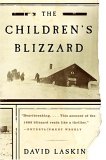
For supplemental discussion material see our Beyond the Book article, and our BookBrowse Review of The Children's Blizzard.
Please be aware that this discussion guide will contain spoilers!
Introduction
On the morning of January 12, 1888, a snow storm of unprecedented ferocity
and suddenness swept down on the American prairie. One moment the air was clear
and mild, the next a blinding wall of ice dust engulfed the landscape in an
instantaneous white-out. Thousands were caught out on the prairie without
protection. Children on their way home from one-room prairie schools, farmers
taking care of their livestock, families doing errands in towns -- all were
overtaken by this terrible storm. But the blizzard itself was just the beginning
of their peril. In the wake of the front that propelled the storm, some of the
coldest air ever recorded spread over the region. As darkness fell, temperatures
from Montana to Kansas plunged to double digits below zero. When the sun rose on
the glittering windless morning of January 13, hundreds lay frozen to death on
the open prairie -- many of them children.
This storm, which the pioneers called "the school children's blizzard," is
the subject of David Laskin's non-fiction book. The settlers of the prairie,
many of them recent immigrants from Scandinavia, Germany and Russian, had come
to Nebraska, Iowa and Dakota Territory hoping to make new lives for their
families. Instead they encountered plagues of grasshoppers, prairie fires,
drought, terrible loneliness -- and, on January 12, 1888, a sudden wall of ice
that forever changed their lives.
The Children's Blizzard unfolds this terrible event by tracing its
impact on six pioneer families and their children. Here too is the story of the
US Army Signal Corps officer who forecast the storm, his superior officer in
Washington, DC, who headed the fledging US Weather Service, and the tangled
bureaucracy that made it so difficult to spread word of the storm to the people
of the region. Laskin also explains the meteorology behind this event -- why it
was so intense and so sudden -- and gives a vivid picture of exactly what
happens to the human body when exposed with no food or shelter to prolonged
cold.
Blending history, meteorology, human interest, and vivid details about the
settlement of the prairie,
The Children's Blizzard is a work that brings
to life both an era of American history and a single unforgettable day.
Questions for discussion
- "The blizzard literally froze a single day in time," Laskin writes in the
Prologue. "It sent a clean, fine blade through the history of the prairie."
Talk about how the blizzard epitomized prairie history, how this single event
came to symbolize the hardships and calamities of the pioneer period.
- The biggest natural disaster of recent years is Hurricane Katrina, and
there are some striking parallels between Katrina and The Children's
Blizzard. Both affected large geographical areas; both were forecast well
in advance but nonetheless caught residents unprepared; both provoked a huge
response in the media. Do you think The Children's Blizzard was the
Hurricane Katrina of its day? What, if anything, have we as a nation learned
since 1888 about how to cope with natural disaster?
- The Children's Blizzard is, at heart, the story of families --
immigrants who came to the prairie for a better life; Civil War veterans who
moved west after the war; Mennonites in search of religious freedom. How do
the stories in the book resonate to your own family stories of settlement,
immigration, hardship and survival? Were any of your ancestors affected by
natural disasters? Do you have any memoirs that relatives have written of
their early experiences in this country?
📖
Get the full reading guide
Join BookBrowse free to unlock all 10 discussion questions, author background, themes, and more for The Children's Blizzard.
Join free — it takes 30 seconds
Already a member? Log in →
- How does the author develop themes of identity and belonging throughout the narrative?
- What role does the setting play in shaping the characters' decisions and relationships?
- Discuss how the ending reframes the events of the story. Were you surprised?
Unless otherwise stated, this discussion guide is reprinted with the permission of Harper Perennial.
Any page references refer to a USA edition of the book, usually the trade paperback version, and may vary in other editions.

 Book Reviewed by: