Book Club Discussion Questions
For supplemental discussion material see our Beyond the Book article, and our BookBrowse Review of The Children's War.
Please be aware that this discussion guide will contain spoilers!
About This Book
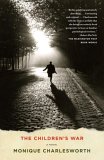
It is the spring of 1939, and Germany has become a ticking time bomb for anyone of Jewish heritage. Desperate to find a temporary haven for her daughter Ilse, Lore Lindemann sends the teenager to Morocco, where she will live with her aunt and uncle, far from Hitler's hub of power. So begins the adventure that will reconfigure Ilse's reality forever.
Under the doting gaze of her charismatic uncle, Ilse steps into a life of unimagined comfort and childish delights in Morocco. Yet simmering under the façade of music clubs and swimming pools, ice cream and private school, is the all-consuming threat of a world war, whispered about in fragments that reveal the cracks in Ilse's family structure. All too soon she is sent away again, this time to Paris, which teeters on the cusp of German occupation. There, Ilse struggles to make a palatable life with her father, Otto, an intractable, brooding radical who is slowly succumbing to despair over the dissolution of his marriage and the political entropy swallowing Europe. When Otto is incarcerated, Ilse (now ostensibly orphaned) must forge a new life on her own. Masquerading as a French national, befriended by prostitutes and underground Resistance fighters, she survives in the shadowy margins of a French society roiling under the pressure of Nazism.
Meanwhile, unbeknownst to her, Ilse has become a mythical figure to a young man named Nicolai, living in an affluent neighborhood of Hamburg. His governess is none other than Ilse's mother, Lore, a woman paralyzed with remorse and fear ever since she sent her daughter away. Nicolai, a reluctant member of the Nazi youth corps, struggles with his secret revulsion for the Reich, even as his peers get sucked into the rising tide of German nationalism. As his comfortable childhood swiftly devolves around him, Nicolai harnesses photography as a lifeline, his darkroom images offering him the candid immediacy and logic that are no longer accessible in war-choked German life. Obsessed with Lore's quiet tragedy, Nicolai dreams of the lost daughter named Ilse, conjuring an imaginary kinship with her and willing an irrational happy ending for them all.
In controlled, gorgeously precise prose, ,
The Children's War presents a refreshingly oblique angle on the horrors of Hitler's rise to power and the ensuing world conflict. Through two unforgettable, carefully crafted young protagonists, author Monique Charlesworth reveals a child's-eye view of the vertiginous loss of control inherent in war–and the hidden reserves of strength that mark survivors.
-
As Ilse waits for her Red Cross escort in Marseilles, she mentally reviews the city guidebook she has memorized, in the hopes of doing some sightseeing on her way out of town. What does this episode reveal about Ilse's character? What subsequent events does it foreshadow?w?
-
Ilse is hurt and shocked by Toni's crass assessment of her family's business failures and her parents' ruinous marriage, and later, by Toni's insistence that Ilse return to Europe. Why, then, does Ilse conjure fond memories of Toni and try to reach her throughout the novel? What is at the root of Toni's pull on her imagination? How does
"Toni's terrible straightforwardness" [p. 58] influence Ilse as she enters adulthood?
-
Nicolai overhears his father lament, "I'm passing myself off as something I'm not" [p. 36] during one of many arguments with his wife about patriotism. How is this statement echoed in Nicolai's own experiences? Does it affect his respect for his father?
📖
Get the full reading guide
Join BookBrowse free to unlock all 18 discussion questions, author background, themes, and more for The Children's War.
Join free — it takes 30 seconds
Already a member? Log in →
- How does the author develop themes of identity and belonging throughout the narrative?
- What role does the setting play in shaping the characters' decisions and relationships?
- Discuss how the ending reframes the events of the story. Were you surprised?
Unless otherwise stated, this discussion guide is reprinted with the permission of Anchor Books.
Any page references refer to a USA edition of the book, usually the trade paperback version, and may vary in other editions.

 Book Reviewed by: