Please be aware that this discussion guide may contain spoilers!
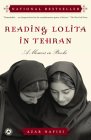
On her first day teaching at the University of Tehran, Azar Nafisi began class with the questions, "What should fiction accomplish? Why should anyone read at all?" What are your own answers? How does fiction force us to question what we often take for granted?
Yassi adores playing with words, particularly with Nabokovs fanciful linguistic creation upsilamba (18). What does the word upsilamba mean to you?
In what ways had Ayatollah Khomeini "turned himself into a myth" for the people of Iran (246)? Also, discuss the recurrent theme of complicity in the book: that the Ayatollah, the stern philosopher-king, "did to us what we allowed him to do" (28).
Compare attitudes toward the veil held by men, women and the government in the Islamic Republic of Iran. How was Nafisis grandmothers choice to wear the chador marred by the political significance it had gained? (192) Also, describe Mahshids conflicted feelings as a Muslim who already observed the veil but who nevertheless objected to its political enforcement.
In discussing the frame story of A Thousand and One Nights, Nafisi mentions three types of women who fell victim to the kings "unreasonable rule" (19). How relevant are the actions and decisions of these fictional women to the lives of the women in Nafisis private class?
Explain what Nafisi means when she calls herself and her beliefs increasingly "irrelevant" in the Islamic Republic of Iran. Compare her way of dealing with her irrelevance to her magicians self-imposed exile. What do people who "lose their place in the world" do to survive, both physically and creatively?
During the Gatsby trial Zarrin charges Mr. Nyazi with the inability to "distinguish fiction from reality" (128). How does Mr. Nyazis conflation of the fictional and the real relate to theme of the blind censor? Describe similar instances within a democracy like the United States when art was censored for its "dangerous" impact upon society.
Nafisi writes: "It was not until I had reached home that I realized the true meaning of exile" (145). How do her conceptions of home conflict with those of her husband, Bijan, who is reluctant to leave Tehran? Also, compare Mahshids feeling that she "owes" something to Tehran and belongs there to Mitra and Nassrins desires for freedom and escape. Discuss how the changing and often discordant influences of memory, family, safety, freedom, opportunity and duty define our sense of home and belonging.
Fanatics like Mr. Ghomi, Mr. Nyazi and Mr. Bahri consistently surprised Azar by displaying absolute hatred for Western literature a reaction she describes as a "venom uncalled for in relation to works of fiction." (195) What are their motivations? Do you, like Nafisi, think that people like Mr. Ghomi attack because they are afraid of what they dont understand? Why is ambiguity such a dangerous weapon to them?
The confiscation of ones life by another is the root of Humberts sin against Lolita. How did Khomeini become Irans solipsizer? Discuss how Sanaz, Nassrin, Azin and the rest of the girls are part of a "generation with no past." (76)
Nafisi teaches that the novel is a sensual experience of another world which appeals to the readers capacity for compassion. Do you agree that "empathy is at the heart of the novel"?
How has this book affected your understanding of the impact of the novel?
Page numbers refer to the hardback edition
Unless otherwise stated, this discussion guide is reprinted with the permission of Random House.
Any page references refer to a USA edition of the book, usually the trade paperback version, and may vary in other editions.
Stranger than fiction, blending tragedy and farce, How to Create the Perfect Wife is an engrossing tale of the radicalism, and deep contradictions, at the heart of the Enlightenment.
Z, the novel about the life of Zelda Sayre Fitzgerald is at points charming and; like another reviewer, I kept thinking of the movie, "Midnight...
read more
Although heavy on the scientific details, which slowed down the story for me (OK, I admit, I was one of those liberal arts majors who skipped out on...
read more
Loved this book. Magical, quirky, enchanting I could go on. All books do not have to be literary fiction, sometimes it is just so comforting to read...
read more
U.S. ebook sales up in 2012, but rate of growth is slowing(May 16 2013) In 2012, trade book sales (i.e. non academic book sales) rose 6.9%, to $15.049 billion, and e-book sales continued to grow, although the rate of growth...
Full Story