return to home  
Join   |  Gift   |  Member Login   |  Library Login
BookBrowse Mobile
Follow Us: 
   Reading Guides

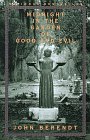
Midnight in the Garden of Good and Evil by John Berendt: Questions, plus a reading group guide, with links to reviews, excerpt, author interview and author biography at BookBrowse.com.

Midnight in the Garden of Good and Evil

Midnight in the Garden of Good and Evil
A Savannah Story
by John Berendt
Hardcover: Jan 1994,
386 pages.
Paperback: Jul 1999,
255 pages.

Publication information
Author Information
Critics' Opinion:   
Readers' Rating:  
About BookBrowse Rankings
Share: 
Buy This Book

Reading Guide Questions

 Printer Friendly Guide

Please be aware that this discussion guide may contain spoilers!

The questions, discussion topics, and author biography that follow are intended to enhance your group's reading of John Berendt's Midnight in the Garden of Good and Evil. We hope that they will provide you with new ways of looking at--and talking about--a book that Edmund White has called "the best nonfiction novel since In Cold Blood." Like Truman Capote's masterpiece, Midnight in the Garden of Good and Evil is the true story of a murder. It is also the portrait of a Southern city in all its charm and eccentricity and a comedy of manners that has pointed things to say about sex and gender, truth and rumor, and superstition and belief.

The victim is Danny Hansford, a small-time hustler who, early on a Saturday morning in May 1981, was shot dead by his sometime employer Jim Williams in the latter's exquisitely restored house in Savannah, Georgia. As Berendt reconstructs Danny's death--and follows Williams's staggering four murder trials--he also presents us with a lovingly detailed social anthropology of Savannah, whose past is full of murders that have been covered up and cheerfully gossiped about for decades afterwards. The author keeps a discreet distance from his protagonists. His true object is to see how a crime engages the collective imagination of a city that is "as remote as Pitcairn Island" [p. 36] and as decadent as Sodom, and whose citizens are so deliriously selfÐ absorbed that it takes a murder to shake them out of their usual preoccupations.

If Hansford and Williams occupy the foreground of Midnight in the Garden of Good and Evil, the background figures of Berendt's canvas sometimes eclipse them in interest and sheer perversity: a fading belle who packs a pistol in her décolletage; a charming, pianoÐplaying con man who moves like a hermit crab from one empty showplace house to the next, accompanied by his highÐliving entourage and pursued closely by his creditors; a moneyed dowager who conducts business from a cruising Mercedes limousine; a sour alcoholic inventor who claims to own a vial of poison so powerful that it could kill off the entire city; a voodoo priestess in purple shades; and a foul-mouthed black drag queen who passes so convincingly for a woman that she is able to extort abortion money from the parents of her white boyfriend. And Berendt himself becomes one of the book's characters, an ingenuous expatriate Yankee who, in the process of making himself at home in Savannah, manages to go everywhere, meet everyone, and ferret out every morsel of the city's delicious gossip--except, perhaps, the truth behind Danny Hansford's death.

For discussion

  1. Midnight in the Garden of Good and Evil begins with a portrait of Jim Williams, the man around whom the book's "plot" revolves. Yet the author sweeps Williams offstage after one chapter and we do not encounter him again until the end of Chapter 11, when we learn that he shot Danny Hansford. What does Berendt accomplish by doing this? Is Midnight truly Williams's story, and if not, who is its real protagonist?

  2. Do you come away from this book believing that Williams is guilty of murder? How does the evidence that surfaces during his trials reinforce or contradict the impression that Berendt conveys elsewhere in the book? How do Williams's friends view him? Is it possible to believe in Williams's guilt yet still feel sympathy for him? Where else does the author elicit sympathy for characters who are morally flawed and perhaps genuinely evil?

  3. In short order it becomes clear that Savannah is full of mysterious characters, from the man with the invisible dog to the salesman who makes up his left eye with purple eyeshadow while leaving the other unadorned for the benefit of his boss. How much do we end up knowing about the people in this book? Is it Berendt's intention to reveal his characters or to draw our attention to their eccentricities, the inconsistencies in the selves that they present to the world? How different would these characters be if they lived in a city like New York or Los Angeles?

  4. As elaborate as these façades are, Berendt suggests that they are also transparent. The salesman's boss knows that he wears makeup on one eye, just as none of Lee Adler's old associates buy his altruistic pretensions. Why, then, might the characters in this book maintain their various masquerades? Is Berendt saying anything about the façades that all of us adopt in order to survive?

  5. How does the transvestite Chablis embody contradictions that Berendt explores elsewhere in the book? Is Chablis Midnight's most deceitful character or its most honest one? What distinction does the author make between the Lady Chablis's "act" and the social masquerades of Lee Adler, Joe Odom, or Jim Williams?

  6. Do you think of Chablis as male or female? Why has she chosen not to undergo sex-change surgery? By what logic can she say that her boyfriend--who knows her true gender--is "straight" [p. 102]? For that matter, can Chablis be said to have a "true" gender? How would you compare Chablis's brand of femininity to Serena Dawes's or Mandy Nichols's? What vision of gender does this book impart to us?

  7. Alongside his human characters, Berendt gives us detailed histories and descriptions of several houses. To what extent are his characters defined by the homes they live in and the objects they use to furnish them? Moreover, what role does geography, from the location of Joe Odom's latest apartment to Savannah's position on the Georgia coast, play in this book?

  8. Danny Hansford is only one of the many people whose violent deaths we learn about in the course of Midnight in the Garden of Good and Evil. Judging by their stories, what does Savannah (or Savannah society) deem grounds for murder? Why are so few of Jim Williams's friends disturbed by the charges against him? Given the casualness with which Savannahians greet the Hansford case, why are they so shocked by the news [p. 333] that their city has been declared the murder capital of the United States?

  9. Although Williams behaves as though he were innocent of any wrongdoing, he also goes to elaborate lengths to conceal the fact of his imprisonment from his clients. How do you account for this? In what ways are the contradictions in his conduct typical of his city?

  10. It is almost immediately obvious that Jim Williams is gay and that Danny is his gigolo, but no one comments on this until the first murder trial. Williams's greatest fear seems to be that his mother will learn the truth about his sexual orientation. Chablis claims that "the South is one big drag show" [p. 101], but if so, it is one where four men can be acquitted of a brutal killing when the victim turns out to be homosexual [p. 205]. What roles do homosexuality and homophobia play in this book? How do Berendt's Savannahians--both gay and straight--variously conceal, deny, or accommodate their sexuality?

  11. "We don't do black-on-white in Savannah," Joe Odom tells Berendt. "A lot may have changed here in the last twenty years, but not that" [p. 54]. What role does race--and the elaborate restrictions that surround it--play in this book? How would you characterize the relations between Berendt's white and black characters? What artifices have various Savannahians devised to cross the color line--or tunnel under it? What institutions have black Savannahians evolved on their side of that line?

  12. Early in the book, Joe Odom gives the author three rules for surviving in Savannah [p. 48]. What are these rules and how reliable do they turn out to be? What does Berendt accomplish by making his (and the reader's) principal guide turn out to be a professional con man?

  13. The "Garden of Good and Evil" is Bonaventure cemetery, which the author visits at the book's beginning and end. What role do the dead play in Berendt's narrative? How do they influence its action and haunt the living characters? In what way does Savannah's attitude toward its dead seem more pagan than Christian?

  14. Frustrated by his attorneys' failure to win an acquittal, Williams hires a conjure woman to work on his behalf. How successful are Minerva's efforts compared to those of more conventional specialists? What beliefs underlie her magic? In what way can the belief systems of the book's other characters be described as magical?

  15. How do we end up feeling about the character of "John Berendt"? What does the author accomplish by making himself a character in his book--or, rather, by creating a character who happens to have his name and profession?

  16. Was Danny Hansford responsible for his own death? Do you come away from this book believing that he was about to kill Williams or that he was merely what Spencer Lawton says he was: "a pawn in a sick little game of manipulation and exploitation" [p. 229]? How do you feel on learning that commentators regard Danny as merely "a good time not yet had by all" [p. 178]? How did Danny fit into Savannah's rigidly stratified society? Why--and at whom--might he be laughing at the book's climax?


Suggestions for further reading
Honoré de Balzac, The Human Comedy
Truman Capote, In Cold Blood and Music for Chameleons
Henry James, The Bostonians and Washington Square
F. Scott Fitzgerald, The Great Gatsby
Richard Gillman, Decadence: The Strange Life of an Epithet
Zora Neale Hurston, Of Mules and Men
Norman Mailer, The Executioner's Song
Edgar Lee Masters, Spoon River Anthology
Flannery O'Connor, "A Good Man Is Hard to Find" and "The Violent Bear It Away"
Marcel Proust, Remembrance of Things Past
Natalie Robbins, Savage Grace
Calvin Trillin, Killings
Diana Trilling, Mrs. Harris: The Death of the Scarsdale Diet Doctor
Mark Twain, Innocents Abroad and Roughing It
Eudora Welty, The Optimist's Daughter
Edith Wharton, The Age of Innocence and The House of Mirth

Page numbers refer to the Vintage paperback edition.
Reading group guide and suggested reading list reproduced with the permission of the publisher, Vintage.


Unless otherwise stated, this discussion guide is reprinted with the permission of Vintage. Any page references refer to a USA edition of the book, usually the trade paperback version, and may vary in other editions.

Become a Member
Click Here
Editor's Choice
  •  May 21 
  •  May 20 
  •  May 18 
Helga's Diary
Helga Weiss

Helga's Diary Jacket

The remarkable diary of a young girl who survived the Holocaust—appearing in English for the first time.
Fever
Mary Beth Keane

Fever Jacket

A bold, mesmerizing novel about the woman known as "Typhoid Mary," the first known healthy carrier of typhoid fever in the burgeoning metropolis of early twentieth century New York.
The Woman Upstairs
Claire Messud

The Woman Upstairs Jacket

The riveting confession of a woman awakened, transformed, and betrayed by passion and desire for a world beyond her own.
Click Here
   Most Recent Blog Entries
Movies Based on Books: Summer 2013 (May - August)
Jewish Young Adult Books That Are Not About The Holocaust
Books to Give This Mother's Day
rss  RSS   rss  subscribe
Recent Reader Reviews
Z: A Novel of Zelda Fitzgerald by Therese Fowler
Z, the novel about the life of Zelda Sayre Fitzgerald is at points charming and; like another reviewer, I kept thinking of the movie, "Midnight... read more
Flight Behavior by Barbara Kingsolver
Although heavy on the scientific details, which slowed down the story for me (OK, I admit, I was one of those liberal arts majors who skipped out on... read more
The House at the End of Hope Street by Menna van Praag
Loved this book. Magical, quirky, enchanting I could go on. All books do not have to be literary fiction, sometimes it is just so comforting to read... read more
RSS RSS feed More...  
Most Viewed This Week
1. Half the Sky
Nicholas D. Kristof, Sheryl WuDunn
2. A Child Called It
Dave Pelzer
3. And the Mountains Echoed
Khaled Hosseini
4. Defending Jacob
William Landay
5. Into The Wild
Jon Krakauer
More...
Book Club Recommendations
Why Be Happy When You Could Be Normal?
by Jeanette Winterson
Paperback (Mar/13)
Eleanor & Park
by Rainbow Rowell
Hardback (Feb/13)
The House Girl
by Tara Conklin
Paperback (Oct/13)
The Painted Girls
by Cathy Marie Buchanan
Hardback (Jan/13)
More...
First Impressions
Members read and review books often months before they're published. See what they think in First Impressions!
The Sisterhood
by Helen Bryan
Four Stars            (Apr/13)
The Caretaker
by A .X. Ahmad
Four Stars            (May/13)
Golden Boy
by Abigail Tarttelin
4.5 Stars            (May/13)
The Last Girl
by Jane Casey
Four Stars            (May/13)
More...
  Latest BookBrowse News
British Parliament asks Amazon to clarify why it pays $9 million in income tax on $23 billion of UK sales. (May 20 2013)
Amazon will be called back to give further evidence to members of the British Parliament "to clarify how its activities in the U.K. justify its low corporate... Full Story
rss RSS feed More...
 
BookBrowse Poll
Q: Which of these Summer movies based on books would you like to see? (Info on each movie here)
The Great Gatsby
Epic
Man of Steel
World War Z
The Lone Ranger
The Wolverine
R.I.P.D.
Percy Jackson
Paranoia
The Mortal Instruments
Select Any That Apply
Search: Title or Author
Free Newsletters
The Light Between Oceans

Online Book Club
More about
The Comfort of Lies
Join the discussion!


Win This Book!
On Sal Mal Lane


"Piercingly intelligent and shatter-your-heart profound."

Enter To Win Now!

wordplay
Solve this clue:
"I Y N P O T Solution, Y P O T P"

and be entered
to win....
frame top
New Author
Interviews
Menna van Praag
Erica Brown
Helga Weiss
Kate Morton
frame bottom
HOME Book Submissions | Advertising | Library Subscriptions | Reviewing for BookBrowse | Contact Us