Please be aware that this discussion guide may contain spoilers!
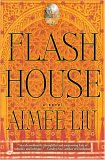
In the opening pages, Kamla states that "Joanna Shaw rescued me in
her way, and I tried to return the favor." How and why did Joanna need
to be "rescued," or was that need only in Kamla's mind? Was Kamla
successful in her attempt to return the favor?
Joanna Shaw is a social worker who attempts to rescue girls who've been
trafficked into India's sex trade. What does her chosen profession reveal
about her character? Why is this important within the overall story?
"Flash house" is a Victorian term for brothel-or house of
prostitution. Kamla escapes from just such a house, but how does the
metaphor of the "flash house" reflect other aspects of the novel?
Early in the novel, Joanna Shaw's boss, Hari, lectures her about the
horrors India suffered during Partition. "I try to remember what a
short time you have been in India," he tells her, "you have no
idea what is rape . . ." Is this meant as an indictment of American
naiveté, or as a plea for help? How does Joanna's relative unfamiliarity
with Asia's recent history affect her choice to pursue Aidan?
Throughout this novel the characters make reference to the Great Game, the
historical rivalry between Britain and Russia for control of the northern
access routes to the Indian subcontinent. Why and how is the Great Game
relevant to the political intrigues that engulf Joanna, Aidan, Kamla, and
Lawrence in Sinkiang? Are there parallels you can draw between the Great
Game and world political events today?
All four of the main characters--Joanna, Lawrence, Simon, and Kamla--live
outside their native states and cultures. They are, in effect, stateless, so
that this becomes a story about the expatriate experience. In what ways is
this a shared experience for all four characters? How and why is this
experience different for each of them? How does their mutual statelessness
impact their choices and interactions?
Absence is a critical theme throughout this story. Aidan's absence drives
Joanna's actions through much of the novel. Kamla and Simon both are marked
by parental absence. Lawrence mourns the loss of his son. What are the
effects of absence on the emotions and behavior of the characters?
Although the novel is told through alternating chapters in three different
voices, the story is bookended by sections written from Kamla's point of
view as an elderly woman. How does this perspective shape the overall story?
Why do you think the author selected Kamla rather than Joanna as the primary
narrator?
Aimee Liu has said that her earliest drafts of Flash House were
written from the perspective of Simon as a grown man. Why do you think she
abandoned this approach? How would it have altered the story for you if
Simon had been telling the tale?
What questions does the story raise about the impulse to rescue? Is
rescue, as described in the story, intrinsically moral, emotional, or
pragmatic? What links does the story suggest between acts of rescue and acts
of love?
In the epilogue Kamla states, "What mattered most in the end was not
right or wrong. It was not politics or fidelity or even understanding.
Certainly it was not the act of rescue. It was simply our mutual ineptitude
at love." Is Kamla a reliable narrator? What does she mean by "our
mutual ineptitude at love"?
Unless otherwise stated, this discussion guide is reprinted with the permission of Grand Central Publishing.
Any page references refer to a USA edition of the book, usually the trade paperback version, and may vary in other editions.

Fearless, gripping, at once darkly funny and tender, spanning three continents and numerous lives, Americanah is a richly told story set in today's globalized world.
The story of an American family, middle class in middle America, ordinary in every way but one. But that exception is the beating heart of this extraordinary novel.
First time novelist Vaddey Ratner captured my heart and senses in this novel based on her childhood in Cambodia. Her story transcends any news story...
read more
From the first page, I was drawn in by the lyrical writing of the author and mesmerized as the narrator, eight year old Raami, remembered the years...
read more
Trite but true, all good things must come to an end. I so wanted to keep reading the wonderful prose, the settings that let one think they are part...
read more
Kenn Nesbitt is new Children's Poet Laureate(Jun 12 2013) Kenn Nesbitt has been named the new Children's Poet Laureate: Consultant in Children's Poetry to the Poetry Foundation, which noted that the two-year position...
Full Story