Book Club Discussion Questions
Please be aware that this discussion guide will contain spoilers!
Introduction
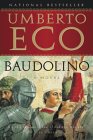
It is April 1204, and Constantinople, the splendid capital of the Byzantine
Empire, is being sacked and burned by the knights of the Fourth Crusade. Amid
the carnage and confusion, our hero, one Baudolino, saves a historian and high
court official from certain death at the hands of the crusading warriors and
proceeds to tell his own long and winding--and thoroughly fantastical--story.
Born a simple peasant in northern Italy, Baudolino has two major gifts: a talent
for learning languages and a skill in telling lies. When still a boy he meets a
foreign commander in the woods, charming him with his quick wit and lively mind.
The commander--who proves to be Emperor Frederick Barbarossa--adopts Baudolino
and sends him to the university in Paris, where he makes a number of fearless,
adventurous, colorful friends. Spurred on by myths and legends, and by their own
vivid reveries, this merry band sets out in search of the Holy Grail, the most
beloved chalice in all Christendom, and Prester John, the legendary priest-king
said to rule over a paradisiacal kingdom in the East--a vast, phantasmagoric
realm of creatures with eyes on their shoulders and mouths on their stomachs, of
eunuchs, unicorns, and lovely maidens. As always with Umberto Eco, this abundant
novel includes dazzling digressions, outrageous tricks, extraordinary feeling,
and vicarious reflections on our postmodern age. Partly a medievalist historical
fiction, partly a philosophical dialogue, and partly a meditation on religion,
myth, love, desire, language, society, and countless other symbols and systems,
Baudolino is, above all else, a fast-paced adventure yarn. This is Eco the
storyteller at his brilliant best.
Questions
- Who is narrating the first chapter of this novel? What scenes,
characters, and events described here show up later in the narrative? Consider
this passage, near the end of the chapter: "I said to him when you learn to
read then you learn everything you didn't know before. But when you write you
write only what you now already so patently I'm better off not knowing how to
write." How does this passage exemplify the novel's complex if not
conflicted treatment of self-expression and communication (written, verbal, and
so on)?
- One of the few constants in this brisk, far-flung, and episodic
adventure story is Baudolino's predilection to stretch the truth, rearrange the
facts, fib, lie. What ironic points might Eco be making about the links between
falsehood and history? Should all of history, in effect, be seen/read/understood
as historical fiction? What are the "little truths" and "the
greater truth" mentioned in Chapter 40?
- Compare and contrast Baudolino's two "father figures." What
sort of life does each man lead? How does each man die? What does each impart or
pass onto Baudolino--physically, emotionally, and spiritually?
- Discuss how, if at all, Baudolino the character both embodies and transcends the many paradoxes at work in Baudolino the novel: sacred and profane
experiences, high and low vocabularies, royal and common families, real and
imagined miracles, etc.
- Acknowledging this novel's many and various literary allusions, one
reviewer described its protagonist as "a resourceful cross between
Voltaire's Candide and Thomas Berger's Little Big Man." But what mythic
traits, if any, did you identify in the character of Baudolino? How did he echo,
for example, the Questing Hero? The Trickster Fool? Any others? Discuss.
- What is the "green honey" that appears at several points in
this novel? What does it do? Why is it so prized or disdained? And how does it
relate to the novel's core struggle between illusion and reality?
- "The limits of my language means the limits of my world," as
the philosopher Ludwig Wittgenstein once remarked famously. Given Baudolino's
almost super-human ability to learn any language, how would you label or define
the limits of his world?
- Who is Niketas? What dramatic and conceptual roles does he play in this
novel? Explain how he influences and participates in the story Baudolino is
telling--or doesn't he? How does the journey Niketas is making thematically
relate to the journey Baudolino is describing? What is the "single
thing" Niketas chooses to believe regarding Baudolino's tale? (see Chapter
26) And is this "single thing" is true or correct?
- Discuss Baudolino as a mystery story. What, in your view, are its
defining questions? Why is Baudolino forced to kill the Poet in Chapter 38--and
why, a few pages later, does Kyot tell Baudolino (regarding the Grasal),
"What counts is that nobody must find it"? And which of the key
queries in Baudolino remain unsolved throughout?
- Look again at the last two chapters of this novel. What happens to our
hero in these final pages? How and why does Baudolino change at the end of the
novel? How and why does he stay the same? Explore the question of whether
Baudolino is ultimately a tragic or comic tale.
Copyright (c) 2002. Published in the U.S. by Harcourt, Inc.
📖
Get the full reading guide
Join BookBrowse free to unlock all 10 discussion questions, author background, themes, and more for Baudolino.
Join free — it takes 30 seconds
Already a member? Log in →
- How does the author develop themes of identity and belonging throughout the narrative?
- What role does the setting play in shaping the characters' decisions and relationships?
- Discuss how the ending reframes the events of the story. Were you surprised?
Unless otherwise stated, this discussion guide is reprinted with the permission of Harvest Books.
Any page references refer to a USA edition of the book, usually the trade paperback version, and may vary in other editions.