Page 1 of 1
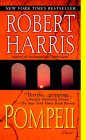
There are currently 3 reader reviews for Pompeii
Write your own review!
Donny
Some parts are very boring
Some parts of the novel are very slow and caused me to lose interest.
Alan
The Lost 40 Pages
Straight out of The Titanic stable (if there is chaos, go to it!). This is a cumbersome read, weighted down by a onslaught of detail ('realism') that works hard to disguise the incredible plot devices. As if that wasn't bad, there are no less than 40 pages missing in my copy...surely not the only one!
Jon Paul
Harris has been working the historical fiction vein for a number of years now, but only with Pompeii has he finally hit his stride. The work is a seamless blend of good plotting, excellent character writing, and exciting action. As with both Enigma and Archangel, Harris grounds his plot in real events, setting during the last four days before the historic erruption of the volcano in CE 79. But this novel marks a distinct advance on Harris' ability to get inside the lives and cultures of other times and places, thus, his immersion of the reader in the reality of the Roman empire is so well done, that you quickly forget the imminence of the erruption, and get deeply involved in the lives of the various characters.
For his central character, Harris has chosen a Roman engineer, Attilius, whose job it is to keep the aqueducts working so that running water can be supplied to all the cities along the Bay of Naples. Against the background of the coming erruption, he struggles with the obduracy of both municipal politics and the materials of his craft. And that's all I can say without giving away too much. To be honest, I don't mind ommitting the details of the plot, interesting as they are, because what interested me was more the sense of lived life with which Harris infuses his novel.
In his previous works, perhaps a little too much turned on spectacular villainy. In Enigma, it was nefarious Nazis in the heart of the Allies' code-breaking effort and a love that had turned sour; in Archangel, a psychotic son of a psychotic father, with an ending almost like one of a dozen "serial killer" fantasies – and really, the truly mad are not very interesting, and mad murderers the least interesting of all. In Pompeii, however, Harris has written a realistic novel about ordinary people caught up in extraordinary events, and the two play off against one another excellently well. It's the quotidian nature of the setting, it's everyday municipal reality, that highlights the extraordinary intrusion, and which allows Harris to exhibit his gifts as a writer of characters. There are no cardboard villains here, and no unbelievable heroes, just people reacting to the events around them. And what events.
I'll say no more. If you're a Harris fan, get this one and read it; Harris is continuing to develop and grow as a writer. I look foward to his next.