Page 1 of 3
There are currently 24 reader reviews for All the Flowers in Shanghai
Write your own review!
 Louise J
(02/05/12)
All the Flowers in Shanghai
Louise J
(02/05/12)
All the Flowers in Shanghai
This was a great novel which I read in one sitting and would highly recommend it to anyone. For a debut novel it was well written.
Barbara P. (Worcester, MA)
(11/28/11)
All the Flowers of Shanghai
Amy Tan and Maxine Hong Kingston's ghosts speak and guide us in their familiar histories.
"Flowers in Shanghai" does not strive or accomplish any social mores of the Chinese tradition. The main character, Feng, didn't act out, is unemotional, and just hides in her room like a dormant flower.
Feng comes to the wealthy Sang family with no experience or with any practical advice. The only beauty in the story is the garden and her grandpa. Feng is the wounded, wilting, and uncaring mother instead of the customary heroine. She needs to plot action to grow. Or does Jepson want her to appear as a non-person showing the readers the prevailing attitude toward daughters in the East? He certainly accomplished this.
The historical fiction of the new modern era verses the old China seems to come too late into the story.
Elinor S. (Loudonville, NY)
(11/27/11)
All the Flowers in Shanghai
After recently reading Lisa Sea's two books about Flowers-"All the Flowers in Shanghai" was lacking depth. I never felt that the main characters actions were justified and never sympathized with her self pity. However, the book moved quickly and seemed historically correct. I must admit that I may have read too many "Shanghai stories" in too little time.
Martha D. (Poway, CA)
(11/26/11)
An interesting veiw into the past.
I have been interested in historical fiction for some time now and this was a interesting look into a period China I found fascinating. I found myself staying awake to find out what would happen. If you're looking for a look into another time and another place this book will take you there. A completely enjoyable read.
Hydee F. (Salt Lake City, Utah)
(11/25/11)
Slow going- ultimately an enjoyable read
I picked this book up and immediately put it down feeling uninspired to continue by the drab beginning. When I did finally pick it up, weeks later, it took on a better momentum and I found myself wanting to see what would happen next... While much of the book is predictable, and the characters seemed undeveloped I found it to be a compelling read once it got going. The story is remarkably sad, if not unfortunately, a realistic depiction of heartbreak in China during those years.
Terri M. (Jacksonville, FL)
(11/17/11)
Fascinating!
I love stories from other cultures, especially ones that follow the life of a central character and are historical in nature. All the Flowers in Shanghai was all of that and more. The book follows the life of Feng "the second daughter". From the minute I picked it up, I couldn't put it down, I had to find out what was happening to Feng and how she would handle it. So well written, I was sorry to see it end.
Sally D. (Racine, WI)
(11/16/11)
Flat
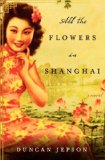
When I received this book, I was curious to read it but I was immediately put off by the cover and the title. I was afraid I had received poor imitation of some of the better books with the same setting.
But after putting it off for several weeks, I plunged in and discovered that I still held the same feelings. The story line itself might have been interesting but for some reason the minute details really slowed down the pace of the novel. Perhaps the fact that Duncan Jepson is a filmmaker and a lawyer makes prone to details but it doesn't always work in this book.
The characters and their motivations are somewhat confusing. When Feng had her first child she gives it away because she is angry. But I never really understood why she wanted her baby daughter to be raised in poverty. Then suddenly she gives in to enjoying the wealth and position of her family but it is never really clear why this transition took place.
I struggled through this book and would be hesitant to recommend it.
Beverly K. (Lockport, IL)
(11/13/11)
All The Flowers In Shanghai
I was fascinated by the microscopic details Jepson was able to provide concerning the life of a young Chinese woman in 1930's Shanghai. I wished I felt more sympathy for the lead character Feng. Her deep sense of duty forces her into a loveless marriage and that leads to even more tragic circumstances. I was hoping against hope Feng would defy her family and seek her own destiny, but I realize Jepson's storyline bore the truth for many women during that time period.