Rated of 5
by Breezier
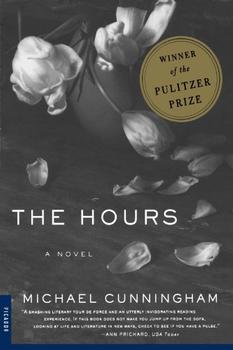
I would not have picked up this book if it were not be for an assignment at uni. Although I might have never picked it up I did and I am so glad I did. This book takes us on a journey through a day in the lives of 3 women in different eras all experiencing suicide either themselves or friends and family. These women all experience health issues that were typical in their era and country. Mrs Woolf - was mentally unstable as she continued to write a novel, Mrs Brown - looking after a young child and pregnant with another, wanting perfection she too was mentally unstable (was not happy with where she was in life), and we can't forget Mrs Dalloway - although she herself did not attempt suicide she was still worried about the choices she made in her life and experiences her best friend commit suicide. There are many twists in this novel on how the 3 single woman are linked. I even got so sure that Mrs Dalloway was infact the daughter of Mrs Woolf (not really knowing the life of Virginia Woolf or have read any of her novels). It kept me interested right up until the end to find out the link and how it all ended. The only real lesson I have learnt from this book is that there are many reasons people have tried or have taken their own lives and I think the real reason is because they are not happy with their lives and the company they keep.
Rated of 5
by Jessica, 16
Michael Cunninghams' The Hours is a brilliant, intricate novel. As it follows the lives of 3 women in a single day the ties between their stories and Virginia Woolfs original Mrs Dalloway are subtle and numerous. In each story there is a character like Clarrissa Dalloway from the original, someone who thrives in society and is slightly artificial. In Mrs Woolfs story this is Vanessa, in Mrs Browns this is Kitty and in Mrs Dalloways this is herself. There is also a character who is a cross between Septimus and Peter Walsh, they are struggling in society and are in love with the Clarrisa like character who can cope with what they cannot. Mrs Woolf struggles in society and feels restricted by her duty as a wife so ends up commiting suicide. Laura Brown is restricted by her duties as a wife and mother, she longs to escape and considers suicide. We learn that she dosn't but leaves her family in Mrs Dalloways story (as the story of Mrs Brown and Mrs Dalloway collide unexpectedly as Septimus' and Clarrisa's do in the original.) Richard also yearns to escape from his illness, he loves Clarissa but cannot keep on living just for her. Suicide is explored in each of the womens lives, they are not crazy just struggling in society. Notice how it is those who feel restrictions that consider suicide - Mrs Woolf, Mrs Brown and Richard. Mrs Dalloway, the main character who dosnt think about suicide but witnesses Richards, has less restrictions as lives in a time when she can live freely - as a lesbian for example. I must also stress that Cunningham is not degrading women - the fact Laura is portrayed as a simple housewife by society would have been true of the time she lived. He is showing the restrictions she faces and how damaging they can be. He, like Woolf in the original, is making a moral statement about society - that its presure can do terrible things to people.
Rated of 5
by Michelle
This book was about three simple women living their lives, but at the same time wanting soemthing more. I believe this novel showed an interesting but degrading approach to women. It discouraging that a woman like Laura Brown is only thought as a simple housewife, who sees in front of her a life she wishes to have. Being a housewife is a noble choice, today many people are failing their obligations to be parents. Being a parent is not just providing, but having the love and understanding that few people express. Cunningham's use of three differnt minds is a use that Woolf thought of. He seems to be gaining the attention from her, even using the same characters names. Crafting a fictional character about Woolf, is an approach to win reviews. No one will understand the mind of Woolf, it is too vast! I believe this book defeats the reason novels are grand. I hope the lesson to learn here is not to copy other's work and move it into a different time era. A book that is written in the past, will always be a book read in time.
Rated of 5
by Mindy
This book was very well written and quite interesting. It did through me for some loops and had very twisted, perverted story lines. I am a sophomore in highschool and read this book for a research paper and it was a very challenging book that has so much to write about. Although if I can comment on the ladies, they are very "messed up" and need bucket loads of help like prozac or something.
Rated of 5
by mrs. k.
I did not like this book. I had to read it as a reading assignment for school and I must honestly say that I have never read such a boring book before! There is absolutely nothing happening in it and I cannot recommend it!
Rated of 5
by terri
One of the best books I've read all year. The narrative used in the book was interesting and very thiught provoking. I loved it.
A bold, mesmerizing novel about the woman known as "Typhoid Mary," the first known healthy carrier of typhoid fever in the burgeoning metropolis of early twentieth century New York.
Two Lives is a memoir written by international best-selling author, Vikram Seth. In this interesting and engaging book, Seth writes about his great...
read more
Z, the novel about the life of Zelda Sayre Fitzgerald is at points charming and; like another reviewer, I kept thinking of the movie, "Midnight...
read more
Although heavy on the scientific details, which slowed down the story for me (OK, I admit, I was one of those liberal arts majors who skipped out on...
read more
Judge rules unused Borders gift cards to be worthless(May 23 2013) Borders owes nothing to holders of roughly $210.5 million of gift cards that had not been used by the time the bookstore chain shut down, a Manhattan federal...
Full Story