Write your own review!
 Cathryn Conroy
Old-Fashioned Storytelling at Its Best: The Life and Drama of Thomas Cromwell
Cathryn Conroy
Old-Fashioned Storytelling at Its Best: The Life and Drama of Thomas Cromwell
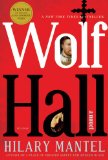
History comes vitally alive when it's told not with facts and dates and lists but rather through the drama of the people who lived it. And author Hilary Mantel does a magnificent job of bringing to life Thomas Cromwell, a man long cast as a cunning Machiavellian villain but in Mantel's deft storytelling, he is something else entirely: a man of honor, respect, ambition, brilliance, and great loyalty. (Okay, in fairness he was a cunning Machiavellian villain—but with a heart.)
Cromwell was a close aide and attorney to Cardinal Thomas Wolsey. After this holy man was disgraced and discarded by King Henry VIII, Cromwell found a place in that volatile and dangerous Tudor court, winning Henry's respect and friendship when he cleared a legal and religious path for Henry to do what was heretofore unthinkable: divorce his wife of 20 years, Katherine of Aragon, and marry Anne Boleyn.
Through a combination of extraordinary research and old-fashioned storytelling, Mantel has cast Cromwell in a way that gives him flesh and blood, a soul and a heart.
This multilayered book, the first in a three-part series on Cromwell's life, is rich in historical detail with big and bold characters. It is imaginatively written in a style that is uniquely Mantel, although admittedly that style can be quite confusing at times. (The word "he" almost always—but not every instance—refers to Cromwell, even when logic says it should be someone else. I got used to it.)
Just beware! There are quite a few detailed descriptions of the brutal and violent practices of torture and execution that were common during this time. Parts of this book you definitely do not want to read just before going to sleep.
DumboDenizen
Worth your patience
I started and stopped WOLF HALL three times before I really made up my mind to focus and become immersed in Mantel's storytelling style. Once I did, I was richly rewarded.
This book is so finely wrought that you feel you are practically living inside of Cromwell's person. The technique allows for first-hand access to the Court of England in a way I've not experienced before, and Mantel is a master of descriptive language.
In between my early attempts at this book I read the wildly acclaimed (and very overrated) THE GOLDFINCH, and came to appreciate even more the value of excellent writing demonstrated in WOLF HALL. Highly recommend.
Frances
Stream-of-Life
I thought this was one of the best novels I've read in a long time. I enjoyed the challenging writing style as well as the story of Cromwell--and it really is Cromwell's story, not so much as a stream-of-consciousness but as a stream-of-life.
It's a book to be savored--many times.
Canadian Chickadee
Wolf Hall by Hilary Mantel
I found this book exasperating in the extreme. Mantel's gift for a telling phrase is unsurpassed (black fur that ruffled like feathers, ruby rings like droplets on blood on the king's knuckles, e.g.) but I longed for a red pencil to edit this tome! Mantel's use of pronouns is very sloppy -- how many "he's" can you have on a page or in a paragraph without creating confusion? And without a thorough knowledge of 16th century Tudor life and politics, this book would be unreadable. In spite of Mantel's efforts, Cromwell remains a shadowy figure. The only time I felt I really understood him was when he took exception to someone who said "Butcher, blacksmith, what's the difference? They're both tradesmen." When Cromwell thinks, "but any oaf can cut up beef, but it takes someone with real skill to make a knife or a pot or a suit of armour" is the first and only real insight we have into what makes Cromwell tick. Unlike those reviewers who found the book so gripping they couldn't put it down, I found the book a real slog, and not one I will probably ever read again.
Dorothy T.
A Short Review of a Long Book
The number of pages is not really why I call this a long book--I kept thinking as I was reading that surely some of it could have been edited, although I have no specific suggestions. I was thankful for the cast of characters list, because I referred to it repeatedly. I did learn much about Thomas Cromwell, however, and my curiosity about the Tudors, particularly the six wives of Henry VIII, was piqued.
This is good historical fiction about a fascinating segment of history, probably a good selection only for a book club whose members like this genre.
Meredith Whitford
However did this win the Booker Prize?
On my first attempt to read Wolf Hall, I tossed it after about 200 pages as simply too tedious and lacking in narrative pace, characterisation or outstanding writing. Its sequel, "Bring up the bodies" is better in that the story, such as it is, moves more quickly and with some point, although it ends by threatening a third book in the series to finish Cromwell's story. After that, I am trying "Wolf Hall" again, but alas, it is heavy going indeed -- the confusion of pronouns so many reviewers have commented on and which causes the reader to double-take and have to backtrack to work out which 'he' Mantel is talking about now -- the lack of pace or authorial selection of relevant scenes. The book seems to have had no or little editing. Would anyone unfamiliar with the history really bother to wade through huge sections on politicking and conspiracy? That said, I have certainly read worse historical fiction, and am glad to see the genre being taken seriously, but how "Wolf Hall" won the Man Booker beats me. Was it a particularly weak field that year? And now the sequel has won yet another Booker. It's as if the Booker Prize judges have only just discovered genre fiction, and got carried away by Mantel's reputation rather than the actual book. Cut to half its length and tightened up, "Wolf Hall" would be readable, even enjoyable, but as it is... tedious and pretentious.
Barbara Bailey
Another Odd Person Out
I agree with Colin Hamilton and the other reviewers who found this novel less than stellar. We may have different reasons, but the book did not hook me at all and I love British history and a story well told. I read it to the end because I thought I should as I had purchased the book. Of the appealing characters, Thomas Cromwell wasn't on my list although this was his story in many ways. Toward the end the pace seemed to pick up and though I and most readers knew the end, in many ways it couldn't have come sooner.
Colin Hamilton
Odd Man Out
If I had not seen so many good reviews I would not have got past the first two hundred pages. Is it me? Why is this such a disjointed novel? I spent most of the time waiting for the story to develop, only for it to go off at a tangent, It isn't helped by knowing the outcome (historically). Does a novel really have to be this complicated? if you have the time to wade through the list of players then maybe you will enjoy the brilliant bits in between.
Sorry, I wanted to like it because this is my kind of subject but it was too much like hard work1
 Book Reviewed by: