Write your own review!
rlg924
an important book to read!
An eye-opening book to the brutality of this monster, which explodes the myths still believed about him. Jung Chang has superbly tackled the incredibly difficult task of trying to determine the truth in a country and time where propaganda and revisionism were commonplace and the historical records are still kept secret many years after the events. This book will enlighten readers to the real threats of totalitarian Communist regimes and help put in context the Korean and Vietnam wars. Even if only 1/10th of what she claims in the book were true, Mao ranks at the top of the most brutal and sadistic leaders of all time.
Henry Wood
It's not good as The Private Life of Chairman Mao by Dr. Zhisui Li
Chang and Halliday’s Mao, Unknown Story is good, but it is not good as The Private Life of Chairman Mao by Dr. Zhisui Li
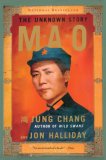
Chang and Halliday’s Mao, Unknown Story provided a brand new version and perspective of Chairman Mao. It is the first time to portray Chairman Mao as a bloody mass-murderer. In their book, Chairman Mao was a large-scale murderer during a Chinese peace era. Nearly 80 million people were dead by his Utopian idealism: that is an unbelievable number. It is four times the number of deaths of the Soviets in the war between the Soviet Union and Germany. He used drastic violence to suppress people who he believed stood in his way for industrializing China. He ignored the death of 30 million people during the starvation period of the Great Famine, which was caused by his foolish “Great Leap Forward” for overtaking the British and catching up to the Americans. After the Great Famine, his lunatic behavior reached new heights. He launched the cultural revolution, which was completely insane. He became a maniac. Under his direction, the violence was propelled to its bloodiest high tide. The horror broke historic records. Elementary school students unbelievably beat their teachers to death. The death toll was continuing to pile up until the day he died. From Mao, Unknown Story, the figure of Chairman Mao was drawn as a vicious monster and mass-murderer.
No wonder, horrible bloody killings described in Mao, Unknown Story truly happened in China from 1949, when Chairman Mao took over China, to 1976 when Chairman Mao died. Chairman Mao did everything so lunatic, and insane. From the catastrophe which he brought to China, he deserves to be considered a bloodthirsty monster and a bloody mass murderer. Overall, the book is good and correct.
Even though the book is good and correct, it cannot compare with Dr. Zhisui Li’s The Private Life of Chairman Mao in deeply and lively describing of Chairman Mao. No less than Dr. Andrew Nathan pointed out, all of biographic writers have a limitation in deeply and lively describing their objects. Because they have never served their objects, they have no chance to observe them closely. Also they have done a lot of research, but the inherent defect is that they don’t really know their objects’ personality and psychology. They don’t know their objects’ courtyard operations; their objects’ retainers, and the relationship between their objects, their objects’ retainers and the government officials.
Dr. Zhisui Li’s The Private Life of Chairman Mao did not portray Chairman Mao as a bloodthirsty monster and a bloody mass murderer; instead of that, it focused on details of Chairman Mao’s personality, psychology and his courtyard operation. Owing to Dr. Zhisui Li’s position, it made him as so called: inside man. He could know a lot of Chairman Mao’s important information that an outsider could not know. Even Chairman Mao’s former public health minister told Dr. Li to come see him anytime if Dr. Li wanted to tell him about any of Chairman Mao’s activities. In the same way, Chairman Mao’s former chief commanding officer of guards also was available to Dr. Li with no appointment.
I feel that Dr. Li portrayed the figure of Chairman Mao and his courtyard operation more close to the true Chinese history, what was really happened in China from 1949 to 1976. Compared to Dr. Li’s book, Chang and Halliday’s Mao, Unknown Story seems pale.
Larry Hochman
A 2-hour perusal of this book.
I would appreciate feedback at
[email protected].
Some of the allegations are facially unbelievable. I have no access to the Chinese cites nor most of the non-Chinese, other than MacFarquhar which I will consult.
1) The notion that everyone was fooled by Mao, from leftists like Edgar Snow and Felix Greene to US military envoys, UN dignitaries and Richard Nixon, is unlikely. What a brilliant man he must have been!
2) In discussing the "Great Leap Forward," no mention is made of back-yard furnaces, small-scale development and the impetus being to quickly gain self-sufficiency. To the authors, a purpose was to starve millions of Chinese. That the Leap failed is another matter. The road to hell is NOT paved with good intentions. Good intentions are better than bad intentions. The authors quote Mao as saying to someone (that I cannot verify) that he wanted quick superpower strength "to conquer Japan and San Francisco." Does anyone believe he thought or said that? That he would conquer the United States? If he believed he could (and why would he want to?) that belies his "brilliance" in being able to fool the world until these two savants came along.
3) Not a word is said about Mao's stated reasons, and valid ones, to bring about the Cultural Revolution. Mao claimed that he wanted to avoid the class divisions, the stifling bureaucratic domination that characterized the Soviet Union. Foolish or not, he wanted to give cityfolks a stint on the farms and farmfolk an experience in the city. Whether feasible or crackpot, any serious writers must at least address the concept. It is not sufficient to simply call him a monster, a falsifier of his participation in the Long March, to allege that he never fought the Japanese, that he only won the Civil War because of Soviet help (Stalin supported Chiang and, if you go back to 1927, Stalin, overriding Trotsky, sent Borodin to china to urge Mao's disastrous amalgamation with the Kuomintang).
The book of J. Chang and J. Haliday, Mao, the unknown story, is very
dishonest, distorting the truth and misleading the Western public into
profound misunderstanding of Mao, China modern history and China itself.
The book central theme is to condemn Mao as an evil monster, bad as or
worse than Hitler. Although the book is supposedly the outcome of 10 years
of intensive research, based on secret archives and hundreds of interviews
in many countries, a careful reader can see clearly that there are huge
gaps between its sensational claims and vast references. Moreover,
the evidence in the book often contradicts, rather than supports, the claims.
An impartial reader should be able to see the contradictions and
inconsistencies between these claims and the reality, without any exceptional
knowledge about China history, because plenty of evidence against these claims
is provided in the book itself.
In the review of Chang and Haliday book, I examine 17 key claims in the book,
which tarnish Mao character most strongly and are praised by Western media as
the most convincingly proven. All of them can be shown clearly as false and
unfounded. When was asked about these 17 questions during an interview with the
Chinese media Duowei, Jung Chang was unable to give any meaningful answer.
Her brother Pu Chang (a translator of the Chinese version of the book) declared
that he would soon give his reply in the web site of Duowei. But no further
response can be found anywhere since then (more than one month ago).
For the details of my 17 questions and arguments to prove the total fallacy of
Chang and Haliday, please visit: http://www.geocities.com/jinxiaoding.

 Book Reviewed by: