Summary | Excerpt | Reviews | Beyond the book | Read-Alikes | Genres & Themes | Author Bio
 Book Reviewed by:
Sarah Sacha Dollacker
Buy This Book
Set during the years shortly before the collapse of the Berlin Wall, Philip Sington's novel The Valley of Unknowing is a fictional memoir penned by Bruno Krug, a smug author anointed the People's Champion of Art and Culture in the Worker and Peasant's State of East Germany. Krug is impressed by his own success and ability to live peacefully within the state security apparatus, an accomplishment few are able to achieve. Krug fancies himself a man of the people – he regularly fixes his neighbor's plumbing problems – but is also at home in the intelligentsia circles that fawn over his popular novel The Orphans of Neustadt, written twenty years ago. Krug now writes banal stories about life in East Germany that sell well and keep the authorities happy. He is aware of the terrors of life in a totalitarian state, but he insouciantly refuses to make them his problem. Then, one evening, he sees Theresa Aden play viola at an event. He is not looking for romance and is shocked when he discovers that he might actually like the shy West German music student. Perhaps, though, Theresa is not all that she seems. She may or not have been involved with Wolfgang Richter, a talented playwright whose work satirizes Krug's books. When Krug is given the opportunity to assess Richter's brilliant unpublished novel, he wonders if his handling of the manuscript might bind him permanently to Theresa. Unfortunately, Krug's deception is not seamless, and, in the end, the person most deceived may be Krug himself.
The strength of Sington's novel lies in the characterization of Bruno Krug. Because the novel is primarily told from his perspective, we are provided with a truncated view of life in East Germany. At first, the lack of sensory detail and information about day-to-day life in a Soviet satellite society made me feel cheated. It feels as though the reading experience would be enhanced by more description and more vignettes about this world, so different from our own. But that is only until it is realized that Bruno is telling the story, and sensory detail (except for ribald details about his own sexual appetites) do not interest him. Bruno is interested in himself, and this is where Sington's mastery is on display. By creating a charming narcissist who has gotten himself into a troubling scrape, Sington allows us an intimate and evolving portrait of life behind the Iron Curtain.
As Bruno pursues Theresa, concocts his deception, and wrestles with his conscience, he emerges from the cocoon of self-interest into a complicated environment where his actions can have great impact. As Bruno becomes aware of the subtle snares surrounding him, the true insidious nature of life in a totalitarian state is made clear. A word choice, an off-hand comment to a neighbor in the hall, any odd behavior on the tram can draw notice from the authorities, and because of the panopticon nature of the security apparatus, the greatest police force are often the citizens themselves.
Bruno previously viewed himself above these problems but that was because he did not fully understand them. The People's Champion of Art and Culture was a darling of the State and enjoyed a degree of freedom and protection that others do not. We realize the terror of totalitarianism as Bruno does, and the impact is far more stunning than if Sington had merely narrated it. As Bruno comes to terms with the gravity of his deception and the possible punishments he could incur, he becomes paranoid and suspicious. Who is Theresa? What are her motives? Despite Bruno's efforts to effect control, the conclusion of the novel makes clear that the true controller is, and always will be, the authoritarian state.
Philip Sington's novel contemplates serious subjects, but the narrative is often light-hearted and funny. Bruno is self-absorbed, but charming, and the reader soon begins to root for him. Over the course of the story, Sington carefully constructs a complicated world with a robust, nuanced character at the center. Fans of the movie The Lives of Others will enjoy this latest glimpse into life in Germany behind the Iron Curtain.
 This review
first ran in the January 23, 2013
issue of BookBrowse Recommends.
This review
first ran in the January 23, 2013
issue of BookBrowse Recommends.

If you liked The Valley of Unknowing, try these:
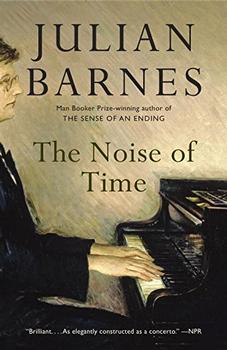
by Julian Barnes
Published 2017
A compact masterpiece dedicated to the Russian composer Dmitri Shostakovich: Julian Barnes's first novel since his best-selling, Man Booker Prize–winning The Sense of an Ending
by Rosemary Sullivan
Published 2016
A painstakingly researched, revelatory biography of Svetlana Stalin, a woman fated to live her life in the shadow of one of history's most monstrous dictators—her father, Josef Stalin.

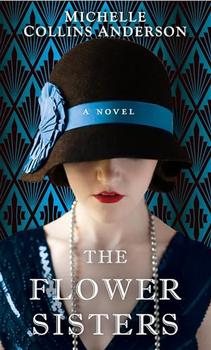
The Flower Sisters
by Michelle Collins Anderson
From the new Fannie Flagg of the Ozarks, a richly-woven story of family, forgiveness, and reinvention.
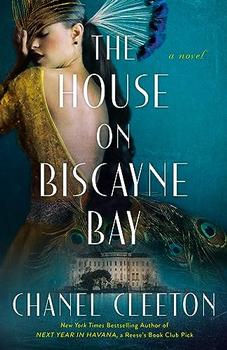
The House on Biscayne Bay
by Chanel Cleeton
As death stalks a gothic mansion in Miami, the lives of two women intertwine as the past and present collide.

The Funeral Cryer by Wenyan Lu
Debut novelist Wenyan Lu brings us this witty yet profound story about one woman's midlife reawakening in contemporary rural China.
Your guide toexceptional books
BookBrowse seeks out and recommends the best in contemporary fiction and nonfiction—books that not only engage and entertain but also deepen our understanding of ourselves and the world around us.