Summary | Excerpt | Reviews | Beyond the book | Read-Alikes | Genres & Themes | Author Bio
Critics' Opinion:
Readers' Opinion:
First Published:
Nov 2012, 256 pages
Paperback:
Nov 2013, 256 pages
 Book Reviewed by:
Morgan Macgregor
Buy This Book
What are a writer's moral responsibilities? Aside from telling a story, does a novel have to Say Something? Something about the Larger Stuff? This is a question I've heard asked, and asked myself, for years, and I still don't know the answer, but I do know that in terms of my own reading tastes, I tend to stay away from the Big Stuff, not only because I get tired of hearing what trouble we're in, but also because I know that in fiction - good fiction, anyway - everything can be large. Lydia Millet writes about big stuff, but it never feels like it. Her style and her sensibility – caustic but never cynical, incisive but never cold – ensure that above all else in Millet's world, story reigns supreme.
Magnificence - the final installment of a trilogy that began with How The Dead Dream and continued with Ghost Lights - holds true to Millet's reverence for story. It is, like much of her work, aware of the issues close to the author's heart - environmental degradation, extinction of languages and cultures, the decline of biodiversity - but anyone who'd call it, or any of her novels, "activist" is missing exactly what makes them anathema to that kind of writing: Millet's fierce loyalty to character. Magnificence is painfully, wincingly, hilariously human. (I should note here that Magnificence stands solidly alone, if you haven't read its precursors.)
Susan Lindley, middle-aged mother and secretary, is recently widowed. In a misguided attempt to prove something to himself - about manhood - her husband, Hal, took off for Belize after walking in on Susan committing adultery with a co-worker. When he comes home in a coffin, the victim of a bizarre and random crime, Susan feels she has no choice but to label herself a murderer. After all, if it weren't for her affair, Hal wouldn't have taken off.
And more important, people need labels. For Susan, guilt and blame aren't nearly as intolerable as ambiguity. "Murderer," at least, leaves no room for that. "She thought: the murder squatted. She thought along these lines daily. The murderer poured a cup of coffee. The murderer went to sleep. The murderer disassociated."
A distant uncle dies, leaving Susan a sprawling, decrepit estate on 20 acres in Pasadena, complete with a veritable natural history museum of taxidermy. She takes refuge in, indeed sets about with monk-like tenacity and reverence, to sort and organize its contents. And in sorting the rooms - Bears of The World, Horned Beasts, The Himalayas – she's able to do the more important sorting of herself: Mother, Slut, Murderer. Magnificence is in large part about labels, systems, the ways in which we organize and categorize our lives in order to make sense of them.
Susan, and the novel, ask: are we the curators of our lives, or merely the caretakers? Inventors, or simply observers? Does anything we do really matter in the end? And what to make of all the systems we take for granted: living vs. dead, rich vs. poor, man vs. woman? As Susan discovers, beneath all the systems we create to understand our lives, there's a greater show, and it's been going on the whole time.
Here's where Millet works her best magic. Near the end of the novel, Susan discovers something different entirely, housed beneath the house she's been working to organize for all these months. It's as if the gods of Susan's life are saying to her, "That was fun, right? Now…look at this." And as this happens to the characters of the novel, it also happens to the reader. Millet's prose achieves the same sudden shift and drop. Her sentences whittle, devolve, and finally distill. "Suddenly in her mind she was an old woman in a rambling house full of pelts. Nothing could be less appealing. And yet Ramon did not notice this sour flash of identity. He showed no outward sign. He did what he did. He was here."
There were several times when I had what I'll call a Lydia Millet moment. It sounds like this: "What's this? Ohhh. Oh wait…OH."
It's very humbling, as someone who writes fiction, to read fiction this good, but I suspect this trick Millet pulls would humble any sensitive reader. Her own characters, too. When Susan discovers what's below the surface, she's awed by the simple reality of it; it's thereness."You didn't know what was happening out of view; you never did. You lived your life in a small part of the world, with only the faintest inkling of what was everywhere else."
And when the reader, like Susan, gets a glimpse of the other, the deeper, the real show, it's...magnificent.
 This review was originally published in The BookBrowse Review in January 2013, and has been updated for the
November 2013 edition.
Click here to go to this issue.
This review was originally published in The BookBrowse Review in January 2013, and has been updated for the
November 2013 edition.
Click here to go to this issue.

If you liked Magnificence, try these:
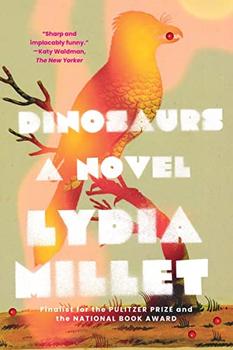
by Lydia Millet
Published 2023
Over twelve novels and two collections Lydia Millet has emerged as a major American novelist. Hailed as "a writer without limits" (Karen Russell) and "a stone-cold genius" (Jenny Offill), Millet makes fiction that vividly evokes the ties between people and other animals and the crisis of extinction.
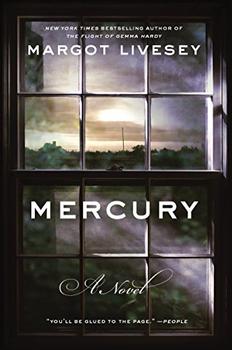
by Margot Livesey
Published 2017
A taut emotional thriller about love, obsession and the secrets that pull a family apart.

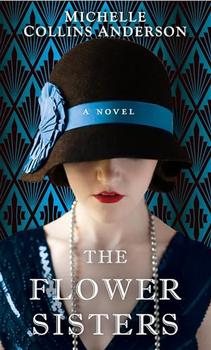
The Flower Sisters
by Michelle Collins Anderson
From the new Fannie Flagg of the Ozarks, a richly-woven story of family, forgiveness, and reinvention.

The House on Biscayne Bay
by Chanel Cleeton
As death stalks a gothic mansion in Miami, the lives of two women intertwine as the past and present collide.

The Funeral Cryer by Wenyan Lu
Debut novelist Wenyan Lu brings us this witty yet profound story about one woman's midlife reawakening in contemporary rural China.
Your guide toexceptional books
BookBrowse seeks out and recommends the best in contemporary fiction and nonfiction—books that not only engage and entertain but also deepen our understanding of ourselves and the world around us.