Summary | Excerpt | Reading Guide | Reviews | Beyond the book | Read-Alikes | Genres & Themes | Author Bio
Critics' Opinion:
Readers' Opinion:
First Published:
Nov 2012, 976 pages
Paperback:
Oct 2013, 976 pages
 Book Reviewed by:
Morgan Macgregor
Buy This Book
"There is no such thing as reproduction. When two people decide to have a baby, they engage in an act of production." So begins Andrew Solomon's Far From The Tree, a large (literally, it's 700 pages without the endnotes) and largely captivating book that deals with the flip side of the age-old adage to which its title refers, asking: What if the apple does fall far from the tree? After all, for all the planning and dreaming and designing we do as prospective parents, there's really not a whole lot we can control about the people we give birth to. No amount of speculation or projection prepares us for the undeniable fact that, no matter who we are, "parenthood abruptly catapults us into a permanent relationship with a stranger."
So what happens if we don't get the child we expected, or the one we think we deserve? What if we have a different, an "exceptional" child - one who seems to speak another language, or live in a different world, entirely? What if our children are nothing like us? Far From The Tree is about these "exceptional" children, and the families that raise them. Specifically, it is a "study of families who accept their children, and how that relates to those children's self-acceptance - that universal struggle we negotiate partly through the minds of others. In turn, it looks at how the acceptance of the larger society affects both these children and their families."
"Through the minds of others" - that's an important factor, because it turns out that when you enter into a conversation about, or with people who are different or exceptional, that conversation is nearly always about identity. Solomon contends that there are two types of identities bestowed on us. Vertical identities are the ones we inherit from our parents - ethnicity, language, religion, nationality. Horizontal identities are traits that don't have such ready transference - sexual preference, disability, psychopathy, genius. Far From The Tree deals with such horizontal identities. Families who are coping with deafness, dwarfism, Down syndrome, autism, schizophrenia, multiple disabilities; families who have transgender children; families whose children are prodigies or who became criminals - each get their own chapter. You may be wondering what these disparate categories could possibly have in common. A fair amount, it turns out. The instances of a horizontal identity such as genius for example, are just as rare and seemingly random as ones for Down Syndrome. The author, who is gay, points out that while each horizontal identity is different from the other, what they together share is the fact that often others perceive them as "undesirable."
Solomon says that having a clearly labeled identity allows "parents to stop viewing their different child as ill." Consider, for example, Alcoholics Anonymous. AA was the first group to suggest that a disease could be managed by claiming it as an identity, and that one's very success in dealing with the disease is directly related to the extent to which one can embrace, accept and live within that identity.
Embracing who you are, finding a community with whom to identify - all sound great until you consider the politics. In chapter after chapter, case after case (Solomon's research is exhaustive and includes anecdotes from over 250 families), we hear of children and their parents whose lives have been vastly enriched, sometimes even saved, through claiming an identity - deaf culture, dwarfism conferences, autism advocates - but the flip side of the coin is this: If these differences are identities rather than illnesses, why do they need special treatment under the law? "Repairing the body and repairing entrenched social prejudice are objectives that dance a troubling waltz; either fix can have unwelcome consequences. A repaired body may have been achieved through brutal trauma and in response to unfair social pressures; a repaired prejudice can eliminate the rights that its existence had called into being...Disabled people are protected by fragile laws, and if they are judged to have an identity rather than an illness, they may forfeit those safeguards."
Lest I'm making the book sound too political, let me assure the reader: there is more humanity in these pages than any novel I've read this year. Solomon spends time with - and becomes close to - people living under extraordinary circumstances and thriving, people who make almost unthinkable challenges look not just tolerable, but something to be celebrated. In almost every case, when speaking with exceptional children or their parents, we hear the same refrain: that while their lives are not exactly what they expected or hoped for, they wouldn't trade them for anything. Their lives are a testament to the power of perspective, and of love.
Solomon's book is remarkable in that it speaks for and about people with horizontal identities, but it also puts the reader directly in contact with them. Perhaps the most moving parts of the book are when someone with whom the author is speaking does the literary equivalent of turning to the camera and saying, "there is nothing wrong with me." As one mother of a girl who is a talented athlete and a dwarf says, "People keep saying, 'Isn't that amazing?' She doesn't want to be amazing because she's a dwarf. What she wants is to be judged like the others." She wants to be treated like a "normal" kid because she is a normal kid.
There are, of course, people who continue the important work of finding cures for various conditions, but what this little girl, and many others in the book highlight, is that many people with disabilities don't want to be "cured," because they're not sick. Many deaf people do not want to hear, because they hear already, just not the way that you and I do (there's a huge movement within deaf culture that rallies against cochlear implants and new technologies that could restore hearing to deaf people. The people within this movement feel that it's similar to limb lengthening for short people - something cosmetic and insulting). Transgender kids don't want to be "fixed" or "treated," they want to be who they believe themselves to be. People with disabilities don't want to be condescended to, and excused from doing things, they want to be given the opportunity to show what they can do.
Solomon believes that empathy, acceptance, and understanding are crucial for the sake of the people toward whom they're extended. This sentiment is echoed by Jim Sinclair, an autistic person, in what was for me, the most arresting passage in the book:
"When parents say, 'I wish my child did not have autism,' what they're really saying is, 'I wish the autistic child I have did not exist, and I had a different (non-autistic) child instead.' Read that again. This is what we hear when you mourn over our existence. This is what we hear when you pray for a cure. This is what we know, when you tell us of your fondest hopes and dreams for us: that your greatest wish is that one day we will cease to be, and strangers you can love will move in behind our faces."
Solomon argues for empathy and acceptance even in relatively more difficult circumstances. He contends, for example, that there are children who are predisposed to committing crimes - something in their makeup makes them more likely to be criminals than those of other children. But because these traits are not visible, and do not show up right away, it's difficult for parents to have to do that inevitable reconciling when the traits do start to make themselves apparent. And society is very harsh on these parents in particular, since having a violent or disturbed child is seen more as a "nurture rather than a nature" problem. A child goes on a shooting rampage and the first question everyone asks is "what's wrong with the parents?" Solomon asserts that a certain level of acceptance and compassion needs to be extended to these parents - that having a child who is seriously disturbed in this way can be as "accidental" as having one who's deaf - and that if we can accept that some children are born with innate qualities they didn't inherit from their parents, we can then focus on how to help these kids before they ruin their own lives, instead of demonizing them and their families after the fact.
Far From The Tree is long and some readers might not be as willing to slog through some of the longer chapters as I was. Some of the better anecdotes and stories are buried within chapters that could have been shorter. But it's worth the read. It felt, for this reader anyway, not only inspiring and compelling, but also personal because of its inclusive message. "Difference is what unites us," Solomon says. "While each of these experiences can isolate those who are affected, together they compose an aggregate of millions whose struggles connect them profoundly. The exceptional is ubiquitous; to be entirely typical is the rare and lonely state." Solomon is a champion of and for people with differences, and so, he's a champion for all of us.
Additional Information
A trailer for the book can be found by clicking the video below:
 This review was originally published in The BookBrowse Review in November 2012, and has been updated for the
October 2013 edition.
Click here to go to this issue.
This review was originally published in The BookBrowse Review in November 2012, and has been updated for the
October 2013 edition.
Click here to go to this issue.

If you liked Far From the Tree, try these:
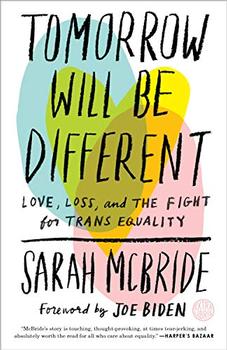
by Sarah McBride
Published 2019
A captivating memoir that will change the way we look at identity and equality in this country.
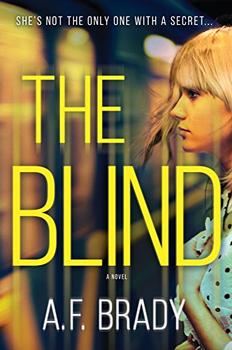
by A.F. Brady
Published 2018
A razor-sharp debut about a woman who goes so far off the deep end, she might never make it back up…
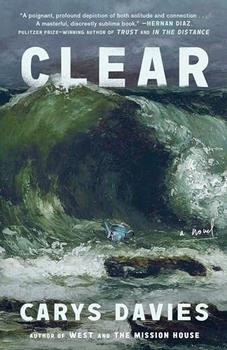
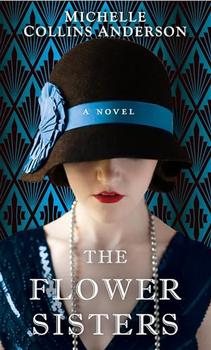
The Flower Sisters
by Michelle Collins Anderson
From the new Fannie Flagg of the Ozarks, a richly-woven story of family, forgiveness, and reinvention.
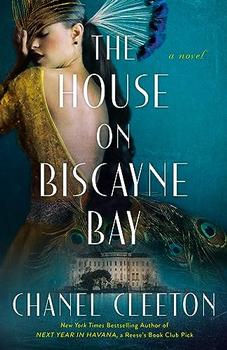
The House on Biscayne Bay
by Chanel Cleeton
As death stalks a gothic mansion in Miami, the lives of two women intertwine as the past and present collide.
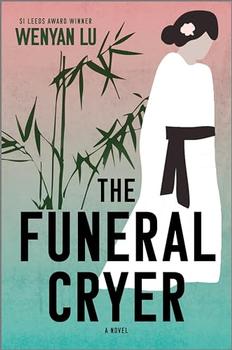
The Funeral Cryer by Wenyan Lu
Debut novelist Wenyan Lu brings us this witty yet profound story about one woman's midlife reawakening in contemporary rural China.
Your guide toexceptional books
BookBrowse seeks out and recommends the best in contemporary fiction and nonfiction—books that not only engage and entertain but also deepen our understanding of ourselves and the world around us.