Summary | Excerpt | Reviews | Beyond the book | Read-Alikes | Genres & Themes | Author Bio
Critics' Opinion:
Readers' Opinion:
First Published:
May 2012, 432 pages
Paperback:
Jan 2013, 432 pages
 Book Reviewed by:
Poornima Apte
Buy This Book
Richard Ford's novel, Canada, is a book that reveals its spoilers early: "First, I'll tell about the robbery our parents committed. Then about the murders, which happened later," says Dell Parsons, the 60-something narrator of the story.
Canada essentially consists of two narratives: the robbery in the first, serving as propellant for what follows in the second. Fifteen year-old Dell Parsons and his twin sister, Berner, are products of a marriage that should never have been. Dell's dad, Bev Parsons, a gregarious Southerner from Alabama, takes an early retirement from the Air Force and decides to settle in Great Falls, Montana. He brings with him his scholarly Jewish wife, the daughter of immigrants resettled in Tacoma.
At the vortex of the events is 15-year-old Dell who watches as the life he dreams of having - high school in the fall, participating in the school chess club - slowly starts disintegrating after his parents rob the Agricultural National Bank in Creekmore, North Dakota as a way of shaking off debt.
It takes Richard Ford about half the book to get to the robbery and a reader can be forgiven if his or her attention wanders a bit. Ford's descriptions of the Montana countryside and the Parsons' cramped life on the fringes of society, however, are beautifully and leisurely done. If Ford takes his time building up to the life-altering event, it is because he delves into the teens' psyches and into the effects that even small actions and misinterpreted reactions can have on them. The laconic pace mirrors Dell's own stifling and apprehensive view of the restricted world he sees. It's heart-wrenching to watch Dell figure out the adult world with just his less-than-model parents as guides. "Things were happening around me," he remembers. "My part was to find a way to be normal. Children know normal better than anyone." Except of course, Dell doesn't. That he and his sister have to cobble together some kind of "normal" through the fractured prisms of their parents' tragic (and wholly avoidable) mistakes is what makes Canada such a moving read. It is hard enough for children to make sense of their world when their parents are on sure footing. But when parents are still trying to make sense of the order of things around them, what measure of success can the kids hope for?
A modicum of success - or at least a pale imitation of it - does eventually visit Dell in Canada where he is transported to the vast plains of Saskatchewan by a distant family friend, Mildred. By this time, Dell's parents are in jail and sister Berner, has left to carve out her life according to her own plans. Mildred drops Dell off with her brother, Arthur Remlinger, somebody who is himself running away from a shady past. "A.R." owns the Leonard hotel in the fictional town of Fort Royal and Dell works odd jobs during the goose-hunting season when tourists from America visit. But as it turns out, tragedy follows Dell even to the remote plains of Saskatchewan and, once again, his life is recast as a result of an adult's follies.
Canada is a big book in every sense of the word - set against a vast, stark landscape, dealing with heavy metaphors. It is a beautifully crafted novel; yet its languid pace, especially in the first half of the book, will unfortunately lose many readers. In the end, Canada emerges as a wonderful, deeply contemplative look at some of the most essential questions of all our lives: How do you deal with loss? Are there second acts in life? Exactly how fluid are boundaries?
Dell quotes the great Irish poet W. B. Yeats who once said, "Nothing can be sole or whole that has not been rent." What makes Canada so compelling is that it shows just how much damage one impulsive act can cause - damage that a person can spend a lifetime trying to undo. It is no coincidence that the adult-Dell loves the work of Thomas Hardy, an author known to create characters that encounter sudden transitions and crossroads. Just as in Hardy's stories, the roles that chance and fate play loom large in Richard Ford's novel. Impersonation and deception are great themes in American literature, Dell points out. But in Canadian literature, not so much. In Canada, Dell seems to imply, you accept your fate and weather the elements, trying to carve out a life of grace - making something whole again that had once been horribly rent.
 This review was originally published in The BookBrowse Review in May 2012, and has been updated for the
January 2013 edition.
Click here to go to this issue.
This review was originally published in The BookBrowse Review in May 2012, and has been updated for the
January 2013 edition.
Click here to go to this issue.

If you liked Canada, try these:
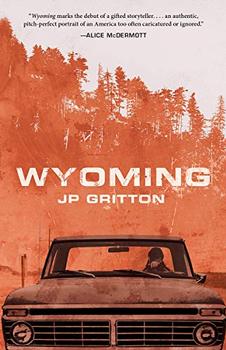
by JP Gritton
Published 2019
A cross between Daniel Woodrell and Annie Proulx, Wyoming is about the stubborn grip of inertia and whether or not it is possible to live without accepting oneself.
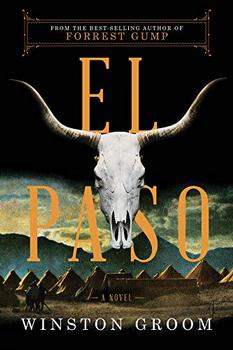
by Winston Groom
Published 2017
Three decades after the first publication of Forrest Gump, and seventeen years since his last novel, Winston Groom returns to fiction with this sweeping American epic.




The Flower Sisters
by Michelle Collins Anderson
From the new Fannie Flagg of the Ozarks, a richly-woven story of family, forgiveness, and reinvention.
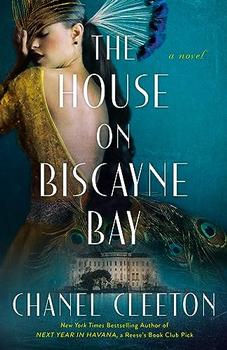
The House on Biscayne Bay
by Chanel Cleeton
As death stalks a gothic mansion in Miami, the lives of two women intertwine as the past and present collide.

The Funeral Cryer by Wenyan Lu
Debut novelist Wenyan Lu brings us this witty yet profound story about one woman's midlife reawakening in contemporary rural China.
Your guide toexceptional books
BookBrowse seeks out and recommends the best in contemporary fiction and nonfiction—books that not only engage and entertain but also deepen our understanding of ourselves and the world around us.