Summary | Excerpt | Reading Guide | Reviews | Beyond the book | Read-Alikes | Genres & Themes | Author Bio
Critics' Opinion:
Readers' Opinion:
First Published:
Jun 2012, 384 pages
Paperback:
Jun 2013, 416 pages
 Book Reviewed by:
Karen Rigby
Buy This Book
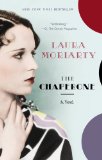
In the mid-19th century, New York's population of homeless children approximated 30,000. The founder of the Children's Aid Society, Charles Loring Brace, suggested placing these children with families on farms - so began the Orphan Train Movement, a social experiment that lasted well into the 20th century and helped inspire modern foster care. Cora Carlisle (née Kaufmann), the protagonist in Laura Moriarty's novel, The Chaperone, was one such orphan adopted by a Kansas couple. When readers first meet her, she is a mother and housewife who longs for information about her past and is preoccupied with propriety even as the Jazz Age ushers in social change.
Enter Louise Brooks (see backstory): a sultry, intelligent, headstrong Wichita teenager whose local notoriety contrasts with thirty-six-year-old Cora and whose candor contributes to an emotional awakening that spans the '20s through the early '80s. Readers drawn to The Chaperone for the jacket description and cover photo of the real-life Brooks should note that, while the fictional Brooks is based on the silent film star and traces a similar path, the story does not attempt to follow her entire life. Most of the novel focuses on the time surrounding her invitation to the Denishawn School of Dancing in New York, an opportunity that prompts Cora to volunteer as her chaperone. Brooks emerges as more of an enigmatic foil for Cora rather than as a fully inhabited character.
Moriarty skillfully portrays the tension between these two unlikely roommates through encounters that range from the everyday, such as discussions over Brooks's forward behavior; to the historical, such as attending a jazz show with a mixed-race audience; and from the painfully comedic, likening women who engage in premarital liaisons to "unwrapped candy"; to the serious, a revelation of childhood trauma. Such scenes twine with Cora's recollection of events at home - including the discovery of the real reason behind her marriage, her husband's dangerous choice in love, and the agreement they strike to keep prying eyes away - as well as the ongoing search for her birth mother and its consequences.
After spending the summer in the city and learning a few harsh truths about Brooks as well as herself, Cora's views on family, Prohibition, race, cohabitation, homosexuality, contraceptives, and morality are broadened to the extent that she reflects, "The young can exasperate, of course, and frighten, and condescend, and insult, and cut you with their still unrounded edges. But they can also drag you, as you protest and scold and try to pull away, right up to the window of the future, and even push you through." It is a simple yet heartfelt realization packed amid curious period details.
The Chaperone offers an imaginative take on women's lives. Though some readers may question the main characters' interpretation of what a newly liberated, enlightened life entails, this is a worthy portrait of loyalty in friendship, courage in the face of disappointment, and belief in remaking the self.
 This review was originally published in The BookBrowse Review in June 2012, and has been updated for the
June 2013 edition.
Click here to go to this issue.
This review was originally published in The BookBrowse Review in June 2012, and has been updated for the
June 2013 edition.
Click here to go to this issue.

If you liked The Chaperone, try these:
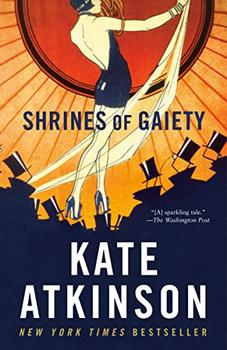
by Kate Atkinson
Published 2023
The #1 national bestselling, award-winning author of Life after Life transports us to a restless London in the wake of the Great War--a city fizzing with money, glamour, and corruption--in this spellbinding tale of seduction and betrayal
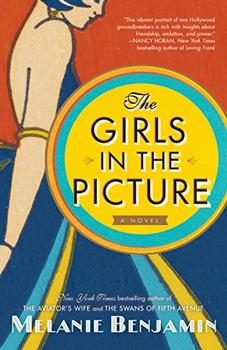
by Melanie Benjamin
Published 2019
From the New York Times bestselling author of The Swans of Fifth Avenue and The Aviator's Wife, a fascinating novel of the friendship and creative partnership between two of Hollywood's earliest female legends - screenwriter Frances Marion and superstar Mary Pickford.


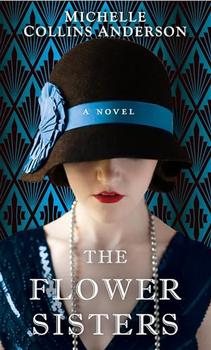
The Flower Sisters
by Michelle Collins Anderson
From the new Fannie Flagg of the Ozarks, a richly-woven story of family, forgiveness, and reinvention.
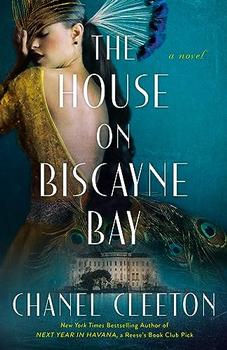
The House on Biscayne Bay
by Chanel Cleeton
As death stalks a gothic mansion in Miami, the lives of two women intertwine as the past and present collide.

The Funeral Cryer by Wenyan Lu
Debut novelist Wenyan Lu brings us this witty yet profound story about one woman's midlife reawakening in contemporary rural China.
Your guide toexceptional books
BookBrowse seeks out and recommends the best in contemporary fiction and nonfiction—books that not only engage and entertain but also deepen our understanding of ourselves and the world around us.