Summary | Excerpt | Reviews | Beyond the book | Read-Alikes | Genres & Themes | Author Bio

Critics' Opinion:
Readers' Opinion:
First Published:
May 2012, 304 pages
Paperback:
Mar 2013, 304 pages
 Book Reviewed by:
Donna Chavez
Buy This Book
David Downing is a master of establishing a keen sense of time and place. Even though I've never been to Berlin, much less anywhere in the winter of 1945, on every page of this novel I was awash in the crumbled ruins of Hitler's wrath. Strange choice of word, "wrath" - especially when used to characterize the Führer's dream of a utopian Germany? Well, there you are. That is Downing's voice, translated through protagonist John Russell. It's a voice that leaves me feeling as though the national leaders who engaged in World War II cared less about the safety and sanctity of people's lives than they did about the advancement of their cause. That Hitler might have preferred total destruction of the nation over sharing the country with non-Aryans becomes a logical conclusion one might draw here.
Because of Hitler's despicable actions and the subsequent involvement of so many countries in the war, Downing's main characters, Anglo-American journalist Russell (who lived in Germany before the war, has an adult son with his ex-German wife, and has spent most of the war years in Germany) and his German actress girlfriend Effi Koenen, find their lives upended. Whether through happenstance, self-and-family-preservation or some cockeyed combination of the two, Russell turns his journalist credibility to espionage. Lehrter Station is not a modern day Bourne-style shoot 'em up espionage - nor have any of Downing's previous novels ever been. No. Downing's style is less James Bond, more James and the Giant Peach in the measure of Russell's quiet resourcefulness as he encounters a series of potentially lose-lose situations.
As a protagonist, Russell combines all the cynicism of his journalistic background with his life as a former World War I soldier bearing witness to the havoc World War II has wreaked. And so this also becomes a kind of clean-up as Russell reconnects with a number of the people he encountered in the previous books, including his beloved Effi and his Russian nemesis, Yevgeny Shchepkin. However, Europe appears beyond clean up, beyond any kind of repair at all with the British, the French, the Americans and Russians all vying for the spoils. The image of circling vultures, while not used by Downing, is more than fitting for the scene he portrays.
Russell laments, "Who would have thought that peace would prove more difficult than the war? The diminished danger of imminent death was certainly to be welcomed, but what else had peace brought in its train? Chaos, hunger, and corrupted ideals. Ivan the Rapist and GI Joe the Profiteer."
This is not a heartening look at post-war Europe by any means. Nor is it a reassuring view of war, period. And at times characterization and plot take a back seat to setting the scene of the abject devastation of people's lives, friends, family and homes. So, has Downing written a novel or an anti-war polemic? Maybe it is a little of each. For many of us, recent wars have waged nearly invisible damage on our everyday lives; perhaps Downing's work is intended to deliver the feel if not the reality close to mind. He succeeds.
This is the fifth in the John Russell series that opened in Berlin in 1939. Goodness knows there was enough political turmoil in the post-war years to provide ample grist for Russell's cynical bully pulpit. I'll be waiting for more.
About the Series
 This review was originally published in The BookBrowse Review in May 2012, and has been updated for the
March 2013 edition.
Click here to go to this issue.
This review was originally published in The BookBrowse Review in May 2012, and has been updated for the
March 2013 edition.
Click here to go to this issue.

If you liked Lehrter Station, try these:
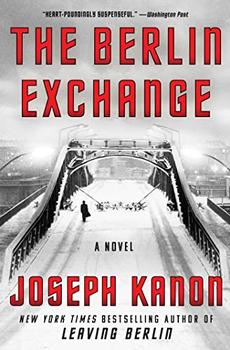
by Joseph Kanon
Published 2023
From "master of the genre" (the Washington Post) Joseph Kanon, an espionage thriller set at the height of the Cold War, when a captured American who has spied for the KGB is swapped by the British and returns to East Berlin needing to know who arranged his release and what they want from him.
by John Lawton
Published 2014
A gripping, meticulously researched and richly detailed historical thriller - a moving story of espionage and war, and people caught up in the most tumultuous events of the twenty-first century.





The Flower Sisters
by Michelle Collins Anderson
From the new Fannie Flagg of the Ozarks, a richly-woven story of family, forgiveness, and reinvention.
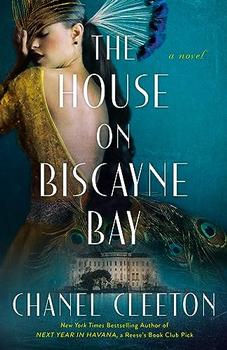
The House on Biscayne Bay
by Chanel Cleeton
As death stalks a gothic mansion in Miami, the lives of two women intertwine as the past and present collide.

The Funeral Cryer by Wenyan Lu
Debut novelist Wenyan Lu brings us this witty yet profound story about one woman's midlife reawakening in contemporary rural China.
Your guide toexceptional books
BookBrowse seeks out and recommends the best in contemporary fiction and nonfiction—books that not only engage and entertain but also deepen our understanding of ourselves and the world around us.