Summary | Excerpt | Reviews | Beyond the book | Read-Alikes | Genres & Themes | Author Bio
Critics' Opinion:
Readers' Opinion:
First Published:
May 2012, 272 pages
Paperback:
Feb 2013, 272 pages
 Book Reviewed by:
Jo Perry
Buy This Book
Kurlansky's engaging portrait of Clarence Birdseye (1886 - 1956) - adventurer, inventor, entrepreneur, naturalist and omnivore - is important not only because Birdseye changed what we eat, how farmers grow crops, and how we cook our food, but for what Birdseye reveals about the American character: its resourcefulness, its inquisitiveness, and its exploitive relationship to the natural world.
Observant, eccentric, and always trying to make a buck, the young Birdseye immersed himself in nature, collecting, tasting, killing and selling specimens that interested him. At nine he trapped and shipped muskrats to England, and at eleven he launched his own taxidermy school. During his two years at Amherst College, he captured and sold frogs to the Bronx Zoo, and his fellow students nicknamed him "Bugs."
After his family's financial problems forced him to leave Amherst early, Birdseye, keen for adventure, took a job with the U.S. Biological Survey studying wildlife in New Mexico and Arizona. Kurlansky notes that while his colleagues ate food from cans, Birdseye cooked and ate rattlesnake, mice, chipmunk, gophers and packrats. Birdseye also got the idea to sell coyote pelts and made $600 when he returned to New York.
After a winter job measuring snowfall in New York City, intrepid Birdseye traveled to Montana as part of a dangerous government medical project studying Rocky Mountain spotted fever. During this trip, "Birdseye shot and trapped gophers, chipmunks, pine squirrels, woodchucks, ground squirrels, wood rats, snowshoe rabbit, cottontail rabbit, several species of mice, flying squirrels, badgers, weasels, muskrat and bats. He also shot and killed the large and dangerous brown bear, the elusive mountain sheep... coyotes, both mule and white-tailed deer, and elks. He shot most of what he saw; but he also set traps and collected 4,495 ticks. In the process he killed 717 wild animals, though he had said his goal was to get 1,000." The ticks Birdseye trapped and the report he co-authored helped scientists understand and control tick-borne fever and other diseases. His report "called for the extermination" of many species and, as Kurlansky notes, "contains no notion of the need to preserve nature or the natural order..."
Montana was just a prelude to Birdseye's most transformative adventure, a trip to Labrador with medical missionary Wilfred Grenfell, from 1912 to 1915. In Labrador, Birdseye established a lucrative fox fur business he would run for several years. Quick to adapt to his new environment, he traveled long distances by dogsled, sent animal specimens he'd stuffed to the U.S. Biological Survey, observed birds and seals, and enjoyed unique meals, which included marinated lynx, seal and owl.
After his time in Labrador, but before he became famous for inventing the flash-freezing process, Birdseye worked for the U.S. Fisheries Association where, "what excited his imagination was the problem of getting fresh fish to market in good condition." This preoccupation led to a breakthrough when, as Birdseye described it, his "subconscious suddenly told [him] that perishable foods could be kept perfectly preserved in the same way [he] had kept them in Labrador - by quick freezing!" This inventive technique greatly improved the quality of frozen foods; prior to flash-freezing, foods would freeze slowly, causing larger ice crystals to form, which resulted in mushy and/or dry food when thawed. Flash-freezing, on the other hand, prevented the large crystals from forming, which yielded tastier and more desirable meals.
Kurlansky covers the history of refrigeration, the chemistry of freezing food, the various freezing processes and the equipment Birdseye invented to package, store, transport and sell "frosted" food, as well as the way these inventions changed the American diet. Americans, who had once eaten fresh-grown produce, eventually came to love "frosted" vegetables from distant factory farms. Other foods that became popular in the Birdseye era - JELL-O, Velveeta, Bubblegum, and 7Up - presaged our era of long-distance and industrialized food. One of Birdseye's assistants recalls, "There was not a frozen food item that I do not recall Birdseye experimenting with at one time or another in the early days. He tried all kinds of things - not only seafood, meats and vegetables, but baked and unbaked goods as well as cooked foods."
In many ways Kurlanksy's biography resembles the animal specimens Birdseye expertly stuffed and preserved; from it, the reader learns important and fascinating things about Birdseye, but what went on inside the man is absent from the narrative. Still, Kurlansky succeeds in selling the idea that, Birdseye, by transforming the way we preserve and distribute food, and by "[contributing] to the development of industrial-scale agriculture... changed our civilization... [and] made urban life possible." After reading this book, I suspect many readers will also remember Birdseye as a predator who enjoyed killing animals and who never missed the opportunity to exploit nature for profit.
Throughout this smart, eloquent and sometimes troubling biography, Kurlansky celebrates the restless and particularly American energy that animated Birdseye: no experience or opportunity was wasted. Birdseye lived the way he ate, digesting everything. He was a curious adventurer eager to discover the next big thing, always looking forward. And though Birdseye may not have been aware of the huge the impact his flash-freezing process would have on both the environment and western diets, people today often struggle with the repercussions of his invention.
 This review was originally published in The BookBrowse Review in May 2012, and has been updated for the
February 2013 edition.
Click here to go to this issue.
This review was originally published in The BookBrowse Review in May 2012, and has been updated for the
February 2013 edition.
Click here to go to this issue.

If you liked Birdseye, try these:
by Edmund Morris
Published 2020
From Pulitzer Prize-winning author Edmund Morris comes a revelatory new biography of Thomas Alva Edison, the most prolific genius in American history.
by Tom Jackson
Published 2016
The refrigerator may seem mundane nowadays, but it is one of the wonders of twentieth-century science - lifesaver, food preserver, social liberator.

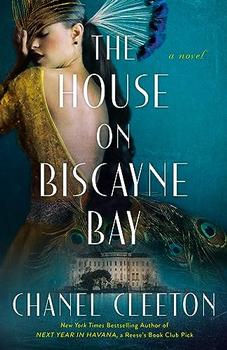
The House on Biscayne Bay
by Chanel Cleeton
As death stalks a gothic mansion in Miami, the lives of two women intertwine as the past and present collide.

The Flower Sisters
by Michelle Collins Anderson
From the new Fannie Flagg of the Ozarks, a richly-woven story of family, forgiveness, and reinvention.

The Funeral Cryer by Wenyan Lu
Debut novelist Wenyan Lu brings us this witty yet profound story about one woman's midlife reawakening in contemporary rural China.
Your guide toexceptional books
BookBrowse seeks out and recommends the best in contemporary fiction and nonfiction—books that not only engage and entertain but also deepen our understanding of ourselves and the world around us.