Summary | Excerpt | Reading Guide | Reviews | Beyond the book | Read-Alikes | Genres & Themes | Author Bio
Critics' Opinion:
Readers' Opinion:
First Published:
Mar 2012, 352 pages
Paperback:
Mar 2013, 304 pages
 Book Reviewed by:
Donna Chavez
Buy This Book
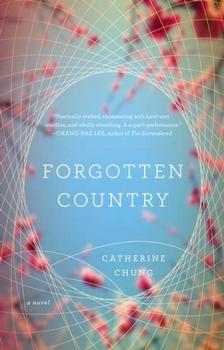
Chung's writing style reminds me of a fine painting where every brush stroke is laid down with purpose and control. Discipline is a word that comes to mind. Restraint is another. Nothing that is written is meant to be taken lightly. Every word has a job. Nothing extraneous is exposed. It is a style that suits the book's focus perfectly.
This is, after all, a novel about a family that communicates via stories, little parables whose meanings are not explicit but instead are couched inside the listener's mind. Maybe it's not the most efficient method of communicating. It's certainly not the most effective since it requires cooperation between the person relating the story and the one who is hearing it. And if the listener mishears or misinterprets the story's meaning, well, that is Chung's central theme. Because when Janie's grandmother tells her a story about how every generation of their family loses a daughter, the poor child takes on her baby sister's care as a personal responsibility. Whether that is what her grandmother intended or not is unclear. Regardless, it ends up being a heavy load placed upon the child.
The obvious consequence is a family paradigm where everyone, including baby sister Hannah, expects Janie to guard her, protecting her not just from outside danger but from self-inflicted harm and strife. The fact that it is an impossible task is what creates the basic conflict in the book. Combined with the added dimension of a family uprooted and thrust into a totally alien culture that values bluntness over parable, work over family, and the plot branches out in several directions. Chung successfully reins in these branches by employing the first person narrative. Her skill here makes it easy to forget this is a work of fiction. Indeed it reads so much like a personal memoir that I had to wonder if it really isn't a thinly veiled account of the author's own experience.
I guess that is neither here nor there because either way Chung knows her protagonist, and the strength of that finely tuned characterization carries the plot. Even when some plot points remain unresolved, it is forgivable because, well, that's just the kind of person Janie is. Her Eastern/Western culture blend doesn't provide easy answers or pat resolutions. So, reader, we will have to forego them as well. No matter. Really. Some of the best books leave us with undigested morsels to ponder at our leisure.
Now that Chung has reached such a high bar with fiction-as-memoir I look forward to where her considerable skills will take her next.
 This review was originally published in The BookBrowse Review in March 2012, and has been updated for the
March 2013 edition.
Click here to go to this issue.
This review was originally published in The BookBrowse Review in March 2012, and has been updated for the
March 2013 edition.
Click here to go to this issue.

If you liked Forgotten Country, try these:
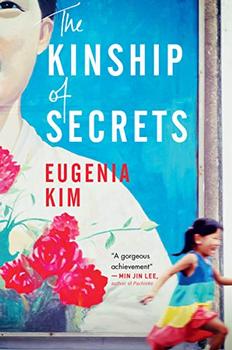
by Eugenia Kim
Published 2019
From the author of The Calligrapher's Daughter comes the riveting story of two sisters, one raised in the United States, the other in South Korea, and the family that bound them together even as the Korean War kept them apart.

by Paul Fischer
Published 2015
A rare glimpse into a secretive world, illuminating a fascinating chapter of North Korea's history that helps explain how it became the hermetically sealed, intensely stage-managed country it remains today.
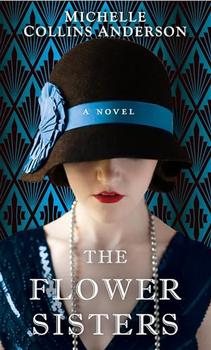
The Flower Sisters
by Michelle Collins Anderson
From the new Fannie Flagg of the Ozarks, a richly-woven story of family, forgiveness, and reinvention.
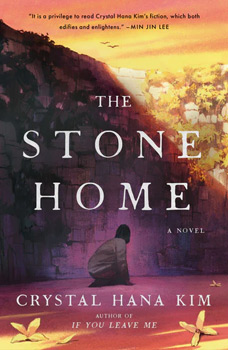
The Stone Home
by Crystal Hana Kim
A moving family drama and coming-of-age story revealing a dark corner of South Korean history.
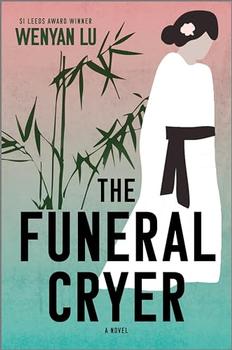
The Funeral Cryer by Wenyan Lu
Debut novelist Wenyan Lu brings us this witty yet profound story about one woman's midlife reawakening in contemporary rural China.
Your guide toexceptional books
BookBrowse seeks out and recommends the best in contemporary fiction and nonfiction—books that not only engage and entertain but also deepen our understanding of ourselves and the world around us.