Summary | Excerpt | Reviews | Beyond the book | Read-Alikes | Genres & Themes | Author Bio
Critics' Opinion:
Readers' Opinion:
First Published:
Mar 2012, 304 pages
Paperback:
Mar 2013, 320 pages
 Book Reviewed by:
Poornima Apte
Buy This Book
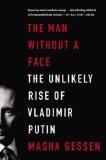
It felt like a scene out of a James Bond movie. Six years ago Alexander Litvinenko, a Russian citizen and ex-KGB agent seeking asylum in the UK, died under mysterious circumstances in London. Later it was discovered, in a sensational case that brought back whiffs of the Cold War, that Litvinenko was poisoned by exposure to trace amounts of plutonium. While a direct connection between Litvinenko's murder and the Russian President Vladimir Putin was never made, enough evidence points in that direction, says journalist Masha Gessen in her scathing book, The Man Without a Face: The Unlikely Rise of Vladimir Putin. Litvinenko had been unearthing and making public many illegal activities perpetrated by the FSB - the Russian Federal Security Service - and his findings were doubtless interfering with the goings on of the Russian authorities, Gessen argues.
In fact, Litvinenko is only one of many who were secretly killed in Putin's Russia. For example, politician Sergei Yushenkov, who extensively criticized Putin's policies was shot in the chest four times; outspoken journalist Anna Politkovskaya, who alleged that Putin was guilty of the genocide of the Chechen people, was shot in her apartment building; and Russian-American journalist Paul Klebnikov, author of a critical book about Russian oligarch Boris Berezovsky and another on a Chechen warlord, was gunned down in the street. "The simple and evident truth is that Putin's Russia is a country where political rivals and vocal critics are often killed, and at least sometimes the order comes directly from the president's office," Gessen writes.
Exactly how did a relatively unknown paper-pusher from the KGB rise all the way to the top of the Russian government? It was a case of being at the right place at the right time and of Putin being a blank slate - an entire nation could project upon him an image they wanted to see. Of the many who did so was oligarch Boris Berezovsky, a member of President Yeltsin's diminishing inner circle, who wanted someone fairly competent to take over the reins of the geographically largest country in the world. Berezovsky remembered Putin as a man who refused a bribe and who was of sterling character; at the time the Yeltsin circle evaluated him, Putin was head of Russia's secret police. Even physically, Putin was everything Yeltsin was not - a smart-looking politician without any readily discernible bad habits. In short order, Putin was moved to the very top, and in August 1999, Yeltsin named Putin Prime Minister.
Gessen's account traces Putin's childhood in Leningrad, where he carefully cultivated (and later maintained) the image of a street thug. The book follows Putin's career as a KGB agent in Dresden, Germany and, subsequently, his rise in Leningrad politics. Gessen also chronicles how Putin, as President, systematically had the government take over private companies and interests - including the major television networks. In due course, candidates who opposed Putin were cut off from resources, venues, and a forum through which to voice their opinions. When all dissent was drowned out, only one voice rang true - and it was Putin's.
Journalist Masha Gessen is Russian-American and still calls Moscow home. She has been called courageous for fearlessly calling out President Putin on his slow stifling of the democratic process - and rightly so. Her book, full of deeply researched exposés about Putin and his assembly, is bound to rankle many nerves in Russia's highest ranks of government. Given the fate of previous outspoken journalists, one can't help but worry about her. This is incredibly brave journalism - her account of Putin's single-minded and gradual takeover of Russia is breathtaking, if at times relentlessly critical.
Gessen's crisp writing style makes The Man Without a Face read like a well-paced page-turner. One doesn't need to know much about Russian politics to truly enjoy this book - Gessen gives readers enough historical background so that those without prior knowledge of the underlying geopolitics can still appreciate the book. As global citizens, it behooves us to learn more about every country around the world, but the case for Russia is even more compelling. The fate of the democratic process in the world's largest country, with an impressive nuclear arsenal and with veto power in the U.N. Security Council, has direct relevance on America's international policy as well. To that end, like all great non-fiction, The Man Without a Face makes for interesting reading that is also good for you.
Despite the grim reporting in its pages, Gessen leaves us with a glimmer of hope. In an epilogue, she notes that the Russian people have woken up to Putin's atrocities, and she seems certain that the days of the "small, vengeful man" are numbered. She points to protests in Moscow as evidence. The reader, however, can see no ready way out. In a country where dissent is readily squashed and where the democratic institutions have been systematically dismantled, one can't help but wonder if Gessen's optimism is misplaced.
In the end, The Man Without a Face is essential reading for everyone - not just for those interested in geopolitics. As Franklin D Roosevelt said in his first inaugural speech, "the only thing we have to fear is fear itself." Gessen's intrepid journalistic account reminds us that fear can slowly choke democratic processes and that, while the electorate sleeps, the party of "crooks and thieves" can slowly chip away at essential freedoms until the very concept of democracy rings hollow.
 This review was originally published in The BookBrowse Review in April 2012, and has been updated for the
March 2013 edition.
Click here to go to this issue.
This review was originally published in The BookBrowse Review in April 2012, and has been updated for the
March 2013 edition.
Click here to go to this issue.

If you liked The Man Without a Face, try these:
by Orlando Figes
Published 2023
From "the great storyteller of Russian history" (Financial Times), a brilliant account of the national mythologies and imperial ideologies that have shaped Russia's past and politics - essential reading for understanding the country today.
by Masha Gessen
Published 2021
A bestselling, National Book Award–winning journalist's bracing elucidation of our tumultuous times.


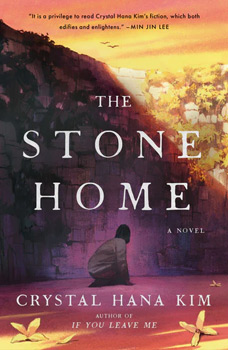
The Stone Home
by Crystal Hana Kim
A moving family drama and coming-of-age story revealing a dark corner of South Korean history.

The Flower Sisters
by Michelle Collins Anderson
From the new Fannie Flagg of the Ozarks, a richly-woven story of family, forgiveness, and reinvention.

The Funeral Cryer by Wenyan Lu
Debut novelist Wenyan Lu brings us this witty yet profound story about one woman's midlife reawakening in contemporary rural China.
Your guide toexceptional books
BookBrowse seeks out and recommends the best in contemporary fiction and nonfiction—books that not only engage and entertain but also deepen our understanding of ourselves and the world around us.