Summary | Excerpt | Reviews | Beyond the book | Read-Alikes | Genres & Themes | Author Bio
Critics' Opinion:
Readers' Opinion:
First Published:
Feb 2012, 384 pages
Paperback:
Dec 2012, 384 pages
 Book Reviewed by:
Poornima Apte
Buy This Book
One of life's many truths is that we're each the sum of our parts. It's not usually only nature or nurture that plays a role; it's both. Yet, what if you don't know one of the essential blocks of your character, you don't know who your parents are? It is this central question of identity that haunts a psychotherapy patient in Ellen Ullman's novel, By Blood.
Ullman uses an interesting story-telling device to narrate the patient's gradual exploration of her past. A professor of Classics, placed on administrative leave by his university, sets up his office next door to the therapist's. Coming in with significant baggage of his own, the troubled professor can't help but eavesdrop on the conversations between the therapist and the patient. The story, set in '70s San Francisco, is narrated by this professor.
When the patient first comes in, her primary problem is the sense of abandonment she feels after her lesbian lover leaves. Knowing that the patient is an adoptee and suspecting that the abandonment issues are chronic and probably transferred, the therapist encourages the patient to explore her past to find out who her biological parents are. The therapist is convinced that knowing her real family, and therefore her true identity, will leave the patient better equipped to handle her feelings.
What plays out over the course of the rest of the book is a detective story of sorts with the gradual unraveling of the patient's past. While her story is compelling in its own right, the psychotic professor's level of interference in the proceedings makes By Blood silently eerie. When the patient runs into stumbling blocks, it is the professor who conducts research at the library and quietly feeds her information by mail. Having suffered a trying childhood himself, the professor looks for some vicarious release through what he hopes will be the patient's disavowal of her biological parents and reconciliation with her adoptive ones.
For her part, the therapist, Dr. Dora Schussler, is racked with survivor's guilt. She is of German (Aryan) origin and remembers her parents using slurs against the Jews. So when the patient finds out that her biological mother is a Jewish survivor of the Holocaust, Dr. Schussler worries she will unconsciously pilot the narrative toward less unpleasant territory to make it easier on herself. She is concerned that her background will interfere with her treatment of the patient.
The most compelling portions of the book are told through the eyes of Michal Gershon, the patient's biological mother, as she speaks of her time through the Holocaust and the toll it took on her family. (Here, the narrator remains the same, but Ullman switches the point-of-view; essentially the narrator is reliving Michal Gershon's experiences because he overhears the patient retelling them.) She comes to describe how her German husband slowly turned on her and managed to feed her to the cruel historical forces taking over all of Europe - and how she then found herself in a displaced persons camp in Bergen-Belsen before finally relocating to Israel.
The displaced persons camps were a fallout of the Holocaust, where survivors from all over the world were brought. "Their former lives were gone," Ullman writes about the residents of these camps, "They were no longer Poles or Germans or Austrians; they were Jews, stateless. They were neither free to live in Europe nor emigrate to the United States nor join their fellow Zionists in Palestine. They were stuck in the mud of the camps." Ullman's descriptions of the Holocaust and these camps are evocative and heart-wrenching and one of the highlights of the novel. To her credit, Ullman doesn't let this story angle take over the novel's central focus. The patient's identity crisis and its overlap with that of the narrator always occupy central stage.
At first glance it seems as if Ullman, whose debut novel was the cult classic, The Bug, has moved into entirely new territory with By Blood. The setting, for one, is completely different. Yet the fundamental overarching theme of obsession - be it with a computer program or something more sinister - is the same. The narrator in By Blood is flawed in similar ways to the one in The Bug; they are both such troubled and obsessive personalities that it is not easy to identify with them. It becomes hard to believe that any one person can be so infatuated with a complete stranger's life. As By Blood progresses, the narrator's interest in the patient's outcome seems increasingly forced. After a while you almost stop caring that he cares.
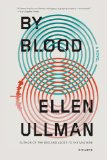
Ullman does a compelling job of illustrating how lives coincide in entirely unpredictable fashions. The cover art is telling - it shows two Doppler waves intersecting, each creating its own dissonance. One of the novel's flaws, however, is that this same dissonance can at times be jarring, as the story frequently stops then precariously lurches forward.
As for the setting, the San Francisco that Ullman paints is not the cheery Rice-A-Roni, Chez Panisse gourmet haven that most of us are familiar with. Instead it's a city enveloped in fog - both literally and figuratively. Like the patient, it seems the city too is trying to carve its identity, shaking off the fog of the 70s when the Zodiac killer stalked the streets and the Patty Hearst kidnapping dominated the big news headlines. By Blood has a fantastic sense of place; the brooding city and even the marble-plastered office building watched over by gargoyles, seem to mirror the dark recesses in the narrator's own troubled mind.
The overall dark, eerie atmosphere also serves to accentuate the realization that one's identity can be as much a yoke as a release - whether that identity is forged by external circumstances or simply, by blood.
 This review was originally published in The BookBrowse Review in March 2012, and has been updated for the
January 2013 edition.
Click here to go to this issue.
This review was originally published in The BookBrowse Review in March 2012, and has been updated for the
January 2013 edition.
Click here to go to this issue.

If you liked By Blood, try these:
by Edan Lepucki
Published 2024
From New York Times bestselling author Edan Lepucki comes an enthralling saga about family secrets that grow more powerful with time, set against the magical, dangerous landscape of California

by Nickolas Butler
Published 2017
Finalist for the 2016 Prix Médicis Etrangere
An epic novel of intertwining friendships and families set in the Northwoods of Wisconsin at a beloved Boy Scout summer camp—from the bestselling author of Shotgun Lovesongs


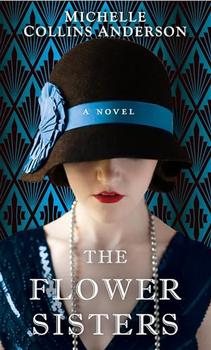
The Flower Sisters
by Michelle Collins Anderson
From the new Fannie Flagg of the Ozarks, a richly-woven story of family, forgiveness, and reinvention.
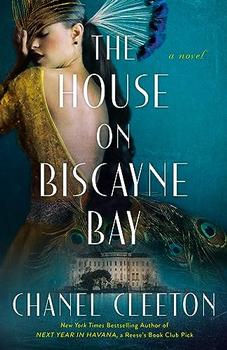
The House on Biscayne Bay
by Chanel Cleeton
As death stalks a gothic mansion in Miami, the lives of two women intertwine as the past and present collide.

The Funeral Cryer by Wenyan Lu
Debut novelist Wenyan Lu brings us this witty yet profound story about one woman's midlife reawakening in contemporary rural China.
Your guide toexceptional books
BookBrowse seeks out and recommends the best in contemporary fiction and nonfiction—books that not only engage and entertain but also deepen our understanding of ourselves and the world around us.