Summary | Excerpt | Reading Guide | Reviews | Beyond the book | Read-Alikes | Genres & Themes | Author Bio
Critics' Opinion:
Readers' Opinion:
First Published:
Mar 2012, 224 pages
Paperback:
Mar 2013, 240 pages
 Book Reviewed by:
Lucia Silva
Buy This Book
My copy of Why Be Happy When You Could Be Normal? is fat at the upper-right-hand corner from all the pages I folded down, the margins penciled with brackets and stars and notes. I read this book as a dialogue with myself - myself as a child, as a mother, as a lover, as a reader and as a writer. As someone who struggles with happiness, with depression, with purpose, with narrative. What is the meaning of happiness? How do we learn about love? What is the purpose of poetry? What is memoir? Big questions, any one of which could serve as a ripe subject for a hefty book. Yet in just 260 pages, Jeannette Winterson pens a road map through some of our largest life questions, and re-frames conventional ideas about the purpose of literature and its many forms - all the while shaping a chilling portrait of an adoptive mother who believed that "'The devil led [her] to the wrong crib,'" and of a child who survived on poetry in place of familial love.
Adopted children are self-invented because we have to be; there is an absence, a void, a question mark at the very beginning of our lives. A crucial part of our story is gone, and violently, like a bomb in the womb.
Toward the end of Why Be Happy, Winterson remarks, "I won't take no for an answer. What is 'no'? Either you have asked the wrong question or you have asked the wrong person. Find a way to get to the 'yes'." In the first half of this memoir, young Jeannette emerges as a child never daring to ask someone who is surely the wrong person (her adoptive mother) the wrong question (is she loved?) The grownup Winterson narrates as someone unwilling to accept the giant "no" at the beginning of her life, and the earnest plea at the heart of her defiance shines through each vignette. The pages read as darkly funny notes on a brutally sad childhood, a child fighting fiercely to survive a life that scarcely seems worth living. Winterson fills in the gaps in her story with the history of her factory town, reflections on T.S. Eliot, on the medieval mind, word-origins, working-class ethics - a mosaic of the fierce intellect that drives her out of her mother's house, out of Accrington, and, impossibly, into Oxford.
Life is layers, fluid, unfixed, fragments. I never could write a story with a beginning, a middle, and an end in the usual way because it felt untrue to me. That is why I write as I do and how I write as I do. It isn't a method; it's me.
This whole first half of the book feels like notes toward a life - determined scraps of story the author is willing into narrative. At first, these scattered pieces bothered me. I couldn't see where she was going, and I was worried the book would fall apart. Each piece is finely wrought - the portrait she draws of her abominable adoptive mother and their sad, dingy life, the landscape she paints of the working class Manchester factory town, her life-raft of books - but they don't seem to hang together.
Then, in the middle of the book, we flash forward several decades to 2007. Winterson is wildly successful, leaving a long relationship and taking care of her father. She finds her adoption papers, and begins to go seriously, suicidally, insane. The perspective shifts, and in these pages where her life falls apart, the memoir comes dramatically together. This turning point - a shift in self and story - is revealed in a change in the tone and shape of the narrative, and it absolutely floored me. Not until I was hit with the flash-flood of its force did I realize the power of the narrative I was in. The essence of Winterson's own tenuous life-story is mimicked in the structure of her memoir, a jumble of hazy pieces coalescing into a mind, a self. What felt unformed and gangly in the first half becomes svelte and athletic; what was meandering becomes as sure and steady as a freight train. In the beginning the memoir felt scattered to me because it was scattered - a writer faced with a story without a beginning, impossible to tell - and it's her own. Winterson collects bits of story and stitches them together, and it's not until she pulls back that you see that that holey garment is in fact the fabric of her formidable mind.
Going mad is the beginning of a process. It is not supposed to be the end result... Creativity is on the side of health - it isn't the thing that drives us mad; it is the capacity in us that tries to save us from madness.
Through the very structure of the memoir, we witness the most tender, secret facts of Winterson's life - the impossibility of a writer not knowing her own beginnings, and the creativity that is her lifeline out of the endless depths of that missing piece. Writing pulls her steadily back into her own life, convinces the voices in her head to play along, and helps her begin the arduous, nearly impossible journey of searching for her birth mother and finding her beginnings.
...[E]arlier meanings [of the word 'happy'] build in the hap - in Middle English, that is 'happ', in Old English, 'gehapp' - the chance or fortune, good or bad, that falls to you. Hap is your lot in life, the hand you are given to play... Pursuing happiness, and I did, and I still do, is not at all the same as being happy - which I think is fleeting, dependent on circumstances, and a bit bovine.
Winterson offers a reader much more than the satisfaction of voyeuristic curiosity that marks so many train-wreck memoirs; this is a memoir about how we deal with our lot in life. Not how we can endure it, but how we might meet it, how we begin a dialogue with it, how we become who we are when we are done being our past.
 This review was originally published in The BookBrowse Review in March 2012, and has been updated for the
March 2013 edition.
Click here to go to this issue.
This review was originally published in The BookBrowse Review in March 2012, and has been updated for the
March 2013 edition.
Click here to go to this issue.

If you liked Why Be Happy When You Could Be Normal?, try these:
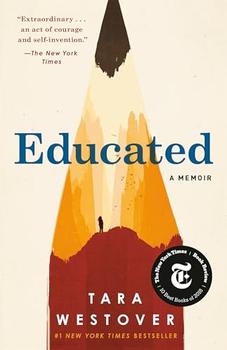
by Tara Westover
Published 2022
Winner of the 2018 BookBrowse Nonfiction Award
An unforgettable memoir about a young girl who, kept out of school, leaves her survivalist family and goes on to earn a PhD from Cambridge University.
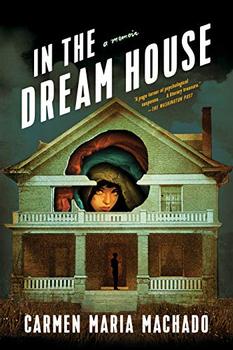
by Carmen Maria Machado
Published 2020
A revolutionary memoir about domestic abuse by the award-winning author of Her Body and Other Parties.

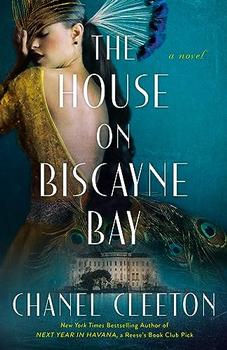
The House on Biscayne Bay
by Chanel Cleeton
As death stalks a gothic mansion in Miami, the lives of two women intertwine as the past and present collide.
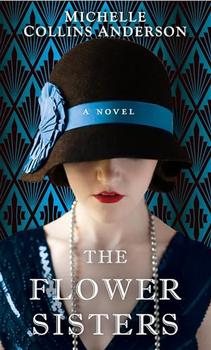
The Flower Sisters
by Michelle Collins Anderson
From the new Fannie Flagg of the Ozarks, a richly-woven story of family, forgiveness, and reinvention.
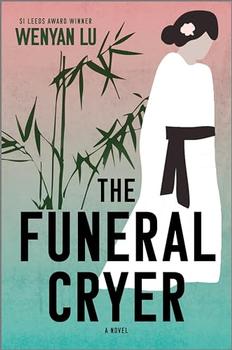
The Funeral Cryer by Wenyan Lu
Debut novelist Wenyan Lu brings us this witty yet profound story about one woman's midlife reawakening in contemporary rural China.
Your guide toexceptional books
BookBrowse seeks out and recommends the best in contemporary fiction and nonfiction—books that not only engage and entertain but also deepen our understanding of ourselves and the world around us.