
-
Your next favorite book
is waiting.
Summary | Excerpt | Reading Guide | Discuss | Reviews | Beyond the book | Read-Alikes | Genres & Themes | Author Bio
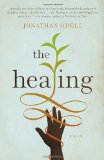
A Novel
by Jonathan Odell Book Reviewed by:
Jonathan Odell's powerful novel takes us to a familiar place: a plantation in the Deep South before the Civil War. Readers will recognize the columned house, the working slaves, the inhumane master, but The Healing is not merely a portrait of slave life. It is a penetrating analysis of identity - the acquisition of it and the ways in which a person can claim an independent self when all forces seem to be against them. In this case, the forces are the slave system and the individual struggling to understand her role in the world is a young slave girl named Granada, who has the misfortune of crossing the path of her sociopathic mistress. Mistress Amanda believes she can reclaim some semblance of her daughter's life by dressing up Granada in the dead girl's old clothes and parading the slave girl in front of white guests, just as she would a real daughter. The result is half-comic, half-tragic, and the person most affected is Granada herself.
As Granada becomes used to sleeping in The Mistress's bed and wearing satin clothes, she sees herself as more and more separate from her slave origins. Yes, her skin may be black, but she is special. The Mistress has chosen her, and her future will be different than the unfortunates who are forced to dredge swampland for the tyrannical master. Until Polly Shine shows up to provide medical assistance for sick slaves, Granada is convinced she will ride off into the sunset with Mistress Amanda's other child, Little Lord, while dressed in borrowed finery.
Polly Shine is a classic change agent, and it becomes clear as soon as she speaks to the master that she will not be treated as the slaves around her are treated. When she notices Granada and demands that the girl assist her in her infirmary, Granada's world is torn asunder. Polly and Granada are opposites: Polly, secure in her notion of self; and Granada, totally ignorant of who she is and where she comes from. Between these opposing sides lies the general slave population on the Satterfield plantation. Many of the slaves merely exist, dependent on the good or bad will of their self-centered master. They do not aspire to be white, as Granada does, nor do they embrace their identity as black people, as Polly does. They have little knowledge of their past and, presumably, want no inkling of their future if it is to include anything similar to what they experience every day. They put their heads down and go to work, but Polly encourages them to create a different worldview.
As Polly administers medicine, some of which appears to be based on common sense, some of which resembles voodoo (though Polly claims otherwise), life in the slave quarters begins to change. Women who were unable to conceive children deliver healthy babies. Gardens are planted and tended near the slave cabins because, as Polly convinces the master, you can get more work out of slaves if they are nourished by wholesome foods. More important, however, the slaves begin to see Polly as an advocate, someone who can mediate the distance between them and the master. She can't free them or reduce their workload, but she can make their burden easier to carry, lessen the fear of dying and childbirth, whisper bolstering words into their ears. Polly treats them like people, not workhorses, and her caring begins to give them a way to create an identity, to provide a context for the crucial development of a self.
Granada, however, resists change, wanting desperately to return to the finery of her white world with Mistress Amanda. She challenges Polly's encouragement to remember her past, to embrace her slave roots, and she wants little to do with learning Polly's healing crafts. Granada wonders if Polly is a witch, questions her methods with the slaves and suspects that she ultimately wants to subvert the status quo on the plantation. Granada's suspicions reflect the white culture she so desperately wants to rejoin, and her inability to recognize her own biases exemplifies Polly's point: Granada is so far away from her own culture that she is completely clueless about who she is.
As Granada becomes more embroiled in Polly's world, the title of the novel takes on interesting nuances. Of course "the healing" refers to Polly's medical expertise, but it also refers to the process of re-identification that she pursues with the slaves and with Granada. In order for a group of people to claim an identity, Polly believes, they must have some knowledge of their past and a way to come to terms with their wounds. Creating a way to heal the atrocities of slavery, to erase the need that some slaves, like Granada, have to escape their culture by attempting to enter white culture is one of Polly's central aims. Whether or not this is possible - if a group of people can heal, can reclaim identity when it has been brutally stripped from them and then cruelly withheld - is one of the central questions of the novel.
In this way, The Healing becomes much more than a historical fiction novel set in the antebellum South. As it contemplates how people are repatriated into their dormant identities, the novel ruminates on the ways in which people define themselves and whether it is possible to heal the horrors of the past to embrace the opportunities of the future.
The Healing is a tremendously powerful novel and one of the best I have read in quite some time. Jonathan Odell has created a masterpiece.
Additional Info
As a part of his research for The Healing, in 2002, Jonathan Odell interviewed Mrs. Willie Turner, a 91-year-old retired midwife who - like his character Polly Shine - was responsible for providing midwife services to African-American women in Mississippi. Click on the video below to hear a portion of the interview or click here to go to the complete interview page.
(Most of the photos used in the video are of ex-slaves, midwives, and sharecroppers taken in the 1930s by artists working for the WPA, archived in the Library of Congress. Video was developed by James Kuether and Random House.)
 This review was originally published in The BookBrowse Review in February 2012, and has been updated for the
November 2012 edition.
Click here to go to this issue.
This review was originally published in The BookBrowse Review in February 2012, and has been updated for the
November 2012 edition.
Click here to go to this issue.

If you liked The Healing, try these:
by Ayana Mathis
Published 2013
A debut of extraordinary distinction: through the trials of one unforgettable family, Ayana Mathis tells the story of the children of the Great Migration, a story of love and bitterness and the promise of a new America.
by Kathy Hepinstall
Published 2013
In the midst of the American Civil War, a southern plantation owner's wife is arrested by her husband and declared insane for interfering with his slaves. She is sent to an island mental asylum to come to terms with her wrongdoing, but instead finds love and escape with a war-haunted Confederate soldier.

by Lois Leveen
Published 2012
With the rich detail of Cold Mountain, the strong female bonds of The Help, and the untold history of The Warmth of Other Suns, comes a powerful debut novel about the secrets a woman keeps, and those she will risk everything to tell.




Failure is the condiment that gives success its flavor
Click Here to find out who said this, as well as discovering other famous literary quotes!

Can you name the title?
Test your book knowledge with our daily trivia challenge!
Your guide toexceptional books
BookBrowse seeks out and recommends the best in contemporary fiction and nonfiction—books that not only engage and entertain but also deepen our understanding of ourselves and the world around us.
