Summary | Excerpt | Reading Guide | Reviews | Beyond the book | Read-Alikes | Genres & Themes | Author Bio
Critics' Opinion:
Readers' Opinion:
First Published:
Oct 2011, 176 pages
Paperback:
Mar 2012, 144 pages
 Book Reviewed by:
Morgan Macgregor
Buy This Book
I work in a bookstore. I say this first because I think it's important for the reader to know where I'm coming from: I talk about books all day; customers count on employees to know their stuff and to be able to engage with them about what's new and good. Most often, I talk with them about books I've never read (you can't read them all), relying on hearsay and reviews to educate me on the finer points of a book's readability. And sometimes, I just wing it.
One of the novels I sold most this holiday season, and one of the books that's sparked the greatest amount of water cooler talk around the store, is the 2011 Man Booker Award winner, Julian Barnes's The Sense of An Ending. It's a slim novel, 176 pages in length, and I read it in one sitting. Yet oddly, I have a harder time talking about it than I do books I haven't read, or books I've enjoyed less.
Tony Webster is 60ish years old, a pleasantly average retiree living out his golden years in relative peace, when a letter arrives in the mail. I know what you're thinking: "A mysterious letter? Come on." And I'll admit to resenting the conceit at first as well. But the contents of this letter - informing him that he's inherited the diary of Adrian, a long-dead school friend - splits Tony's life wide open, and suddenly, "What had begun as a determination to obtain property bequeathed to me had morphed into something much larger, something which bore on the whole of my life, on time and memory."
As Tony starts to sift through that suspect treasure chest called memory, one that, for him, has long remained unopened, all sorts of questions arise. He realizes, among other things, that for all the forward looking we do as young people, "What you fail to do is look ahead, and then imagine yourself looking back from that future point. Learning the new emotions that time brings. Discovering, for example, that as the witnesses to your life diminish, there is less corroboration, and therefore less certainty, as to what you are or have been."
Details start to shift, perceptions morph. The big stuff, too, starts to waver a little under the microscope. Suddenly, long after Tony thinks he'd reconciled with those youthful questions of philosophy and faith, he finds himself grappling with the vagaries of relationships, the mutability of history, the utter incomprehensibility of time.
This is heavy business, but Barnes lays it flat out, no stylistic wand-waving, no tricks. He writes in an everyman's lingo with such unapologetic, razor-edged insight, that somehow his prose amounts to a kind of alchemy, putting, as if by magic, words to all those questions simmering away at the back of our minds. I use the universal "our" here because who hasn't wondered about time, about the reliability of their own memory, about the deleterious effects of regret, of nostalgia, of quitting, of taking the easy road, or the wrong road? "What did I know of life, I who had lived so carefully? Who had neither won nor lost, but just let life happen to him?"
Looking back on his younger years, Tony marvels at how much he'd expected his life to mimic the novels he loved so much, and he has to admit, alas, that life isn't literature. "In a novel, Adrian wouldn't just have accepted things as they were put to him. What was the point of having a situation worthy of fiction is the protagonist didn't behave as he would have done in a book?"
And if your life isn't literature, how do you read it? How do you judge it? "Later, the memory becomes a thing of shreds and patches. It's a bit like the black box aeroplanes carry to record what happens in a crash. If nothing goes wrong, the tape erases itself. So if you do crash, it's obvious why you did; if you didn't, then the log of your journey is much less clear."
Barnes's prose is so vital, so pared down to the molten core of life, that the reader senses, nay experiences, Barnes's own existential alligator wrestling through that of Tony's. It can be painful, and at times bewildering. Some readers I've spoken with (and some reviewers, too) are frustrated with the sense of ambiguity in the novel, the questions left unanswered. My answer has been, and continues to be, "We're not supposed to have the answers. There aren't any answers." That's the whole point. Tony wants what we all want: the sense of an ending. But Barnes knows that real endings, definitive endings, only happen in novels. The Sense of An Ending, in this way, is the anti-novel.
Thus when I find myself at work, confronted by a customer holding up Barnes's novel, asking, "How's this?" I don't quite know where to start.
 This review was originally published in The BookBrowse Review in January 2012, and has been updated for the
March 2012 edition.
Click here to go to this issue.
This review was originally published in The BookBrowse Review in January 2012, and has been updated for the
March 2012 edition.
Click here to go to this issue.

If you liked The Sense of an Ending, try these:
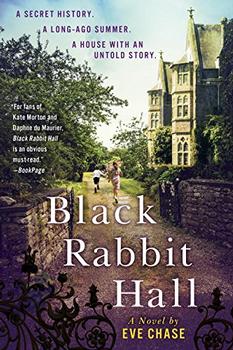
by Eve Chase
Published 2017
For fans of Kate Morton and Sarah Waters, here's a magnetic debut novel of wrenching family secrets, forbidden love, and heartbreaking loss housed within the grand gothic manor of Black Rabbit Hall.
by Colum McCann
Published 2016
In such acclaimed novels as Let the Great World Spin and TransAtlantic, National Book Award–winning author Colum McCann has transfixed readers with his precision, tenderness, and authority. Now, in his first collection of short fiction in more than a decade, McCann charts the territory of chance, and the profound and intimate consequences of ...



The Flower Sisters
by Michelle Collins Anderson
From the new Fannie Flagg of the Ozarks, a richly-woven story of family, forgiveness, and reinvention.

The House on Biscayne Bay
by Chanel Cleeton
As death stalks a gothic mansion in Miami, the lives of two women intertwine as the past and present collide.

The Funeral Cryer by Wenyan Lu
Debut novelist Wenyan Lu brings us this witty yet profound story about one woman's midlife reawakening in contemporary rural China.
Your guide toexceptional books
BookBrowse seeks out and recommends the best in contemporary fiction and nonfiction—books that not only engage and entertain but also deepen our understanding of ourselves and the world around us.