Summary | Excerpt | Reviews | Beyond the book | Read-Alikes | Genres & Themes | Author Bio
Critics' Opinion:
Readers' Opinion:
First Published:
Sep 2011, 544 pages
Paperback:
Jul 2012, 544 pages
 Book Reviewed by:
Marnie Colton
Buy This Book
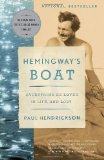
In 1936, at the height of his creative powers and popularity, Ernest Hemingway wrote the following to his friend, the poet Archibald MacLeish: "Me I like life very much. So much it will be a big disgust when have to shoot myself." Twenty-five years later, the innovative author, legendary big-game hunter, and disappointed father and husband did exactly that, ending his life with a shotgun blast to the head at the age of 61. It was a messy, ignominious end to a messy, often tragic, and occasionally glorious life - one that has been so extensively examined that readers can be forgiven for rolling their eyes at the prospect of yet another addition to the Hemingway biographical canon. Yet Hemingway's Boat, for all its frustrating idiosyncrasies, clearly deserves a place at that heavily loaded banquet table.
Rather than simply penning a straightforward chronological account of Hemingway's life, Paul Hendrickson focuses on the author's 1934 acquisition of a fishing boat, Pilar, that was manufactured and modified to his specifications in Brooklyn, then sent down to Miami so that he could pilot it to his home in Key West. Hemingway was riding high at the time of this purchase; he had recently returned from a successful (some would say cruel and excessive) safari in Africa, had published a flurry of novels and short stories that received mostly positive reviews, and had embarked on what was to become a long and productive relationship with the newly launched Esquire magazine. His second marriage, to Pauline Pfeiffer, was relatively stable, and he was reveling in sharing his love for the outdoors with his three sons. In the midst of the Depression, glamorous parties took place aboard Pilar, with guests enacting Hollywood-like scenes of breezy camaraderie, feasting on picnics of baked chicken and deviled eggs while the boat's captain reeled in gigantic marlin and shot sharks in the head with a tommy gun. Black and white photos sprinkled throughout the book provide testament to all this heartiness and good cheer, but such halcyon days were to be the apex of Hemingway's personal life, and with few exceptions, his professional life as well.
Although Hendrickson seldom explicitly addresses Hemingway's psychiatric diagnoses, he does allude to the family's history of depression and an alarming propensity for suicide (Hemingway's father, brother, and at least one of his sisters committed suicide), noting that Hemingway received shock treatments at the Mayo Clinic in the months preceding his own death. Interestingly, he never mentions heavy drinking as a factor in Hemingway's demise, although it surely influenced the author's increasingly erratic moods (now understood to be a manifestation of bipolar disorder). Writing feverishly, compulsively counting how many words he'd logged each day, suffering from insomnia, and lashing into breathtaking epistolary diatribes aimed at both friends and enemies, Hemingway clearly had entered a hellish realm by the time he decided to end his own life.
Somehow, though, in the thick of religiously documenting every expedition on Pilar and digressing from his subject's life to make forays into pet subjects (Hendrickson's own personal relationships with various Hemingway associates, detailed nautical references that mean little to the layperson, and lurid forensic depictions of various deaths), Hendrickson has produced one of those biographies that seems to say more about its author than about its subject.
Hemingway's Boat is well-written and rigorously researched, but it's an exhaustive and exhausting read. While I appreciate that Hendrickson has chosen to frame Hemingway's last 30 years through his love of fishing and spending time on the water, the sheer volume of information on types of fish, fishing gear, and boating lore tends to detract from the narrative itself. I doubt that most readers, even Hemingway scholars, want to know the complete history of the shipyard that built Hemingway's beloved Pilar. The author quotes so extensively from external sources that the book's bibliography ends up being its most striking feature; I often found myself wanting to read these sources (primarily memoirs written by Hemingway's relatives and associates) for myself so that I could come to my own conclusions.
Hendrickson also ruminates excessively on people who spent relatively brief amounts of time with Hemingway onboard his boat, primarily so that he can compare and contrast their fates with Hemingway's. Too often, this leads him into flights of speculation that don't really warrant the page space and end up seeming forced. Finally, his fascination with Hemingway's youngest son, a transsexual doctor, comes across as more prurient than edifying, and again, consumes so much space in the narrative that it might as well be a separate biography.
Ultimately, this book feels like a flawed achievement, one that has already garnered much critical acclaim but will likely prove too daunting for all save the most fanatical Hemingway fans.
Additional Information
For more information, listen to NPR's interview with Paul Hendrickson entitled The Old Man And The Boat: Hemingway On The Pilar (Oct 2011).
 This review was originally published in The BookBrowse Review in November 2011, and has been updated for the
July 2012 edition.
Click here to go to this issue.
This review was originally published in The BookBrowse Review in November 2011, and has been updated for the
July 2012 edition.
Click here to go to this issue.

If you liked Hemingway's Boat, try these:
by Alice Greenway
Published 2014
Written in lush, lyrical prose - rich in island detail, redolent of Maine in summer and of the Pacific -The Bird Skinner is wise and wrenching, an unforgettable masterwork from an extraordinarily skillful novelist.
by J. Maarten Troost
Published 2014
Headhunters on My Doorstep is a funny yet poignant account of one man's journey to find himself that will captivate travel writing aficionados, Robert Louis Stevenson fans, and anyone who has ever lost his way.




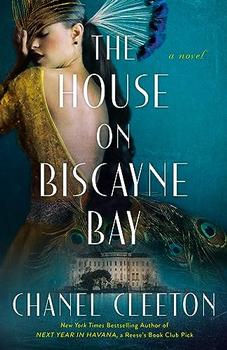
The House on Biscayne Bay
by Chanel Cleeton
As death stalks a gothic mansion in Miami, the lives of two women intertwine as the past and present collide.
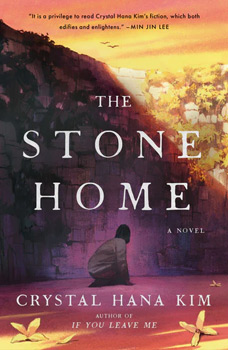
The Stone Home
by Crystal Hana Kim
A moving family drama and coming-of-age story revealing a dark corner of South Korean history.

The Funeral Cryer by Wenyan Lu
Debut novelist Wenyan Lu brings us this witty yet profound story about one woman's midlife reawakening in contemporary rural China.
Your guide toexceptional books
BookBrowse seeks out and recommends the best in contemporary fiction and nonfiction—books that not only engage and entertain but also deepen our understanding of ourselves and the world around us.