Summary | Excerpt | Reading Guide | Reviews | Beyond the book | Read-Alikes | Genres & Themes | Author Bio
 Book Reviewed by:
Amy Reading
Buy This Book
Rated Best Children's Book of 2011 by BookBrowse Members
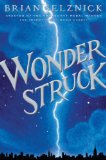
When you pick up Brian Selznick's Wonderstruck, make sure you have several hours in which to read it, because you aren't going to want to put it down until you are done. You won't be able to put it down. You'll tell yourself, "I'll put it down right when I get to the end of Ben's chapter." But then Ben's chapter will open out into a montage of Rose's drawings, silently interleaved into his words. The action in the two stories perfectly mirror each other. For instance, in 1927 Rose watches a silent film in which a woman is caught in a thunderstorm, and just as a lightning bolt flashes on the screen, the action switches back to Ben in 1977, where a lightning strike has just knocked out the power. A few pages later, Ben gets struck by lightning and loses his hearing, while at the same time, Rose learns that her beloved silent movies are about to be replaced by "talkies" which, having been born deaf, she won't be able to understand. Before you know it, you'll have turned two dozen pages, and you won't be able to stop. The only way to read Wonderstruck is to inhale it because Selznick has so enchantingly engineered your reading experience.
The story is immersive in part because it is about immersion. Ben (whose story takes up most of the novel) is still grieving for his mother when he finds a book called Wonderstruck in her closet, about the American Museum of Natural History in New York. Soon after becoming deaf, he runs away from his aunt's home in Minnesota to live in the AMNH. Meanwhile, fifty years earlier, Rose has run away from her overbearing father in Hoboken and finds herself at the museum, looking at the same exhibits that Ben discovers. He is enveloped by a new and yet strangely familiar world of animals and other exhibits. In particular, he is astonished by a wolf diorama that has figured in his dreams for years, despite never having seen it. Slowly he pieces together a mystery he didn't even know he was following. It is a wonderful, intoxicating conceit: the more he looks around the museum, the more its objects become charged with personal meaning that lead him deep into his mother's history and the story of the father he has never known. Inevitably, perfectly, he finds himself inside the book Wonderstruck.
My only critical thought - and it's a tiny one - is the wish that Selznick had pushed his own concept all the way, and that as soon as Ben becomes deaf, his story too was related only in pictures, thus striking the reader "deaf" as well. But perhaps he couldn't have told the rather dizzying tale of Ben alone in New York solely in pictures. And what he does give us is the stunning moment when Ben and Rose's stories converge across their fifty-year gap, and Ben emerges into Rose's picture world, wordless and shining. I won't say anything more about the plot, but I will tell you that nothing here is magical, just gloriously convergent.
Like The Invention of Hugo Cabret, this will be an instantly successful book for children and adults, and is a worthy successor to Hugo Cabret. It is built on the bones of several quite sturdy ideas - about deaf culture, about museums and collections, about missing parents and lonely, fiercely intelligent children - but it moves by emotion. There is nothing more affecting than the first words we get from the silent Rose, a note she scrawls almost halfway through the book, just four words with devastating power that reveal an enormous amount to the reader about her own quest, not so different from Ben's. Sometimes Selznick's art is dazzling in its textured complexity, as when he portrays the historically accurate interior of the AMNH, and other times, it is the simplicity of a single image that startles the eye and the heart. The end of the book is a pure triumph.
 This review
first ran in the September 21, 2011
issue of BookBrowse Recommends.
This review
first ran in the September 21, 2011
issue of BookBrowse Recommends.

If you liked Wonderstruck, try these:
by Laura A. Schlitz
Published 2014
Newbery Medal winner Laura Amy Schlitz's Victorian brings her sorcery to a Victorian gothic thriller -- an enthralling, darkly comic tale that would do Dickens proud.
by Rebecca Stead
Published 2013
Liar & Spy is an inspired, often-funny story about destiny, goofy brilliance, and courage. Like Stead's Newbery Medal-winning When You Reach Me, it will keep readers guessing until the end


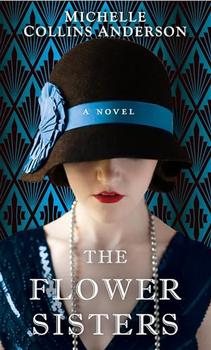
The Flower Sisters
by Michelle Collins Anderson
From the new Fannie Flagg of the Ozarks, a richly-woven story of family, forgiveness, and reinvention.
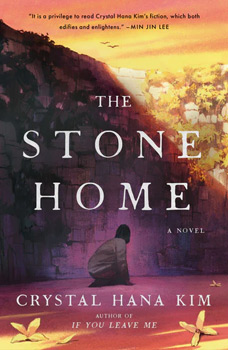
The Stone Home
by Crystal Hana Kim
A moving family drama and coming-of-age story revealing a dark corner of South Korean history.
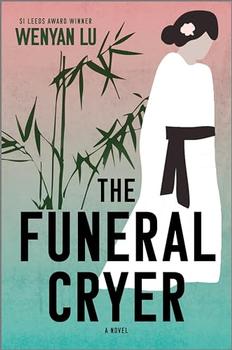
The Funeral Cryer by Wenyan Lu
Debut novelist Wenyan Lu brings us this witty yet profound story about one woman's midlife reawakening in contemporary rural China.
Your guide toexceptional books
BookBrowse seeks out and recommends the best in contemporary fiction and nonfiction—books that not only engage and entertain but also deepen our understanding of ourselves and the world around us.