Summary | Excerpt | Reading Guide | Reviews | Beyond the book | Read-Alikes | Genres & Themes | Author Bio
Critics' Opinion:
Readers' Opinion:
First Published:
May 2011, 304 pages
Paperback:
Jul 2012, 304 pages
 Book Reviewed by:
Norah Piehl
Buy This Book
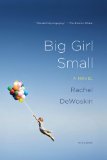
Is it important that Judy Lohden, the inimitable heroine of Big Girl Small, is a little person topping out at well under four feet tall? After all, many (perhaps all) other teenage girls have experienced crises of confidence like those Judy undergoes. Judy's periodic disorientation as she attempts to reconcile her own imagined version of her physical appearance with the external realities of her body is also something that will ring true for anyone who recalls adolescent awkwardness. What's more, the horrific event that causes sixteen-year-old Judy's retreat from friends, family, and school life is one that could - and, tragically, does - happen to girls and women of any age, regardless of their stature.
The fact that we can all identify with Judy's doubts and fears, as well as admire her sarcastic narration and her towering singing voice, enables readers to identify with this little person, which rehumanizes a type of character who is too often inserted into film or literature for comic effect, eliciting pity or aversion rather than genuine empathy. (Of note, Judy's acting role model, who often challenges this stereotype, is Peter Dinklage, the star of the film The Station Agent). Likewise, Judy's character reminds readers continually - without preaching or idealizing - that there's a person inside every "little person."
It's hard to know how to categorize Big Girl Small, with its pitch-perfect depiction of high school life and its precocious teenage narrator. DeWoskin's novel evokes high school life with a kind of biting cynicism while it simultaneously offers a hopeful coming-of-age story with a performing arts setting that will appeal to fans of the television shows Fame and Glee. Big Girl Small is both sophisticated thematically and (at times) raucously crude, the kind of book both teenage girls and their parents might laugh along with.
One refreshing aspect of Big Girl Small is the relationship between Judy and her family; as she hides out in a seedy motel room in Ypsilanti, Michigan, what comes to mind more than anything (besides her self-loathing and fear of what awaits her when - or if - she emerges) is her affection for her parents and, in particular, her younger brother. Their relationship holds an appealing sweetness too rarely found in descriptions of adolescent family dynamics. Judy's relationships with her friends - her desire to hang out with the popular crowd even as her real friends prove themselves over and over again - are also carefully and realistically drawn. However, with that in mind, some readers may still find the novel's finish a bit unrealistic.
So is it important that Judy Lohden is a little person? Inasmuch as Judy's small stature helps Rachel DeWoskin elevate common adolescent concerns to new heights of empathy, yes. Far more than a sideshow caricature or an object of pity, Judy is both thoroughly human and larger than life.
About the Author
 Rachel DeWoskin spent her twenties in China, writing and acting in a Chinese soap opera. Her memoir of those years, Foreign Babes in Beijing has been published in six countries and is being developed as an HBO television series. Her novel, Repeat After Me, won the Foreward Magazine Book of the Year award. For more information, please visit her bio page.
 This review was originally published in The BookBrowse Review in June 2011, and has been updated for the
July 2012 edition.
Click here to go to this issue.
This review was originally published in The BookBrowse Review in June 2011, and has been updated for the
July 2012 edition.
Click here to go to this issue.

If you liked Big Girl Small, try these:
The Miseducation of Cameron Post
by Emily M. Danforth
Published 2013
The Miseducation of Cameron Post is a stunning and unforgettable literary debut about discovering who you are and finding the courage to live life according to your own rules.
by Cris Beam
Published 2012
An inspiring story of self-discovery, of choosing to stand up for yourself, and of finding your own path - readers will recognize a part of themselves in J's struggle to love his true self.


The House on Biscayne Bay
by Chanel Cleeton
As death stalks a gothic mansion in Miami, the lives of two women intertwine as the past and present collide.
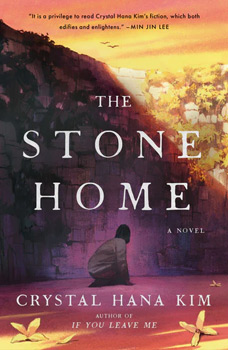
The Stone Home
by Crystal Hana Kim
A moving family drama and coming-of-age story revealing a dark corner of South Korean history.

The Funeral Cryer by Wenyan Lu
Debut novelist Wenyan Lu brings us this witty yet profound story about one woman's midlife reawakening in contemporary rural China.
Your guide toexceptional books
BookBrowse seeks out and recommends the best in contemporary fiction and nonfiction—books that not only engage and entertain but also deepen our understanding of ourselves and the world around us.