Summary | Excerpt | Reading Guide | Reviews | Beyond the book | Read-Alikes | Genres & Themes | Author Bio

Critics' Opinion:
Readers' Opinion:
First Published:
Feb 2011, 256 pages
Paperback:
Jan 2011, 256 pages
 Book Reviewed by:
Donna Chavez
Buy This Book
In Pittard's absorbing mystery-cum-elegy the main character, Nora Lindell, is not just unknowable she is quite literally unseen, unknown, absent. When the sixteen-year-old went missing on Halloween some thirty-plus years ago, all she left behind was her memory. It is a mere whiff of a memory at that, since sixteen years is hardly enough time to make any kind of substantial mark. Or is it?
Maybe in the great cosmic scheme of things sixteen years is not long. To those in the unnamed Mid-Atlantic town where Nora grew up, however, it is long enough to leave indelible marks on those who knew and cared about her. Therefore, such an unexpected and inexplicable disappearance elicits not just profound grief but wild and prolonged speculation about why and how and with whom and where. So many unanswered questions. Ah, but herein lies the twist, the magic of Pittard's treatment. Because what she develops for the reader is not an exhausted cliché about loss as felt by Nora's parents and her sister, Sissy. A grief we know having read it all before in other books like The Lovely Bones, Judith Guest's Ordinary People or almost any Jodi Picoult book about families in crisis.
Instead, from the moment Nora goes missing Pittard constructs a multi-story skyscraper built around a central atrium--Nora. She first takes us into the minds of a handful of boys who knew the girl, her schoolmates. It is the ground floor of their experience, where the central atrium of their circle is clearly visible and their grief is such that the boys cannot fully comprehend it. We kick around in the minds of these unnamed narrators, seeing Nora and her disappearance through their prism. At first the prism is pure adolescent boy, preoccupied with phone tree etiquette and sex rather than the grief they share. When one boy, Trey Stephens, boasts about having sex, with Nora, the collective narrator confesses, "It was exactly how we'd imagined having sex, if we'd ever dared to imagine it, and so we let ourselves believe Trey Stephens, his reality so closely overlapping our own fantasies."
Typical of teenagers, the boys imagine that the girl's life – maybe even her death -- is all about them. Trey even speculates that Nora has run away because of him. But in the context of the lives of these boys this is wholly credible. They live in a laid back suburban neighborhood where when, "One pool party ended…the next was planned. It was that simple, that easy, that fun. And by the end of summer, the fun was so monotonous that we were thankful for it to be over."
As time elapses, however, the boys grow older and begin envisioning more elaborate visions of Nora's fate. As the years add floors to the skyscraper of their lives the atrium dims in the distance. In part their grownup fantasies stem from an innate and immature attempt to deny the fact that Nora might indeed be dead. Like the ubiquitous Waldo, the imaginary Nora pops up in the most outlandish circumstances, and the myth actually begins to feed itself. Naturally because none of these boys, now men, actually ever leaves the old neighborhood, this geography also feeds their preoccupation. Lingering ghosts of memories haunt their every step. But over time their obsession becomes an embarrassment, so they collectively secrete it--"away from our wives and mothers…we could be as openly curious about Nora as we wanted"--but do not abandon it.
Although the publisher's summary depicts these boys/men as, "Far more eager to imagine Nora's fate than to scrutinize their own," I don't necessarily agree. As I read this book I kept thinking that one never forgets one's first time, particularly if it occurs during adolescence. Of course, it is entirely likely none of the boys had sex with Nora – Trey's claims notwithstanding – but the girl's disappearance did mark a traumatic first in their lives. So their obsession with her fate seems eminently reasonable, particularly since none of them has moved away from the scene of the incident. There are simply too many memory triggers to ignore. In other words, the narrative works either way. Finally, Pittard so successfully and effortlessly blends these boys' voices into those of grown men that even though we never truly know for certain what happens to Nora, by the last page we do feel that the mystery, the fantasies about Nora Lindell have come full circle. We are sated.
 This review
first ran in the March 9, 2011
issue of BookBrowse Recommends.
This review
first ran in the March 9, 2011
issue of BookBrowse Recommends.

If you liked The Fates Will Find Their Way, try these:

by Tom Rachman
Published 2011
Set against the gorgeous backdrop of Rome, Tom Rachman’s wry, vibrant debut follows the topsy-turvy private lives of the reporters, editors, and executives of an international English language newspaper as they struggle to keep it—and themselves—afloat.

by Marilynne Robinson
Published 2006
"Robinson's prose is beautiful, shimmering and precise; the revelations are subtle but never muted when they come, and the careful telling carries the breath of suspense....Robinson truly succeeds in what is destined to become her second classic."




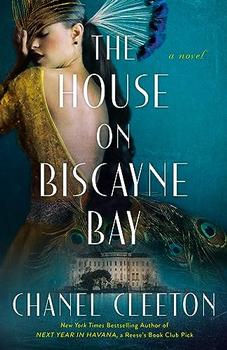
The House on Biscayne Bay
by Chanel Cleeton
As death stalks a gothic mansion in Miami, the lives of two women intertwine as the past and present collide.

The Flower Sisters
by Michelle Collins Anderson
From the new Fannie Flagg of the Ozarks, a richly-woven story of family, forgiveness, and reinvention.
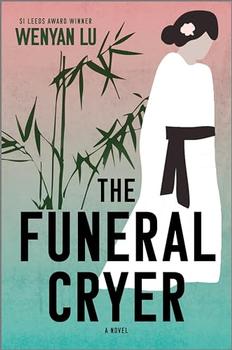
The Funeral Cryer by Wenyan Lu
Debut novelist Wenyan Lu brings us this witty yet profound story about one woman's midlife reawakening in contemporary rural China.
Your guide toexceptional books
BookBrowse seeks out and recommends the best in contemporary fiction and nonfiction—books that not only engage and entertain but also deepen our understanding of ourselves and the world around us.