Summary | Excerpt | Reviews | Beyond the book | Read-Alikes | Genres & Themes | Author Bio
Critics' Opinion:
Readers' Opinion:
First Published:
Sep 2010, 336 pages
Paperback:
Jul 2011, 336 pages
 Book Reviewed by:
Stacey Brownlie
Buy This Book
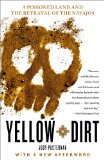
The story told in this book should not be a familiar one. A tale of corporate negligence, impotent bureaucracy, and an alternately confused and devastated group of people should be the exception - or at least generate outrage. But for many, these descriptors sound all too familiar. Worse, some may have run out of outrage, having spent it on so many recent events. Thankfully, author Judy Pasternak and a few others had the concern and the energy required to pursue the truth regarding the effects of uranium mining on Navajo land and several generations of Navajo citizens.
Vanadium and uranium mining on Navajo tribal land began over sixty years ago. A company called the Vanadium Corporation of America began bargaining for reservation mining rights in 1941. The Navajo, who had previously resisted such requests, were swayed this time by not only the prospect of stable jobs, but also by their desire to support the United States government in its fight against Germany and Japan. The vanadium would be used in protective armor plate for the military, helping a cause most Navajo deemed noble. Very few people knew, however, that another ore - uranium - was also being harvested for a top-secret government research program officially named the Manhattan Engineering District, a program more commonly known as the Manhattan Project.
When the successful product of the Manhattan Project, the atomic bomb, ended World War II, it began another another longer conflict, the Cold War. The Atomic Energy Commission, a replacement of sorts for the Manhattan Project team, began in 1946 and the Commission's Raw Materials Division in particular was the driving force in a frantic search for as much uranium - especially domestic uranium - as could possibly be found. What followed in this race for nuclear superiority was a decades-long crime of deception and frustrating complexity. The crime was perpetrated against an entire nation and its sacred land. Yellow Dirt covers this tragedy from just before the beginning until the present day and follows one Navajo family, Adakai of Cane Valley and his progeny, throughout the long, sad story. Pasternak's narrative closes in the fall of 2009, when the cleanup of spoiled Navajo land and the replacement of contaminated Navajo homes were still a work in progress.
Yellow Dirt is a work of the highest quality journalism, an exposé made possible by meticulous research. Pasternak's dedication to accuracy amidst the confusion of oral accounts and the obstacle of institutional stalling is evident in her extensive notes and bibliography. She has taken a large cast of characters, a bulging list of corporations and government agencies, and a scientific subject and managed to unite them in a story that the average reader can comprehend. The numerous and overlapping names of people, places and institutions make it necessary to re-read some passages, but the story is well worth the extra effort. This book is a solemn reminder of what harm can result when governments act in haste and fear and business decisions are based solely on profit. The American story of Yellow Dirt is a piece of recent history that could not be more relevant today.
Interesting Link:
Photographs associated with the book can be viewed on the author's website.
 This review was originally published in The BookBrowse Review in November 2010, and has been updated for the
August 2011 edition.
Click here to go to this issue.
This review was originally published in The BookBrowse Review in November 2010, and has been updated for the
August 2011 edition.
Click here to go to this issue.

If you liked Yellow Dirt, try these:
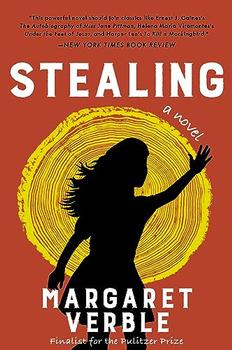
by Margaret Verble
Published 2024
A gripping, gut-punch of a novel about a Cherokee child removed from her family and sent to a Christian boarding school in the 1950s—an ambitious, eye-opening reckoning of history and small-town prejudices from Pulitzer Prize finalist Margaret Verble.
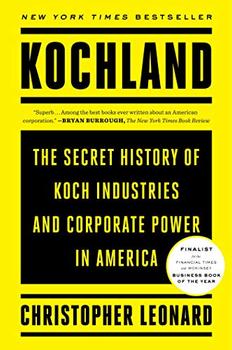
by Christopher Leonard
Published 2020
Just as Steve Coll told the story of globalization through ExxonMobil and Andrew Ross Sorkin told the story of Wall Street excess through Too Big to Fail, Christopher Leonard's Kochland uses the extraordinary account of how one of the biggest private companies in the world grew to be that big to tell the story of modern corporate America.

The Flower Sisters
by Michelle Collins Anderson
From the new Fannie Flagg of the Ozarks, a richly-woven story of family, forgiveness, and reinvention.
The House on Biscayne Bay
by Chanel Cleeton
As death stalks a gothic mansion in Miami, the lives of two women intertwine as the past and present collide.
The Funeral Cryer by Wenyan Lu
Debut novelist Wenyan Lu brings us this witty yet profound story about one woman's midlife reawakening in contemporary rural China.
Your guide toexceptional books
BookBrowse seeks out and recommends the best in contemporary fiction and nonfiction—books that not only engage and entertain but also deepen our understanding of ourselves and the world around us.