Summary | Excerpt | Reading Guide | Reviews | Beyond the book | Read-Alikes | Genres & Themes | Author Bio
Critics' Opinion:
Readers' Opinion:
First Published:
Oct 2010, 304 pages
Paperback:
Nov 2011, 304 pages
 Book Reviewed by:
Donna Chavez
Buy This Book
Brian Leung's haunting, lyrical love story is a powerful parable about how someone's personal history can be superseded by the creative machinations of those involved in writing history. When Addie Maine first arrives in Dire, Wyoming, she learns that the remote mining town got its unique name from the dire straits of two intrepid brothers, early miners who perished in a snowstorm, whose skeletal remains are the stuff of local legend. She is struck by the fact that there are no facts to substantiate any of it. Wise beyond her 19 years, Addie reflects, "And wasn't that the way of history? Strangers looking at strangers from afar, telling what was knowable, filling in the rest with interesting guesses."
Indeed, powers beyond her control keep supplanting Addie's own story. The erasure begins when the young woman decides to pack all her belongings, leave Kentucky and join her brother Tommy on his homestead in the Wyoming Territory. Long ago abandoned by her mother and with her father dead, Addie laments that she is leaving behind no trace of her existence. When Addie's business relationship with Wing Lee, a Chinese immigrant, begins to blossom into a full-blown friendship, Tommy cautions her with wild imaginings about the danger she is courting, and a wave of rumors sweeps the mining camp. Of course, neither Tommy's fears or the camp's rumor mill nowhere near resemble the truth of Wing and Addie's story. Just as the wind whips across Wyoming's plains with sand and coal dust obliterating the earth's surface details, so too does time and storytelling obscure the fine nuances of this couple's truth.
Part of the power of Leung's novel is not just the skewed story of Addie and Wing's relationship but the way it is interwoven with the largely ignored facts of the way the Chinese laborers were treated as they slaved (very nearly literally) to expand America's western continental reach. After the 1885 riot during which Chinese laborers' homes are burned and many are killed Addie reads a newspaper article claiming that the governor of Wyoming is sending the Chinese back to China. But Addie knows the newspaper story is not true; the railroad is in fact shipping them back to work the mines. In the end, it seems that Leung is reminding us that the stories - both personal and national - that endure are not necessarily the whole truth but simply a version of the storyteller's truth.
 This review was originally published in The BookBrowse Review in November 2010, and has been updated for the
November 2011 edition.
Click here to go to this issue.
This review was originally published in The BookBrowse Review in November 2010, and has been updated for the
November 2011 edition.
Click here to go to this issue.

If you liked Take Me Home, try these:
by Jenny Tinghui Zhang
Published 2022
A propulsive and dazzling debut novel set against the backdrop of the Chinese Exclusion Act, about a Chinese girl fighting to claim her place in the 1880s American West.
by Paul Lynch
Published 2014
Language and landscape combine powerfully in this tense exploration of life and death, parts of which are based on historical events. A visceral and meditative novel that marks the debut of a stunning new talent.

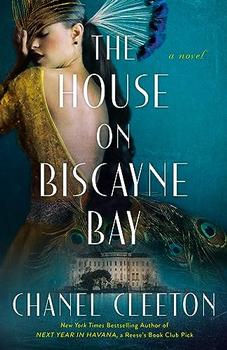
The House on Biscayne Bay
by Chanel Cleeton
As death stalks a gothic mansion in Miami, the lives of two women intertwine as the past and present collide.
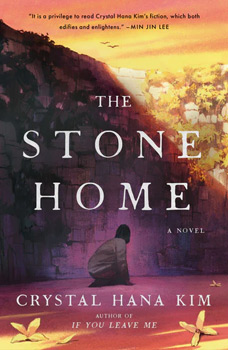
The Stone Home
by Crystal Hana Kim
A moving family drama and coming-of-age story revealing a dark corner of South Korean history.
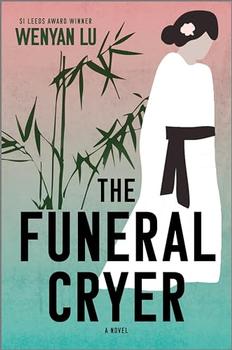
The Funeral Cryer by Wenyan Lu
Debut novelist Wenyan Lu brings us this witty yet profound story about one woman's midlife reawakening in contemporary rural China.
Your guide toexceptional books
BookBrowse seeks out and recommends the best in contemporary fiction and nonfiction—books that not only engage and entertain but also deepen our understanding of ourselves and the world around us.