Summary | Excerpt | Reviews | Beyond the book | Read-Alikes | Genres & Themes | Author Bio
Critics' Opinion:
Readers' Opinion:
First Published:
Oct 2010, 289 pages
Paperback:
Sep 2011, 289 pages
 Book Reviewed by:
Donna Chavez
Buy This Book
I have been a fan of Nicole Krauss for a while, and so I jumped at the opportunity to review Great House. This novel possesses the same inventive, graceful prose that Krauss is known for. How wonderful is her prose? Even though I had previously bought and listened to The History of Love on audio I went out and bought the actual book so I could hold it in my hands and periodically savor the parts that simply left me in awe.
On first glance Great House runs along a similar theme as The History of Love. The theme has to do with the interconnectedness of people the world over and how, over time, we can trace a connection between ourselves and just about every other person living or dead. The publisher plays up this theme in the book's jacket blurb, suggesting a kind of game out of trying to connect all the seemingly unrelated characters to an antique writing desk. That does make for some fine fun for readers who enjoy a good puzzle, but there's so much more here to ponder. Not the least of which is overall composition and how it enhances another important theme - the lack of true intimacy within our closest personal connections.
Krauss divides the novel into seven separate chapters written in the first person by four separate protagonists. Three protagonists "write" six of the chapters - each its own short story, really - and the final chapter is in the voice of a fourth protagonist. What is most striking about each of these characters is the tenor of their relationships with their closest loved ones. A father, speaking of his son, says, "We move throughout the day like two hands of a clock; sometimes we overlap for a moment, then come apart again, carrying on alone in our separate cycles." Or a man, speaking about his wife of decades, says, "Here in this house live two different species, one on land and one in the water, one who clings to the surface and the other who lurks in the depths, and yet every night, through a loophole in the laws of physics, they share the same bed." Even when a woman is speaking of her lover she says, "it was impossible to talk... directly about our relationship, whereas indirectly we could talk about the most raw and intimate things."
That Krauss so exquisitely captures the essence of these flawed, yet all-too-common relationship patterns filets the characters who populate them, bringing their souls into extraordinarily clear focus. We know these people. In some instances we are these people. People who love with all their hearts but who must acknowledge and lament the reality that, much as they love someone, true intimacy can still be elusive, diaphanous as a smoke ring.
What is not elusive is the main reason I enjoyed reading Great House. For this I will borrow a quote from the book, "It would be my pleasure... and a door in the room of my life opened."
 This review was originally published in The BookBrowse Review in October 2010, and has been updated for the
October 2011 edition.
Click here to go to this issue.
This review was originally published in The BookBrowse Review in October 2010, and has been updated for the
October 2011 edition.
Click here to go to this issue.

If you liked Great House, try these:
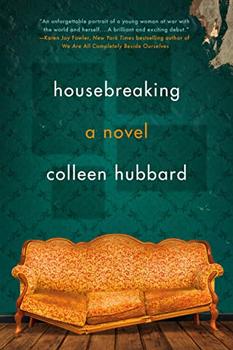
by Colleen Hubbard
Published 2022
Following a long-standing feud and looking to settle the score, a woman decides to dismantle her home—alone and by hand—and move it across a frozen pond during a harsh New England winter in this mesmerizing debut.
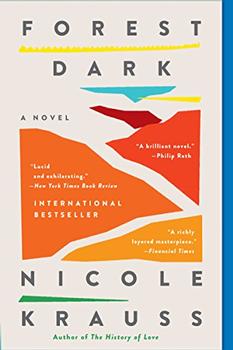
by Nicole Krauss
Published 2018
Bursting with life and humor, Forest Dark is a profound, mesmerizing novel of metamorphosis and self-realization—of looking beyond all that is visible towards the infinite.


The Flower Sisters
by Michelle Collins Anderson
From the new Fannie Flagg of the Ozarks, a richly-woven story of family, forgiveness, and reinvention.
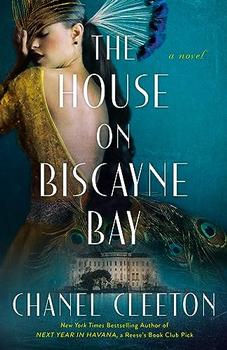
The House on Biscayne Bay
by Chanel Cleeton
As death stalks a gothic mansion in Miami, the lives of two women intertwine as the past and present collide.

The Funeral Cryer by Wenyan Lu
Debut novelist Wenyan Lu brings us this witty yet profound story about one woman's midlife reawakening in contemporary rural China.
Your guide toexceptional books
BookBrowse seeks out and recommends the best in contemporary fiction and nonfiction—books that not only engage and entertain but also deepen our understanding of ourselves and the world around us.