Summary | Excerpt | Reviews | Beyond the book | Read-Alikes | Genres & Themes | Author Bio
Critics' Opinion:
Readers' Opinion:
First Published:
Sep 2010, 384 pages
Paperback:
May 2011, 384 pages
 Book Reviewed by:
Amy Reading
Buy This Book
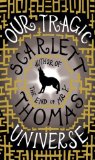
My attention was on high alert when I began Our Tragic Universe, because this is a book about a writer, leading me to expect a fair amount of self-consciousness about the form of the novel itself. I began to get a glimpse of what Scarlett Thomas is up to on page 12, when Libby finds herself in a jam, about to be caught having an affair, and she turns to Meg, the novelist, and asks, "What's the formula here?" She means, what's the predetermined structure to this series of events, what genre does this belong to? Good question, and one the novel implicitly poses about itself. Meg solves her friend's dilemma by suggesting she push her car into the river, signaling that even narrative convention in this book can contain a fair dose of surprise.
This is a talky, charming book, like a dinner party of smart, curious, but not wildly successful artists, a novelized "My Dinner With Andre" for the 30-something female set. Aside from the car sliding into the river and a creepy beast who haunts the moors, the action consists mostly of beers in pubs and lattes in coffee houses, as Meg gets together with friends and family to chew over the novel she is having so much trouble writing, her unsatisfying relationship with a beautiful but demanding man, and the affair she is contemplating with an unavailable older man.
Meg has been given an advance to write a serious literary novel, but the money has long ago run out, and instead she pays the bills by churning out science fiction for teenagers and adults. She deeply respects the literary conventions that undergird her genre fiction and make it so easy to write. When she sits down to write her "real" novel, she lays down pages worth of words, only to go back and delete them, an ever diminishing creative process that tends down toward absolute zero. She wishes life could be more like fiction, that she and her boyfriend could have "a second draft of our relationship, where all the conflict was pushed into act one, and everything that was wrong with us became an obstacle that we'd already overcome."
So, is Our Tragic Universe more like Meg's genre fiction, a chick lit novel about intelligent women balancing careers and men, or is it more like her literary novel, a formless yet deeper meditation on life and art? As the novel progresses, it gives us more options within Meg's discussions of narrative theory. Her friend Vi advocates an aesthetic theory of storylessness, like Zen parables, in which "all structures must contain the possibility of their own non-existence -- some zip that undoes them." Meg weaves more and more strands into her grand inquiry into narrative theory, generating a rich series of connections between her life, what she's reading, and what she and her author friends are trying to write. She even takes up knitting, alive to the suggestiveness of the activity. As she deletes her literary novel down to just 43 words, her own life begins to come together into a coherent whole.
Scarlett Thomas has produced something sui generis: a realist metafiction novel. I'd be hard-pressed to think of something quite like it. The events within the novel, Meg's own literary troubles, clearly resonate with and affect the reader's experience of Thomas's novel, but without threatening or undermining the overall project. Meg narrates the story in past tense, but there is never the hint that what we are reading is her novel, finally finished and bound; Thomas is not interested in piercing through from Meg's world to our own. Nor is she trying to foil the reader's expectation of a good story, as in more spare and disorienting novels like Paul Auster's Travels in the Scriptorium or Don DeLillo's Point Omega.
She's trying to portray the way narratives affect our perceptions of unwritten reality, the way storytelling matters in even the messiest life, and she does this by crafting a tidily packaged novel bursting with ideas but ultimately organized by a strict intelligence. That the story is too messy in the beginning and too neat at the end, complete with several dei ex machina, is regrettable but not fatal. It is Meg's world that has come to matter, a world in which literature viscerally improves the lives of those who take it seriously.
Thomas' portrayal of Meg's writerly routine and her struggles with the blank page make this a fantastic book for the buried writer in all of us. The book's gentle exploration of generic convention is perfect for someone just beginning to explore literature beyond the purely realist. Its often risky discussions of things like reincarnation or the omega point would please the omnivorous reader who ranges across science, philosophy, and plain old narrative. Book clubs would have a heydey with this one.
As Meg says, defending her genre fiction in terms of Aristotle's theory of narrative, "[O]ne of the key things the writer has to do is to make the person who hears or reads the story feel astonished, even though the story itself has a formula and is written in accordance with probability and cause and effect. It's a great art to make someone surprised to see the picture, and even more surprised when they realise they had all the pieces all along." When I finished Our Tragic Universe, I found myself astonished that it hadn't been written before.
 This review was originally published in The BookBrowse Review in October 2010, and has been updated for the
June 2011 edition.
Click here to go to this issue.
This review was originally published in The BookBrowse Review in October 2010, and has been updated for the
June 2011 edition.
Click here to go to this issue.

If you liked Our Tragic Universe, try these:

by Stephanie Butland
Published 2018
The Lost for Words Bookshop by Stephanie Butland is a compelling, irresistible, and heart-rending novel, perfect for all book lovers.
by Hari Kunzru
Published 2013
Viscerally gripping and intellectually engaging, Gods Without Men is, above all, a heartfelt exploration of the search for pattern and meaning in a chaotic universe.
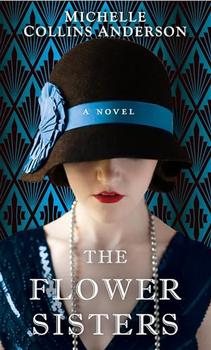
The Flower Sisters
by Michelle Collins Anderson
From the new Fannie Flagg of the Ozarks, a richly-woven story of family, forgiveness, and reinvention.
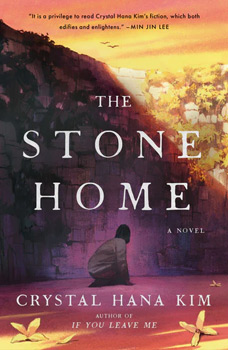
The Stone Home
by Crystal Hana Kim
A moving family drama and coming-of-age story revealing a dark corner of South Korean history.
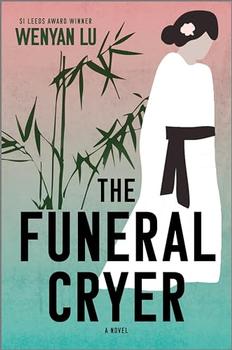
The Funeral Cryer by Wenyan Lu
Debut novelist Wenyan Lu brings us this witty yet profound story about one woman's midlife reawakening in contemporary rural China.
Your guide toexceptional books
BookBrowse seeks out and recommends the best in contemporary fiction and nonfiction—books that not only engage and entertain but also deepen our understanding of ourselves and the world around us.