Summary | Excerpt | Reading Guide | Reviews | Beyond the book | Read-Alikes | Genres & Themes | Author Bio
Critics' Opinion:
Readers' Opinion:
First Published:
Dec 2009, 272 pages
Paperback:
Oct 2010, 272 pages
 Book Reviewed by:
Micah Gell-Redman
Buy This Book
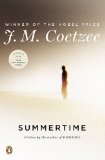
Though it may strike an odd note of praise, the most admirable quality of J.M. Coetzee's Summertime is the author's monastic restraint. As the novel develops through a disjointed series of interviews with characters from the early career of the now famous writer J.M. Coetzee, practically every page calls out for the real Coetzee to break the fourth wall of narration and intervene on his hapless hero's behalf. No such intrusion is forthcoming. Instead, we play rapt audience to lovers, family and colleagues whose recollections painstakingly depict the fictional Coetzee as a calamitous failure of a human being, unable to make contact through the walls of his genius.
The story proceeds at two levels, each progressing steadily and each guided by its own logic. At one level we follow a young South African man returned to live with his ailing father after a stint in America that ended in some unspecified disgrace. He toils absurdly, laying a new cement wall to surround the old one rotted out from the damp. When a married woman stops to say hello, more out of pity than attraction, it sets in motion the first of many disastrous encounters. Stifled by conflicting moral impulses, our hero is only able to muster a convincing show of passion on the night that his lover has decided to leave him once and for all. Each successive vignette delves deeper into the tender, hopelessly self-involved persona of the author. His young Brazilian student and her mother, his own cousin, a university colleague-cum-lover - they are by turns drawn to him and repulsed by his childish infatuation.
As a the episodic narrative takes shape, the story is simultaneously progressing at a different level. Each narrative episode is told through an interview with the fictional Coetzee's fictive biographer, Mr. Vincent. The first of these interviews is with Julia, who seeks refuge from an unhappy marriage in Coetzee's arms, the unlikeliest of places. Speaking essentially in monologue, Julia makes clear to the interviewer that she will put her own passions front and center, no matter what great truths he might want her to reveal the about the famous author who once shared her bed. In a later interview, with Coetzee's cousin, the subject is so ashamed of her own story that she can barely stand to hear it repeated for the purpose of clarification. Coetzee the narrator dramatizes the contested terrain of memoir and recollection in spectacular fashion.
The parallel stories are bookended by diary entries from the days after Coetzee's return home that show his shame over the dehumanizing violence of South Africa's apartheid regime. These are played against his desire for a simple moment of honest reconciliation with his father, who has lost all contact with life outside of a demeaning bookkeeping job and his passion for rugby.
Perhaps this says more about my own disposition than the quality of Coetzee's work, but I found myself captivated from the moment I read an excerpt of Summertime in the New York Review of Books. His tone struck me as at once merciless in its treatment of his young self and yet not driven by resentment or shame. It's as if he has simply resigned himself to showing us human frailty through the lens of his own memory. More than just an academic exercise in meta-fiction, Summertime is an understated yet riveting portrait of the artist as a young man.
 This review was originally published in The BookBrowse Review in February 2010, and has been updated for the
November 2010 edition.
Click here to go to this issue.
This review was originally published in The BookBrowse Review in February 2010, and has been updated for the
November 2010 edition.
Click here to go to this issue.

If you liked Summertime, try these:
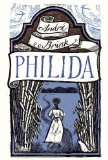
by André Brink
Published 2013
In Philida, longlisted for the Man Booker Prize, André Brink—"one of South Africa's greatest novelists" (The Telegraph)—gives us his most powerful novel yet; the truly unforgettable story of a female slave, and her fierce determination to survive and to be free.
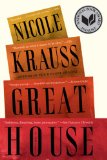
by Nicole Krauss
Published 2011
Nicole Krauss has written a soaring, powerful novel about memory struggling to create a meaningful permanence in the face of inevitable loss.



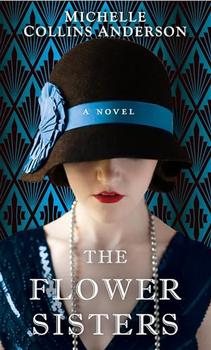
The Flower Sisters
by Michelle Collins Anderson
From the new Fannie Flagg of the Ozarks, a richly-woven story of family, forgiveness, and reinvention.
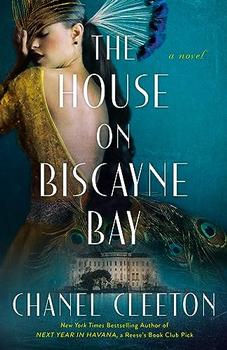
The House on Biscayne Bay
by Chanel Cleeton
As death stalks a gothic mansion in Miami, the lives of two women intertwine as the past and present collide.

The Funeral Cryer by Wenyan Lu
Debut novelist Wenyan Lu brings us this witty yet profound story about one woman's midlife reawakening in contemporary rural China.
Your guide toexceptional books
BookBrowse seeks out and recommends the best in contemporary fiction and nonfiction—books that not only engage and entertain but also deepen our understanding of ourselves and the world around us.