Summary | Excerpt | Reading Guide | Reviews | Beyond the book | Read-Alikes | Genres & Themes | Author Bio
Critics' Opinion:
Readers' Opinion:
First Published:
Nov 2009, 320 pages
Paperback:
Nov 2010, 320 pages
 Book Reviewed by:
Marnie Colton
Buy This Book
"Too much happiness," murmurs Sophia Kovalevsky, joyful on her sickbed, in the title story of Alice Munro's remarkable meditation on the themes closest to her heart: hateship, friendship, courtship, loveship, marriage, to quote the title of her 2002 collection. Munro's stories always take the road less traveled to foster epiphanies in their characters and a subtle yet deep satisfaction in the reader, and "Too Much Happiness" is no different. Traveling by train through Denmark on her way to Stockholm, Sophia meets a doctor who respects her mathematical genius and, begging her not to go through plague-riddled Copenhagen, slips a tablet into her hand for consumption during the ferry ride away from that city. At this point, we have accompanied Sophia back and forth across time and place, from her early affinity for mathematics and the "white marriage" that enables her to attend college in Berlin to her relationships with fellow mathematicians and her romance with an indifferent suitor. The scene with the doctor and the ensuing effects of the unidentified drug ("She was overflowing with ideas, she said, of a whole new breadth and importance and yet so natural and self-evident that she couldn't help laughing") are so wonderfully unexpected that they catapult an already poignant story into that stratosphere which Sophia herself explored via mathematics.
While "Too Much Happiness" is the longest story in the collection, the other, shorter stories shine equally brightly. Critics often comment that Munro's stories contain as much material as many novels, wasting nary a drop of detail and forking off along lush, deeply shaded paths as their characters make new, often difficult personal discoveries. Indeed, reading these stories is akin to exploring a beautiful, overgrown cemetery, simultaneously verdant and gothic. Along with fellow Canadians Margaret Atwood and Robertson Davies, Munro employs a style known as "Southern Ontario Gothic," a term coined by novelist Graeme Gibson; this style shares many characteristics with Southern Gothic writing in the United States: a dark sense of humor, a penchant for the grotesque or eerie, and a strong sense of social critique, especially as it pertains to gender (Munro's stories usually feature female protagonists), class, and religion.
In "Free Radicals" Munro pays homage to one of the greatest proponents of Southern Gothic, Flannery O'Connor. Nita, an older woman who has recently lost her husband and survived cancer, has isolated herself in her old farmhouse. When a man comes to the door to examine her fuse box, she unthinkingly lets him in, only to become embroiled in a battle of wits with a criminal who bears a disconcerting resemblance to the Misfit in O'Connor's "A Good Man is Hard to Find." This sinister tale and its startling resolution, highlighted by touches of bleak humor, would do O'Connor proud, but it is Nita's resourcefulness in the face of danger that slyly upends this tribute.
Revenge and atonement both play prominent roles in these stories. The narrator in "Wenlock Edge," a studious young woman attending college in the early '50s, falls under the spell of her exotic roommate, Nina, ultimately agreeing to have dinner with Nina's much older lover and protector, Mr. Purvis. The bizarre encounter with the man leads to disillusionment with Nina, marking the end of the narrator's innocence and her entry into a world where she can enact a vengeance both devastating and impersonal. In a sort of mirror tale, "Child's Play," Marlene recounts her childhood bond with another girl at summer camp, Charlene, and the secret that haunts them both into old age. When Charlene is dying of cancer, she contacts Marlene by note, imploring her to arrange a visit with a priest so that Charlene can receive absolution for the act that occurred so long ago at camp. The long-term consequences of past events often color the present for these characters, and in her unflinching portrayal of misjudgments, accidents, and serendipitous exchanges, Munro has crafted a dark masterpiece.
Read "Wenlock Edge" in full at The New Yorker
 This review was originally published in The BookBrowse Review in November 2009, and has been updated for the
November 2010 edition.
Click here to go to this issue.
This review was originally published in The BookBrowse Review in November 2009, and has been updated for the
November 2010 edition.
Click here to go to this issue.

If you liked Too Much Happiness, try these:
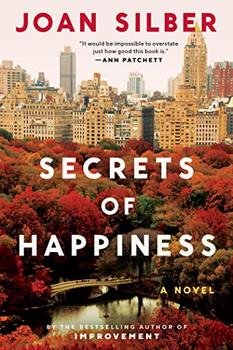
by Joan Silber
Published 2022
When a man discovers his father in New York has long had another, secret, family - a wife and two kids - the interlocking fates of both families lead to surprise loyalties, love triangles, and a reservoir of inner strength.
by Megan Mayhew Bergman
Published 2012
A heartwarming and hugely appealing debut collection that explores the way our choices and relationships are shaped by the menace and beauty of the natural world.


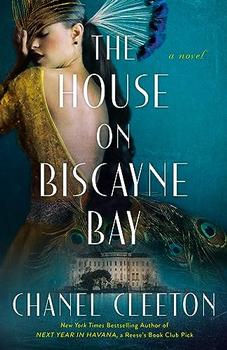
The House on Biscayne Bay
by Chanel Cleeton
As death stalks a gothic mansion in Miami, the lives of two women intertwine as the past and present collide.
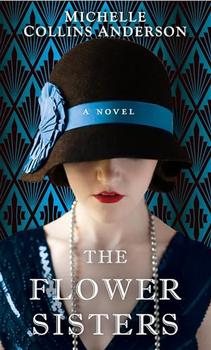
The Flower Sisters
by Michelle Collins Anderson
From the new Fannie Flagg of the Ozarks, a richly-woven story of family, forgiveness, and reinvention.
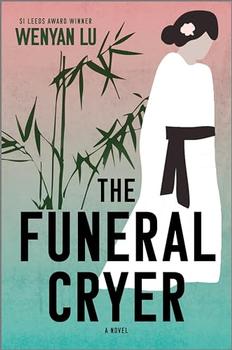
The Funeral Cryer by Wenyan Lu
Debut novelist Wenyan Lu brings us this witty yet profound story about one woman's midlife reawakening in contemporary rural China.
Your guide toexceptional books
BookBrowse seeks out and recommends the best in contemporary fiction and nonfiction—books that not only engage and entertain but also deepen our understanding of ourselves and the world around us.