Summary | Excerpt | Reading Guide | Reviews | Beyond the book | Read-Alikes | Genres & Themes | Author Bio
Critics' Opinion:
Readers' Opinion:
First Published:
Nov 2008, 176 pages
Paperback:
Aug 2009, 224 pages
 Book Reviewed by:
Amy Reading
Buy This Book
I was quite disappointed by A Mercy. There, I've said it. It feels
sacrilegious to speak ill of such a worthy book and such an exalted author. But
if a novel can be at once worthwhile and disappointing, this one is.
The story begins in a recognizably Morrisonian voice. "Don't be afraid," the
voice says. "My telling can't hurt you in spite of what I have done and I
promise to lie quietly in the dark—weeping perhaps or occasionally seeing the
blood once more—but I will never again unfold my limbs to rise up and bare
teeth." Immediately what springs to mind is the incomprehensibly monstrous deed
at the heart of Beloved, and we wonder: who is this woman and what has
she done? Is Morrison going to take us to a place as terrible as that in
Beloved? At the end of the first chapter, the voice intones, "But I have a
worry. Not because our work is more, but because mothers nursing greedy babies
scare me. I know how their eyes go when they choose." It couldn't be a more
ominous opening.
Over the next spare 155 pages, we are given many stories of horror, cruelty, and
hardship. We learn that the voice belongs to Florens, the 16-year-old slave of
Rebekka Vaark. In a scene which is almost the reverse of the moment in
Beloved when Sethe kills her oldest daughter rather than let her be returned
to slavery, Florens comes to live with the Vaarks when her mother voluntarily
offers her as payment for her master's debt, an abandonment that shadows Florens
for her entire life. Rebekka, whose husband has just died, is also mistress to
Lina, a native woman sold into slavery after her village was sacked, and Sorrow,
an uncontrollable girl who "dragged misery like a tail," a foundling who was
rescued from a shipwreck in which her father was captain and given to the Vaarks
when she became pregnant at age eleven. As if seeking to represent as many
different kinds of people who lived in Virginia in the 1680s as possible,
Morrison rounds out their household with two white men who are indentured
servants and one free African blacksmith who ultimately upsets the precarious
balance of the Vaark farmstead. Each of these characters, with the notable
exception of the black smithy, receives his or her own chapter, and Morrison
presents each of their life stories in compelling prose utterly stripped of
self-pity by the extremity of their circumstances. The remorselessness of the
Atlantic slave trade and the barbarity of colonial life require extraordinary
acts of everyday survival, and some of them are haunting:
"It was Lina who dressed herself in hides, carried a basket and an axe, braved the thigh-high drifts, the mind-numbing wind, to get to the river. There she pulled from below the ice enough broken salmon to bring back and feed them. She filled her basket with all she could snare; tied the basket handle to her braid to keep her hands from freezing on the trek back."
Yet the novel never gets started. The ominous story that Florens promises simply never happens. The action of the novel is confined to just a few days in the spring of 1690, interrupted by deep plunges into history. And the narration of that action is given over to Florens, the only character to speak in first person and present tense. But nothing happens in those few days to warrant the dread of that first chapter. Rebekka falls ill and sends Florens to find the blacksmith, with whom she is passionately in love. He cures Rebekka but fights with Florens, rejecting her for her slavish lovesickness. Morrison gradually reveals that Florens' narration is a love letter to the blacksmith carved on the floor of the Vaark house with a nail. Florens' voice is almost ridiculous in its mixture of high romanticism and clear-eyed naiveté:
"You probably don't know anything at all about what your back looks like whatever the sky holds: sunlight, moonrise. I rest there. My hand, my eyes, my mouth. The first time I see it you are shaping fire with bellows. The shine of water runs down your spine and I have shock at myself for wanting to lick there."
In Beloved, the central horrific act is narrated many times but never
directly. It is reported to the reader in flashes and shards who begins to
"remember" it much like Sethe herself does. But in A Mercy, that same
elision or deferment works against the novel's own purpose. Destroyed by the
blacksmith's rejection, Florens attacks him first with a hammer and then with
his hot tongs, bringing about the blood of the novel's second sentence. But this
seemingly climatic scene is reported to us after the fact, and we never learn
what happens after the blood begins to flow. Florens flees back to the Vaark
household to scratch out her tale, a tale that we never fully experience and
whose point we never quite get. I don't mean to suggest that Morrison's novel
would have been stronger with more melodramatic conflict and bloodshed; instead,
I would have liked to haunt her characters as they perceive their world and make
decisions about how to tame it, rather than simply have their actions reported
to me.
Morrison beautifully, terribly renders the world of America in the 1680s. It is
a world in which it is lawful for a man to beat his wife after nine o'clock, a
world in which the sight of a black girl is still rare enough to cause white
children to scream and white women to cross themselves. But it is a world in
which none of Morrison's characters—black, white or native; free, indentured or
enslaved—have agency, and therefore it is a world without action. Horrific
events and acts of small mercies occur. The characters move, but it is the
zeitgeist blowing through them that animates them. A Mercy is a like a
three-dimensional oil painting that was made to illustrate a point: "There is no
protection. To be female in this place is to be an open wound that cannot heal.
Even if scars form, the festering is ever below."
 This review was originally published in The BookBrowse Review in January 2009, and has been updated for the
September 2009 edition.
Click here to go to this issue.
This review was originally published in The BookBrowse Review in January 2009, and has been updated for the
September 2009 edition.
Click here to go to this issue.

If you liked A Mercy, try these:
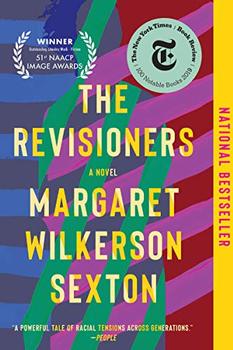
by Margaret Wilkerson Sexton
Published 2020
Following her National Book Award–nominated debut novel, A Kind of Freedom, Margaret Wilkerson Sexton returns with this equally elegant and historically inspired story of survivors and healers, of black women and their black sons, set in the American South.

by Andrea Levy
Published 2011
The author of Small Island tells the story of the last turbulent years of slavery and the early years of freedom in nineteenth-century Jamaica.



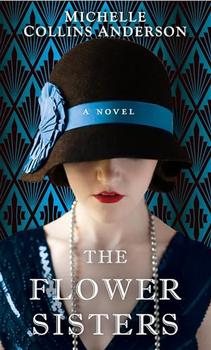
The Flower Sisters
by Michelle Collins Anderson
From the new Fannie Flagg of the Ozarks, a richly-woven story of family, forgiveness, and reinvention.
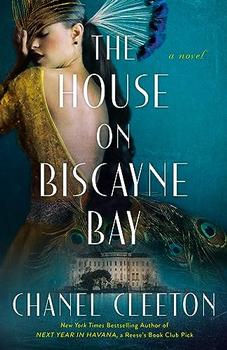
The House on Biscayne Bay
by Chanel Cleeton
As death stalks a gothic mansion in Miami, the lives of two women intertwine as the past and present collide.
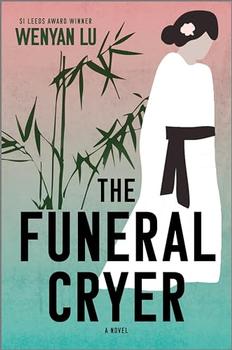
The Funeral Cryer by Wenyan Lu
Debut novelist Wenyan Lu brings us this witty yet profound story about one woman's midlife reawakening in contemporary rural China.
Your guide toexceptional books
BookBrowse seeks out and recommends the best in contemporary fiction and nonfiction—books that not only engage and entertain but also deepen our understanding of ourselves and the world around us.