Summary | Excerpt | Reviews | Beyond the book | Read-Alikes | Genres & Themes | Author Bio
Critics' Opinion:
Readers' Opinion:
First Published:
Oct 2008, 432 pages
Paperback:
Aug 2009, 448 pages
 Book Reviewed by:
Karen Rigby
Buy This Book
Considering the articles in recent years regarding toy
recalls or melamine-tainted milk products, Factory Girls
serves as a timely reminder of the human story behind the
Chinese factories we often view in critical terms. Leslie T.
Chang examines an easily forgotten facet: that factories
represent a chance for millions to leave a rural life in
search of higher wages, to escape traditional expectations,
and to search for adventure—a migratory phenomenon known as
chuqu, "to go out".
The city of
Dongguan
is brought to the foreground through a blend of immersion
reporting, diary excerpts and research. As you would expect,
we're given accounts of what it's like to work in the
factories, but the best chapters detail life outside the
confines of the assembly line and the dormitories: Hustlers
promote pyramid schemes; a self-help author preaches the
practicality of plagiarizing; and Mr. Wu, whose method for
teaching English informs the chapter "Assembly-Line
English", inspires his star pupil to teach despite her lack
of fluency. In the talent market, workers claim to possess
skills beyond their actual experiences. A motivational
speaker remarks that "In a factory with one thousand or ten
thousand people, to have the boss discover you is very hard.
You must discover yourself."
One may be left with the impression that the modus operandi
is one of self-preservation and opportunism, but the author
never gives the impression of moralizing and doesn't write
an exposé of China's problems. If the cast of dynamic
characters seem like those you might imagine in a frontier
town—surviving on their wits, a little suspect of outsiders,
and constantly building, moving or selling snake oil—it is
partly because these are the characters that make for the
most compelling reading; but also because the author notes
that, to some degree, the subjects were self-selecting,
since the ambitious were more open to talking about
themselves.
On occasion, Chang departs from the central themes of
migration and the quest for employment, education and
security to examine her own family history. The attempt to
draw parallels between her grandfather and the factory girls
is tenuous—he was sent abroad for a college degree,
something beyond the financial reach of most girls in China
and certainly beyond the reach of most factory girls. Even
if the motivation to search for a better life was the same,
the differences remain too broad to convince the reader.
Nevertheless, these sections provide a valuable context as
they explore some of the consequences of the Communist
Revolution and the subsequent years of recovery.
The author's rare fallible moments turn into one of the
book's strengths. No mantle of authority is assumed here.
When Chang struggles, we empathize with her, particularly in
the beginning when she hesitates to approach workers on the
street for interviews and experiences emotional victories
and setbacks with the girls. When she seems a little too
pleased with being a native speaker of English, as when she
mentions "all the times strangers had gushed over my
English", it's a forgivable faux-pas—living abroad for years
in pursuit of a story is no easy feat, and indeed, that
willingness to portray oneself in a multi-faceted light,
whether favorable or not, lends an honesty to the voice that
might otherwise become too distant, too austere.
Factory Girls does not propose solutions, nor is it
meant as a comprehensive guide to current trends in the
industry. Instead the author leaves it up to the reader to
draw his or her own moral conclusions. Although some readers
may notice an absence of the more salient controversies
(from the USA point of view) surrounding the factories, such
as extensive discussions on unionization or the lack
thereof, livable wages, or whether or not foreign
corporations should be outsourcing their manufacturing
processes in the first place, the author appears to be
focusing more on the human-interest perspective, and as
such, succeeds wonderfully when it comes to following
Chunming, one of the main subjects, whose journey rivals
that of any fictional protagonist. One of the highlights
occurs when Chang visits Chunming's family. Growing up in a
communal village where privacy is nominal goes a long way
towards explaining the initial loneliness the girls
experience in an anonymous city like Dongguan, but also the
freedom most of them come to appreciate, even when it comes
at a high cost.
Ms. Chang's writing is thoroughly engaging, both serious and
funny in unexpected ways. A pastiche of slogans, Maoist song
lyrics, facts, reportage, sociology and insights, Factory
Girls would interest the general reader as well as those
particularly interested in Asian affairs.
 This review was originally published in The BookBrowse Review in October 2008, and has been updated for the
September 2009 edition.
Click here to go to this issue.
This review was originally published in The BookBrowse Review in October 2008, and has been updated for the
September 2009 edition.
Click here to go to this issue.

If you liked Factory Girls, try these:

by Amelia Pang
Published 2022
In 2012, an Oregon mother named Julie Keith opened up a package of Halloween decorations. The cheap foam headstones had been $5 at Kmart, too good a deal to pass up. But when she opened the box, something fell out that she wasn't expecting: an SOS letter, handwritten in broken English by the prisoner who'd made and packaged the items.
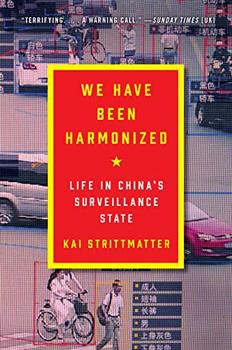
by Kai Strittmatter
Published 2021
Hailed as a masterwork of reporting and analysis, and based on decades of research within China, We Have Been Harmonized, by award-winning correspondent Kai Strittmatter, offers a groundbreaking look at how the internet and high tech have allowed China to create the largest and most effective surveillance state in history.


The Flower Sisters
by Michelle Collins Anderson
From the new Fannie Flagg of the Ozarks, a richly-woven story of family, forgiveness, and reinvention.

The House on Biscayne Bay
by Chanel Cleeton
As death stalks a gothic mansion in Miami, the lives of two women intertwine as the past and present collide.

The Funeral Cryer by Wenyan Lu
Debut novelist Wenyan Lu brings us this witty yet profound story about one woman's midlife reawakening in contemporary rural China.
Your guide toexceptional books
BookBrowse seeks out and recommends the best in contemporary fiction and nonfiction—books that not only engage and entertain but also deepen our understanding of ourselves and the world around us.