Summary | Excerpt | Reading Guide | Reviews | Beyond the book | Read-Alikes | Genres & Themes | Author Bio
Critics' Opinion:
Readers' Opinion:
First Published:
May 2008, 256 pages
Paperback:
Apr 2009, 256 pages
 Book Reviewed by:
Lucia Silva
Buy This Book
When Dr. Leo Liebenstein's wife, Rema, comes through the door of
their apartment carrying a "russet puppy", he knows instantly that she's an
impostor. First of all, Rema doesn't like dogs. And secondly, though this
simulacrum has the same "hayfeverishly fresh scent" in her hair, "same tucking
behind ears of dyed cornsilk blond", and does a perfect imitation of Rema's
Argentine accent with "halos around the vowels", he's certain she's not his
Rema. Either Dr. Leo Liebenstein's mind is fracturing or the reality of the book
is fractured, and the novel perches on this dangerous ledge, playing with one
foot over the precipice, inviting the reader to decide where it will land. Equal
parts intellectual exercise and emotional Rorschach, negotiating the web of
reality is part of the great delight of reading this gorgeous and brilliantly
constructed debut.
No doubt, Atmospheric Disturbances is a very strange book, but it's
anchored by the arc of a simple love story (man loses woman, tries to get her
back), and Rivka Galchen never confuses complexity with impenetrability. The
emotional underpinnings are true and tender -- even achingly familiar -- and
ground the reader in a deeper reality even as the plot progresses into more and
more surreal territory. As Leo's increasingly crazy search for the missing Rema
progresses, the reality of his love for her never falters. In fact, it's
strengthened by the careful observations of the minute details that betray the
simulacrum. Even as he finds the impostor dazzlingly gorgeous and relentlessly
attractive, he has no love for her, only for Rema. As Leo reflects on his first
night spent together with the impostor, "I was proud of myself for having the
strength of character to leave behind such an attractive woman. I wish Rema
could have witnessed that. I just would have liked her to enjoy the spectacle of
how obviously and entirely and singularly I loved her." Still, some of Leo's
remarks - the impostor has slightly more wrinkles around her eyes than the real
Rema, her hair doesn't hold quite the same sheen, she's more annoying or less
sincere - signal the possibility that it's his love that has fractured, not his
reality. These moments pin the novel to the reader's heart, tugging at ideas
about how we sustain love and attempt to repair it when it begins to fade, how
we reconcile the person our lover becomes with the person we fell in love with.
Filling her novel with subtle clues and delicate motifs, Galchen is both playful
and serious, and has an impressive instinct for how far she can push the
boundaries and how much she can ask of her readers. She constructs beautiful
sentences, and uncovers humor inherent in language, reveling in mis-hearings,
botched translations, and the allure and poetry of scientific writing just
outside the layperson's ken. She makes a completely preposterous premise come
alive with equal parts fun and heartache, and is generous with her myriad gifts
to the very end. Some readers may find the novel's ambiguous reality
unmanageable or unsatisfying, but it's exactly what kept me up late to the last
page, and what kept me thinking about its strange world long after I closed the
cover.
 This review was originally published in The BookBrowse Review in July 2008, and has been updated for the
May 2009 edition.
Click here to go to this issue.
This review was originally published in The BookBrowse Review in July 2008, and has been updated for the
May 2009 edition.
Click here to go to this issue.

If you liked Atmospheric Disturbances, try these:
by Jennifer Egan
Published 2011
A Visit from the Goon Squad is a book about the interplay of time and music, about survival, about the stirrings and transformations set inexorably in motion by even the most passing conjunction of our fates. Sly, startling, exhilarating work from one of our boldest writers.
by Joshua Ferris
Published 2010
What drives a man to stay in a marriage, in a job? What forces him away? Is love or conscience enough to overcome the darker, stronger urges of the natural world? The Unnamed is a deeply felt, luminous novel about modern life, ancient yearnings, and the power of human understanding.


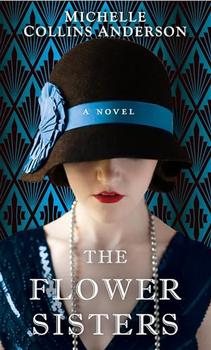
The Flower Sisters
by Michelle Collins Anderson
From the new Fannie Flagg of the Ozarks, a richly-woven story of family, forgiveness, and reinvention.
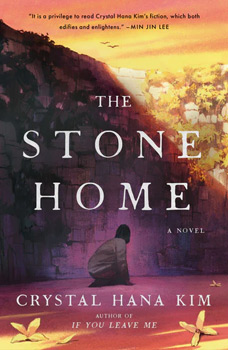
The Stone Home
by Crystal Hana Kim
A moving family drama and coming-of-age story revealing a dark corner of South Korean history.
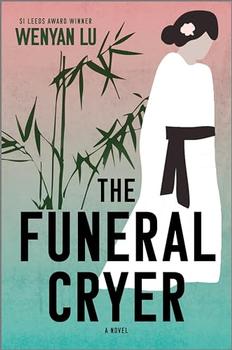
The Funeral Cryer by Wenyan Lu
Debut novelist Wenyan Lu brings us this witty yet profound story about one woman's midlife reawakening in contemporary rural China.
Your guide toexceptional books
BookBrowse seeks out and recommends the best in contemporary fiction and nonfiction—books that not only engage and entertain but also deepen our understanding of ourselves and the world around us.