Summary | Excerpt | Reading Guide | Reviews | Beyond the book | Read-Alikes | Genres & Themes | Author Bio
Critics' Opinion:
Readers' Opinion:
First Published:
May 2008, 592 pages
Paperback:
Jun 2009, 624 pages
 Book Reviewed by:
Lucia Silva
Buy This Book
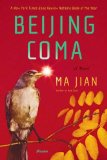
How can a novel about the massacre of hundreds of people narrated
by a man in a coma be beautiful, even life-affirming? Let me not mislead you;
this is a painful novel, filled with brutality and horror. It would be
impossible to read, were it not for the protagonist's voice, filled with the
light of vivid memories and the sweet ache of youth. Beijing Coma is 600
pages of fiction based on facts too awful to bear, but the way Ma Jian tells the
story makes the novel hard to put down, even when it's painful to read.
Comatose and dead to the world for ten years, Dai Wei has become little else
than a collection of memories. Trapped in the prison of his body, he dives into
the past and tries to make sense of his claustrophobic present. In the first
part of the book he focuses alternately on his father's persecution during the
Cultural Revolution and his own first loves, setting up a beautiful dialectic
that remains throughout the rest of the book. As the novel progresses into a
moment-by-moment account of the events in Tiananmen Square, Wei's infatuation
with the three women (girls, really) whom he fell in love with and lost is at
the heart of all of his memories. His focus is unwavering and his recall
impeccable, the details crystalline, physical, and unexpected. Even as he shouts
through a megaphone to thousands of hunger strikers in the square, he's
remembering Lulu, A-Mei, and Tian Yi; he's capturing the color of light through
a bead on one's necklace, of the way another holds a pen, of the pumpkin seed
caught in another's teeth.
Glimpses of the events in Tiananmen Square begin to increase in frequency until
they take over, slipping the reader into a minutely detailed recounting of the
six weeks Wei and his fellow university students spent in protest. These kids
are less hard-core revolutionaries expecting to die than young, naive,
impassioned hopefuls wrapped up in something that becomes much bigger than they
could have ever imagined, much more terrifying than they'd ever feared. Just a
week before they were struggling to finish their theses, get laid, make travel
plans for the summer -- but they're also students who stayed up through the
night to finish a forbidden copy of Freud's The Interpretation of Dreams,
who wore out a smuggled recording of a Beethoven concerto in just a week. Like
most 20-year-olds, their emotions are bursting at the seams and their passions
ride high as they face struggles both real and unimaginable. As protesters,
they're disorganized, their collective voice scattered and divided, their aims
unclear, and the in-fighting and power struggles among them threaten to destroy
their movement at every turn. As Wei remembers through the distance of years he
asks, "What was wrong with our generation? When the guns were pointing at our
heads, we were still wasting time squabbling among ourselves. We were courageous
but inexperienced, and had little understanding of Chinese history".
Wei's focus is physical, filled with scent memories, vivid details of the body, and intimate remembrances that become engrossing and addictive, and help create the light that illuminates this dark history.
As awful history continues to be made around him, he reveals the mind of a tender, careful observer, and a sharp analyst of Chinese oppression. As author Ma Jian remarks, "The act of remembering gives life its meaning. It is an act of defiance against tyranny and death."
Imagine a lone copy of the beautifully jacketed Beijing Coma - now banned in Ma Jian's home country - laying in the middle of the 100 acres that make up Tiananmen Square: A fitting monument, a powerful act of defiance and a work of art, against tyranny and death.
 This review was originally published in The BookBrowse Review in July 2008, and has been updated for the
June 2009 edition.
Click here to go to this issue.
This review was originally published in The BookBrowse Review in July 2008, and has been updated for the
June 2009 edition.
Click here to go to this issue.

If you liked Beijing Coma, try these:
by Jan-Philipp Sendker
Published 2016
The first in a suspenseful new trilogy by the internationally bestselling author of The Art of Hearing Heartbeats, this gripping story follows a retired expat journalist in contemporary China who tries to crack a murder case as he battles his own personal demons.
by Ha Jin
Published 2015
From the award-winning author of Waiting and War Trash: a riveting tale of espionage and conflicted loyalties that spans half a century in the entwined histories of two countries—China and the United States—and two families.




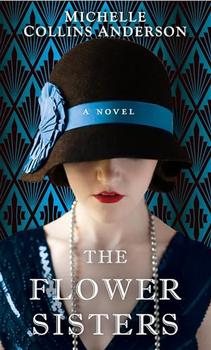
The Flower Sisters
by Michelle Collins Anderson
From the new Fannie Flagg of the Ozarks, a richly-woven story of family, forgiveness, and reinvention.
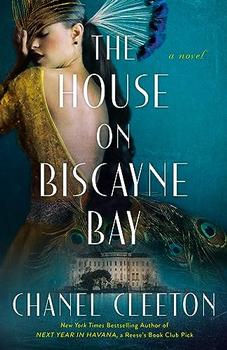
The House on Biscayne Bay
by Chanel Cleeton
As death stalks a gothic mansion in Miami, the lives of two women intertwine as the past and present collide.
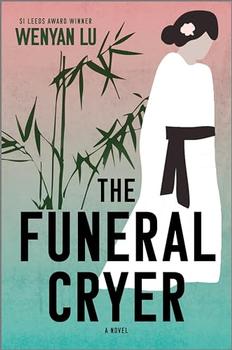
The Funeral Cryer by Wenyan Lu
Debut novelist Wenyan Lu brings us this witty yet profound story about one woman's midlife reawakening in contemporary rural China.
Your guide toexceptional books
BookBrowse seeks out and recommends the best in contemporary fiction and nonfiction—books that not only engage and entertain but also deepen our understanding of ourselves and the world around us.