Summary | Excerpt | Reading Guide | Reviews | Beyond the book | Read-Alikes | Genres & Themes | Author Bio
Critics' Opinion:
Readers' Opinion:
First Published:
Apr 2008, 400 pages
Paperback:
Jun 2009, 400 pages
 Book Reviewed by:
Sarah Sacha Dollacker
Buy This Book
The Outlander opens with Mary Boulton, the widow, running
headlong through the wilderness. Around her the darkness morphs into human
shape, as Mary hears voices and sees abhorrent visions. Somewhere in the murky
distance are her angry brothers-in-law, large and dangerous. She's a widow by
her own hand, and they are pursuing her, anxious for retribution. The haunting
and spine-tingling qualities of the opening pages grab the reader in a chokehold
and refuse to let go.
Along Mary's escape route, she meets various eccentrics who mirror a person from
her past. For example, moments or conversations with Reverend Bonnycastle remind
Mary of her father, which prompts a flashback to her earlier life.
This mirror-like approach allows for the reader to learn about Mary's past in
measured doses. The subtle disclosure serves two purposes: primarily, it
maintains a sense of mystery and suspense around Mary's character; and secondly,
it positions her past experiences, tragedies, and slights in the frame of her
present. Mary is running from a violent act, but she is also running from other
pain and sadness in her life. As Mary flees, and as she meets different people,
she, and the reader, slowly come to terms with the weightiness of her despair,
the cause of her madness, and the ways in which she might recover. Her desperate
journey, from madness to self-awareness, from hunger to satisfaction, can also
be read as a condensed analysis of her existence, a journey that allows her to
leave forever the girl who was driven to kill her husband.
Mary Boulton's intense psychological transformation is augmented by Adamson's
crystalline prose. Nothing is too miniscule for Adamson's notice: the mud at the
bottom edge of Mary's hem, the glint in the brothers-in-laws' animal-like eyes,
the color of the sky, the smell of the trees. Each sentence and paragraph is
worth the contemplation of any great poem. The pacing is deliberate and perfect.
Adamson's dark, yet delicate descriptions take this story from mere western
escape story to a gothic fairytale. Mary's deepening madness, complete with
hallucinated ghosts, plus the spare elements of romance, add to this perception.
The Outlander is a dynamic piece of historical fiction; a novel that
allows us to understand life in 1903, but in clean, modern language. Mary's
crime is heinous, but her reasons for committing it are not. Considering the
time-period and its regular oppression of women, her murderous act is
understandable. Adamson pays careful attention to details that make the setting
and time of her story believable. Her dialogue, sparse and pointed, hits the ear
as consistent with the way people in that period must have talked.
Ultimately, this tale of flight can be read for many reasons – its language, a
woman's drive towards independence, a suspense-filled tale of flight, a
historical drama – and it will stand up to every one.
About the Author
Gil Adamson is the author of two books of poetry, Primitive (1991) and
Ashland (2003), and a collection of short stories, Help Me, Jacques Cousteau (1995).
The Outlander is her first novel and was 10 years in the making. The
gothic elements in the novel stem from Adamson's love of the X-Files. She wrote
a fan book, Mulder, It's Me with her sister, about the series' female
star, Gillian Anderson. The idea for The Outlander started with an image
in her head of "a young woman, dressed in black, running like hell." She
started to write poems about the woman, but found the form too limiting. She
began a larger piece, and this 'seed' image informs the opening pages of the
novel.
Gil Adamson is seventh generation Canadian. Facts about her family - a
homesteader whose name was Bonnycastle, like the Reverend in the novel, and a
grandfather who was a coal mine operator in Edmonton - appear in the novel. Her
many travels through the western hinterlands of Canada and the United States
helped her to focus on the western setting. Gil Adamson lives in Toronto, Canada
with fellow writer Kevin Connelly. More at Quill & Quire.
 This review was originally published in The BookBrowse Review in May 2008, and has been updated for the
July 2009 edition.
Click here to go to this issue.
This review was originally published in The BookBrowse Review in May 2008, and has been updated for the
July 2009 edition.
Click here to go to this issue.

If you liked The Outlander, try these:
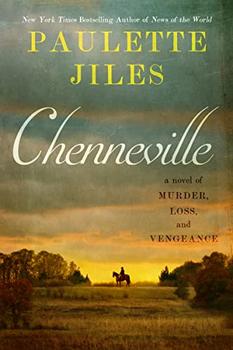
by Paulette Jiles
Published 2024
Consumed with grief, driven by vengeance, a man undertakes an unrelenting odyssey across the lawless post–Civil War frontier seeking redemption in this fearless novel from the award-winning and New York Times bestselling author of News of the World.
by James Scott
Published 2015
A scorching portrait of guilt and lost innocence, atonement and retribution, resilience and sacrifice, pregnant obsession and primal adolescence, The Kept is told with deep compassion and startling originality, and introduces James Scott as a major new literary voice.


The House on Biscayne Bay
by Chanel Cleeton
As death stalks a gothic mansion in Miami, the lives of two women intertwine as the past and present collide.
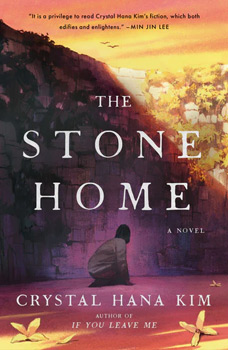
The Stone Home
by Crystal Hana Kim
A moving family drama and coming-of-age story revealing a dark corner of South Korean history.

The Funeral Cryer by Wenyan Lu
Debut novelist Wenyan Lu brings us this witty yet profound story about one woman's midlife reawakening in contemporary rural China.
Your guide toexceptional books
BookBrowse seeks out and recommends the best in contemporary fiction and nonfiction—books that not only engage and entertain but also deepen our understanding of ourselves and the world around us.