
-
Your next favorite book
is waiting.
Summary | Excerpt | Reading Guide | Reviews | Beyond the book | Read-Alikes | Genres & Themes | Author Bio

A Novel
by Aravind Adiga Book Reviewed by:
There are two ways to view Balram Halwai, the protagonist in
Aravind Adiga's The White Tiger: Is he downright evil, or is he
forced into taking desperate measures to free himself from India's oppressive
caste system? Balram refuses to send money home to his struggling family,
kills his boss, and then skips town, even though he knows what devastating
effects his murderous act will have on his kin when his employer's family
discovers what he has done. Is he a heinous character, or is he just taking
advantage of certain opportunities. Either way, he's manipulative and anxious to
succeed in a world that is completely against him.
In a funny, derisive tale about life in modern India, Aravind Adiga creates a
modern-day Iago* with money on the brain. Balram, also called 'the boy' and 'the
white tiger,' narrates his life's story in a series of daily letters to His
Excellency Wen Jiabao, the Premier of China. Wen Jiabao is planning a trip to
India, and Balram believes he's the one who can show The Premier the real
India - not just the glitzy, rich "New India" that has grown up in the economic
boom of the past decade or so.
Balram escapes his past and becomes an entrepreneur, though the way he explains
it entrepreneur might be something of a dirty word. Entrepreneurs take advantage
of the opportunities available, they are anxious for material gain, and they are
savvy enough to know what the stakes are when escaping the 'Darkness'.
Entrepreneurs, through money and luck, exist outside the social system. After Balram makes his money, he becomes something like a landlord, a position
previously inaccessible to the lower castes. He accesses a higher social stratum
through manipulation, murder, and acquisition of wealth. The question is: can we
blame him?
Aravind Adiga taps into a 'real' India, the kind of India Westerners do not
often see. Readers interested in reconciling the dichotomist stories of a rich
India, filled with call centers and outposts of successful American companies,
with the reality of a destitute and dirty India need go no further. Not
only are both worlds fully present but the wealthy India
exists on the back of the poor one. The wealthy India is the 'Light' and the
destitute India is the 'Dark.' The caste system and the corrupt government
maintain these disparate societies, and it takes a major act of courage and luck
to move from the Dark into the Light. The Light takes advantage of the Darkness
through the 'rooster coop,' an expression that Balram uses to describe the
oppressed, confined, and hopeless situation of the average Indian person.
Adiga's description of life in the Darkness is visceral and disturbing.
Hospitals are undermanned and under funded. Authorities do not require doctors
to attend the needy hospitals; doctors are given reprieve based on good
behavior, so they never appear. Balram's voice is cutting and ironic when he
explains the filth, disease and suffering of the sick and wounded in the
Darkness's hospitals. A few chapters later, these observations are juxtaposed by
equally as detailed descriptions of the shiny, clean and fully manned hospitals
in the Light. The contrast is not lost on Balram.
Balram's act of murder could not have focused on a more mild manner guy.
Balram's boss, Ashoke, is weak, privileged, and very American. He went to school
in America and returned to India to be with his family. Balram pities Ashoke for
his weakness, but a guy has to get out of the rooster coop somehow. The fact
that Balram from the Darkness overtakes Ashoke from the Light points clearly to
the notion that weakness is not always equated to destitution, and power is not
always equated to money. Occasionally, the tables turn, the white tiger emerges,
and the upper echelons of society need to watch out. After reading page after
page of Balram's description of the hedonistic lifestyles of the Light society
compared to the squalor of the Darkness, it is no wonder Balram is raging mad.
Adiga's novel is hilarious and impolite, a fabulous counterpoint to some of the
beautiful, lyrical Indian novels that have surfaced in the past decade. Adiga
does not sugarcoat Balram's view of India, and the result is a true, unique view
of a country we may have thought we understood.
*The general's most trusted advisor in Shakespeare's Othello.
About the Author
Aravind Adiga was born in India in 1974 and was raised partly in
Australia. He attended Columbia and Oxford Universities. He is a former
correspondent for Time Magazine and a former contributor to The
Financial Times. He now lives in Mumbai (Bombay), India,
where he is currently working on his second novel.
The White Tiger was influenced by three black American writers: Ralph
Ellison, James Baldwin, and Richard Wright. Critics have observed a
strong thematic similarity between The White Tiger and Wright's The
Native Son. Balram Halwai, however, comes directly from the Indian
streets. Adiga says, "Balram is what you'd hear if one day the drains and
faucets in your house [in India] started talking."
Although Adiga emphasizes that
The White Tiger is a work of fiction, it
nonetheless has elements, like the many examples of corruption, that are
factual. However, Adiga is also firm in asserting that "It's important
that you see these classifications [of India] as Balram's rather than as mine". Extrapolating on this thought he goes
on to say: "I don't intend for the reader to identify all the time with
Balram: some may not wish to identify with him very much at all. The past
fifty years have seen tumultuous changes in India's society, and these
changes -- many of which are for the better -- have overturned the
traditional hierarchies, and the old securities of life. A lot of poorer
Indians are left confused and perplexed by the new India that is being
formed around them."
 This review
first ran in the May 2, 2008
issue of BookBrowse Recommends.
This review
first ran in the May 2, 2008
issue of BookBrowse Recommends.

If you liked The White Tiger, try these:
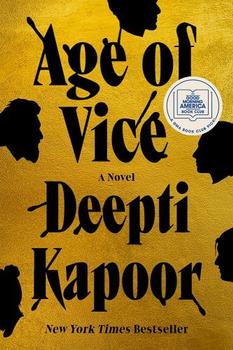
by Deepti Kapoor
Published 2024
This is the age of vice, where money, pleasure, and power are everything, and the family ties that bind can also kill.
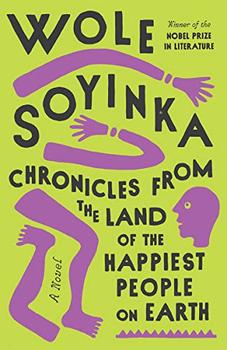
Chronicles from the Land of the Happiest People on Earth
by Wole Soyinka
Published 2022
From the first Black winner of the Nobel Prize in Literature and one of our fiercest political activists, a fictional meditation on power and greed - at once a literary hoot, a whodunit, and a scathing indictment of political and social corruption.
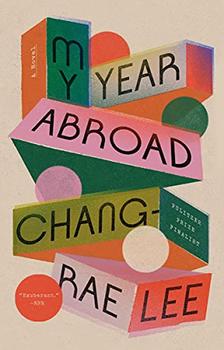
by Chang-rae Lee
Published 2022
From the award-winning author of Native Speaker and On Such a Full Sea, an exuberant, provocative story about a young American life transformed by an unusual Asian adventure – and about the human capacities for pleasure, pain, and connection.





Never read a book through merely because you have begun it
Click Here to find out who said this, as well as discovering other famous literary quotes!

Can you name the title?
Test your book knowledge with our daily trivia challenge!
Your guide toexceptional books
BookBrowse seeks out and recommends the best in contemporary fiction and nonfiction—books that not only engage and entertain but also deepen our understanding of ourselves and the world around us.
